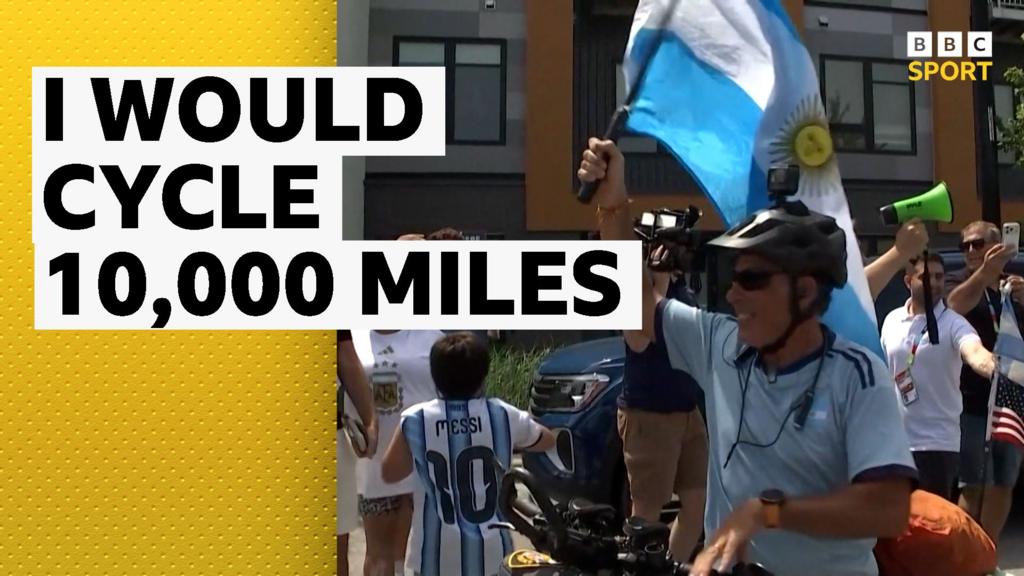
Measuring the true distance of fandom
Three Argentina supporters arrived in Kansas City this week after a trek covering 10,500 miles. Their journey from Gualeguaychu to the site of their team’s opening 2026 World Cup match represents a commitment rarely seen in the modern professional game. While the average supporter tracks ticket prices and flight availability, this trio prioritized the transit over the destination.
Cycling across the Americas is a logistical nightmare involving terrain that tests even elite athletic conditioning. Navigating multiple borders and unpredictable weather cycles requires a level of planning that puts typical travel logistics to shame. For context, the path spans roughly 40 percent of the Earth's circumference. It turns the tournament arrival into a test of physical endurance rather than a simple consumer transaction.
The cost of support in a tournament era
The 2026 World Cup expansion brings a massive influx of logistical strain on both organizers and traveling supporters. With 48 teams participating, the demand for infrastructure is at an all-time high. As the BBC reported, the dedication shown by these fans highlights a disparity in how supporters engage with the tournament. While casual observers look for nearby venues, these individuals treated the commute as the main event.
We should view these 10,500 miles as a counter-argument to the sanitized nature of international sports travel. Most supporters cover the distance in 12-hour flights, neutralizing the effort required to reach the host city. By opting for human power, these three fans stripped away the buffer of modern travel. The result is an authentic, if exhausting, dedication to the national team.
The hidden data of the fan journey
Compare the carbon footprint and time investment of this expedition to standard tournament travel. A flight from Buenos Aires to Kansas City covers approximately 5,000 miles. These fans doubled that distance by opting for a path that lacked direct infrastructure and support. It represents a 200 percent increase in travel time compared to commercial options. The emotional return on investment is subjective, but the statistical investment is 10,500 miles of road wear.
Is this level of effort a sign of true fandom, or an outlier that masks the difficulty of current tournament access? It is worth noting that for every fan cycling through the Americas, thousands face significant barriers related to visa approvals and ballooning hotel costs. This specific journey is an outlier that shouldn't define the tournament experience for the majority. Their arrival in Kansas City on June 4 marks the culmination of their effort exactly 7 days before the kickoff. It is a rare feat that frames the scale of one of the shortest distances they will likely ever travel to see their team compete in a major final.
Read Next
- England’s kit cycle is a cynical cash grab before the World Cup kicks off
- Morocco are no longer the underdogs for the 2026 World Cup
- FIFA is jeopardizing fan safety for a logistical headache
- FIFA's hydration policy for the World Cup is a dehydration disaster
- 🏆 World Cup 2026 — Full Coverage Hub
- 🇦🇷 Argentina World Cup 2026 — Defending Champions Hub