Fitness clouds hang over the Emirates ahead of Bournemouth
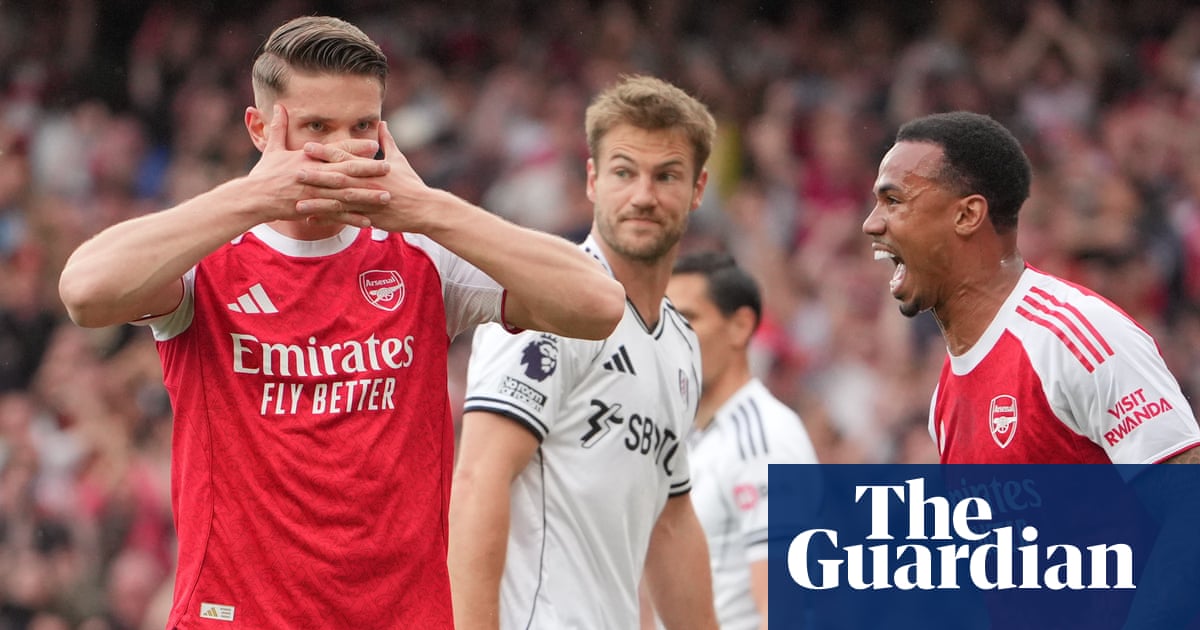
Arsenal are managing a precarious medical situation as they prepare for this weekend's clash with Bournemouth. Martin Odegaard, the club captain, is currently the primary concern after picking up a knee issue during the match against Sporting CP. While fans are understandably anxious, Stale Solbakken has publicly signaled that he does not anticipate a long-term layoff for the midfielder.
The club confirmed that Odegaard was absent from Thursday’s training session as a precautionary measure. His omission from tactical drills suggests he is effectively racing the clock to prove his fitness. Given his role in breaking down deep-lying defenses, his unavailability would be a massive tactical handicap for Mikel Arteta as the title race hits the final straight.
Saka and Timber updates dominate the narrative
The situation regarding Bukayo Saka and Jurrien Timber remains fluid. Both players are undergoing monitored routines at London Colney. These absences rarely go unnoticed, especially with Arteta’s need to maintain a high-intensity rhythm against a Bournemouth side capable of causing an upset. The lack of clarity around their specific injury statuses creates an uneasy preparation window.
There is, however, some relief for the Gunners. Eberechi Eze has successfully rejoined first-team training, marking a significant milestone in his recovery from a calf injury that kept him sidelined since mid-March. Bringing a player of his creativity back into the fold provides a necessary safety net if other starters fail to clear late fitness tests.
Midfield attrition and youth rotation
The latest updates include news of a setback for a key midfield star, adding another layer of complexity to Arteta’s squad selection. As recently reported by Metro UK, this development likely limits the coaching staff's ability to rotate players effectively. Managing the workload of aging veterans while bringing in younger prospects like Junior Kroupi—who is also currently managing fitness concerns—is a delicate balancing act.
This reliance on youth is not a coincidence. Recent speculation suggests Arsenal are actively scouting for an 18-year-old replacement wing talent to provide long-term depth. When a club begins planning succession for key starters, it often highlights a lack of trust in the current second-string or an acknowledgment that recurrent injuries are becoming a permanent personnel issue rather than a temporary string of bad luck.
Broader implications for the Premier League
Arsenal's title credentials, backed by figures like Paul Merson who recently endorsed their path to the trophy, depend entirely on personnel availability. Injuries in the final 60 days of the campaign—especially with the added pressure of European commitments—frequently determine the table order. The margin for error is non-existent when Manchester City remains in the rearview mirror.
Across the division, the impact of mid-April fatigue is visible. Clubs like West Ham, who are monitoring Crysencio Summerville, and Newcastle, dealing with a lingering Bruno Guimaraes concern, are all struggling with the same late-season reality. The physical cost of high-pressing systems is starting to show on the team sheets. Failing to have a fully reinforced squad for the final 6 weeks is essentially an invitation for competitors to close the gap.
The medical room at London Colney is currently the most intense environment at the club; how they handle the next 72 hours will define the rest of the campaign.
The decision to hold players out of training is the right move for long-term health, but it invites media hysteria and tactical instability in the short term. Arteta has proven he can shuffle the backline and midfield during injury crises, but with the title race this tight, every individual absence feels like a self-inflicted wound. The upcoming 0 points margin of error means there is no room for misjudging a player’s recovery timeline.
Read Next
- Arsenal hold their breath over Odegaard while Chelsea welcome back Reece James
- Arsenal face injury chaos at the worst possible time
- Arsenal face a creative crisis as Odegaard misses training before Bournemouth
- Arsenal sweat on Odegaard as Eze nears return for Bournemouth clash
- 🇳🇴 Norway World Cup 2026 — Can Haaland Lead the Vikings?
- ⭐ UCL 2026 — Champions League Quarter-Finals Hub