The Clinical Anatomy of a Collapse
In the medical and fitness departments of elite football clubs, the most destructive injuries aren't always visible on an MRI scanner. A torn hamstring or a ruptured ACL is a straightforward problem with a predictable rehabilitation timeline.
Sometimes, however, the most devastating issue is entirely neurological and deeply insidious. Arsenal are currently experiencing what sports science professionals quietly refer to as the late-season wobble.
It is a collective mental fatigue that directly manifests as physical hesitation on the pitch. When the pressure of a title race mounts, the human body physically reacts to the mounting stress.
According to a stark assessment published by the Daily Mail, this phenomenon is heavily documented among managers who have suffered through it. Former Newcastle United boss Kevin Keegan famously described the sensation of a sudden title collapse as a physical contagion. His diagnosis was blunt, highly accurate, and terrifying for any current manager navigating the treacherous waters of April.
"The virus spreads through the team, you can't escape it."
Keegan's analogy hits exactly on how modern sports psychologists view collective anxiety. It is never just one isolated player making a random, unforced mistake. It is a systemic breakdown of the squad's central nervous system.
When one defender shows signs of panic, the cortisol levels across the entire dressing room spike instantly. Cognitive processing slows down. Muscles tighten up involuntarily, leading to the dreaded heavy legs cliche that managers constantly cite during the run-in.
The Snowball Effect on Motor Skills
The physiological impact of extreme stress on a football pitch is entirely measurable. Peripheral vision literally narrows under high anxiety.
Reaction times drop by critical fractions of a second. This is exactly what happens when a historically fluid, attacking team starts to overthink every single pass instead of playing on pure instinct.
Roberto Mancini experienced this exact physiological drop-off during his turbulent time at Manchester City.
Mancini likened the immense pressure of a title race to a snowball gathering pace down a mountainside. Once the negative neurological momentum starts, it requires a massive, immediate intervention to arrest the slide.
You cannot simply train your way out of it with extra passing drills or punishing shuttle runs. The pathology sits entirely between the ears, rooted deep in the amygdala's response to perceived threat. Rival clubs with more experience are well aware of this drop in output, ready to capitalize the moment the symptoms appear.
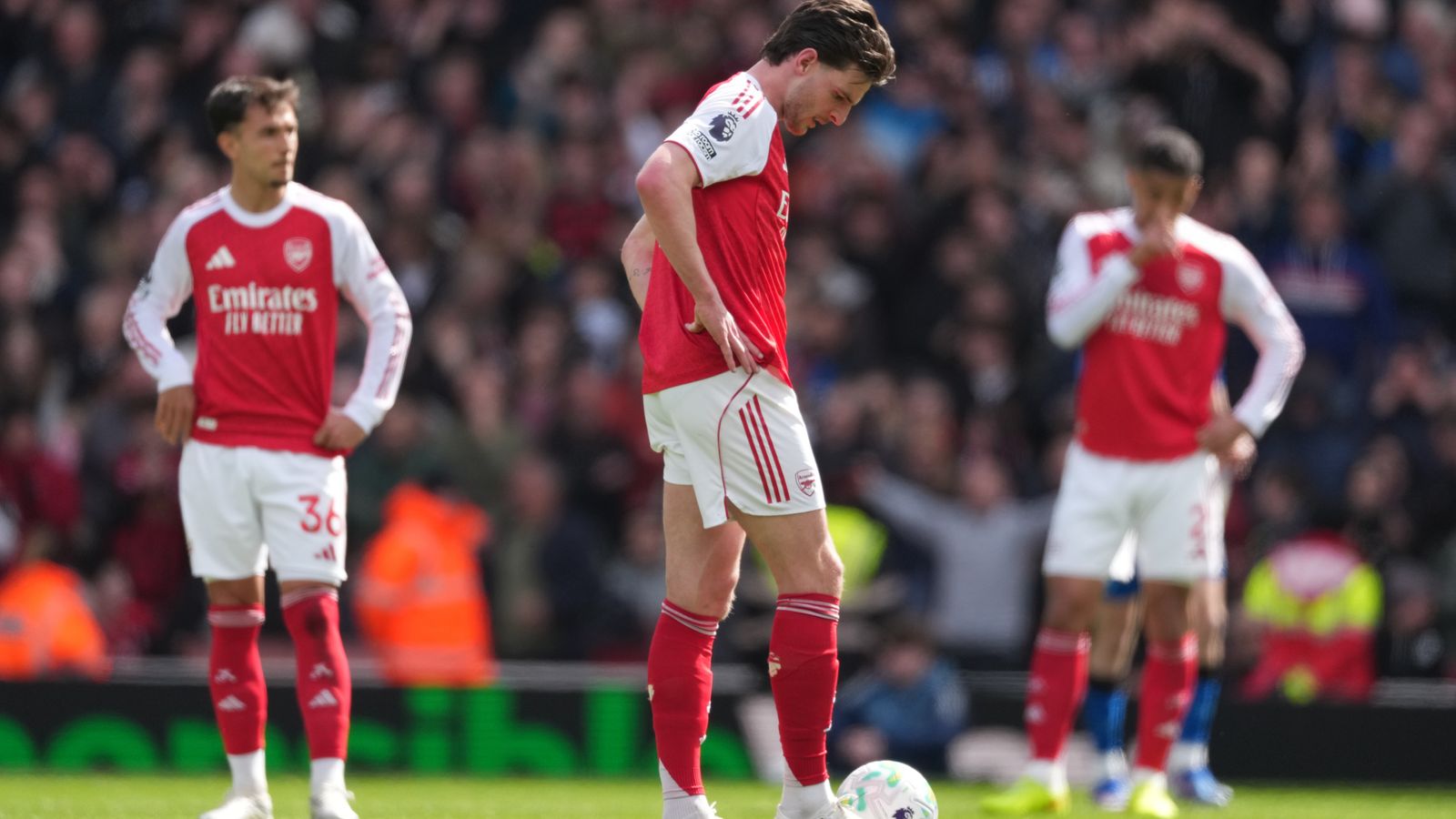
For Arsenal, the clinical symptoms are becoming painfully obvious to anyone watching. The rapid, instinctive movements that characterized their early season form are completely gone. They have been replaced by rigid, fearful decision-making.
Elite athletes are suddenly taking an extra touch. Dynamic fullbacks are hesitating for a split second before committing to an overlap. Midfielders who normally dictate the tempo are hiding behind markers.
These are the classic, undeniable signs of a squad suffocating under the brutal weight of expectation.
Historical Precedents and Misdiagnosed Symptoms
We have seen this exact sporting pathology before. The Daily Mail report specifically highlights the infamous collapses of Newcastle United and various Manchester United squads from previous eras. In almost every single historical case, the initial diagnosis from outside observers was a lack of effort or poor physical conditioning. Television pundits routinely claim a team has simply run out of gas or lost their legs.
That is rarely the medical reality. The hard truth is that acute mental exhaustion perfectly mimics physical exhaustion.
When an athlete's brain is heavily overloaded with the stress of a championship race, it sends fatigue signals to the muscles much earlier than it would in a low-pressure August fixture. Arsenal's players are likely hitting the exact same physical output metrics in training right now.
Their GPS data probably looks completely normal to the sports science department.
However, the cognitive load of the current matchday environment is draining their physiological reserves prematurely. The mental calculation of what a single mistake might cost them is physically exhausting.
A player terrified of making a bad pass burns more energy agonizing over the decision than he does actually executing it. This is precisely where the medical staff and performance psychologists have to step in and take control.
Their job right now is arguably more important than the manager's tactical preparation.
They have to find a way to break the neurological circuit of anxiety. If they fail to intervene, the exact virus Keegan warned about will simply run its natural course. The title challenge will die a slow, agonizing death, just as it has for so many promising squads before them.
Treatment Protocols: What Not To Do
So, how does a modern medical department cure this psychological virus? The first and most difficult step is openly acknowledging it. Ignoring the rising tension only allows the contagion to fester. The Daily Mail piece explicitly examines what teams should and definitely shouldn't do when the wheels start to come off. The worst possible intervention is to crank up the intensity.
Treating every remaining fixture like a life-or-death cup final is a catastrophic medical error. It spikes adrenaline prematurely and leads to an inevitable crash before kickoff. The adrenaline dump leaves players feeling hollow and lethargic by the time the whistle actually blows. Here is the standard psychological recovery protocol for a title-chasing squad currently in crisis:
- Reduce cognitive load immediately by simplifying all tactical instructions to base principles.
- Isolate the squad entirely and cut off all external media consumption to stop the anxiety loop.
- Focus purely on physical process and execution, completely ignoring the league table and point permutations.
The fitness teams must drastically adapt their daily schedules. Afternoon recovery sessions must become less about muscle repair and heavily focused on central nervous system down-regulation.
Breathing exercises, cold water immersion, and prolonged isolation periods are necessary. Sleep hygiene instantly becomes the single most important metric tracked by the club.
A tired brain simply cannot regulate sudden emotion, and emotional dysregulation is the core driver of the title race wobble.
The Bleak Prognosis for Arsenal
It is necessary to be highly critical of how Arsenal's coaching and performance staff are managing this current phase. They appear to be treating a severe psychological crisis with minor tactical tweaks.
You absolutely cannot fix a collective panic attack by slightly altering your midfield pressing triggers. The glaring failure to address the profound mental fragility of the squad is a massive, unforgivable oversight.
Arsenal have scar tissue from previous seasons. They know exactly what it feels like when the virus takes hold, yet they seem entirely unprepared to fight it this time around.
With the physical and mental pressure only set to increase as we move deeper into the final weeks of the season, they are rapidly running out of time to find a viable cure.
They are currently operating in a permanent state of high alert. They are burning through their finite mental reserves at an entirely unsustainable rate.
If they do not implement immediate, drastic psychological interventions this week, the prognosis is incredibly bleak. History shows that once the snowball starts rolling, very few teams have the strength to stop it.
They will not just narrowly lose the title race. They will suffer a complete, systemic collapse. The timeline for resolution is essentially zero.
The next 90 minutes of football they play will definitively reveal whether the virus has completely taken hold, or if the squad has somehow managed to build a sudden immunity.
If they continue to show the exact same clinical symptoms of hesitation and deep-seated fear, the season is effectively over. The physical fitness of any squad becomes completely irrelevant when the collective mind has already quit.
Read Next