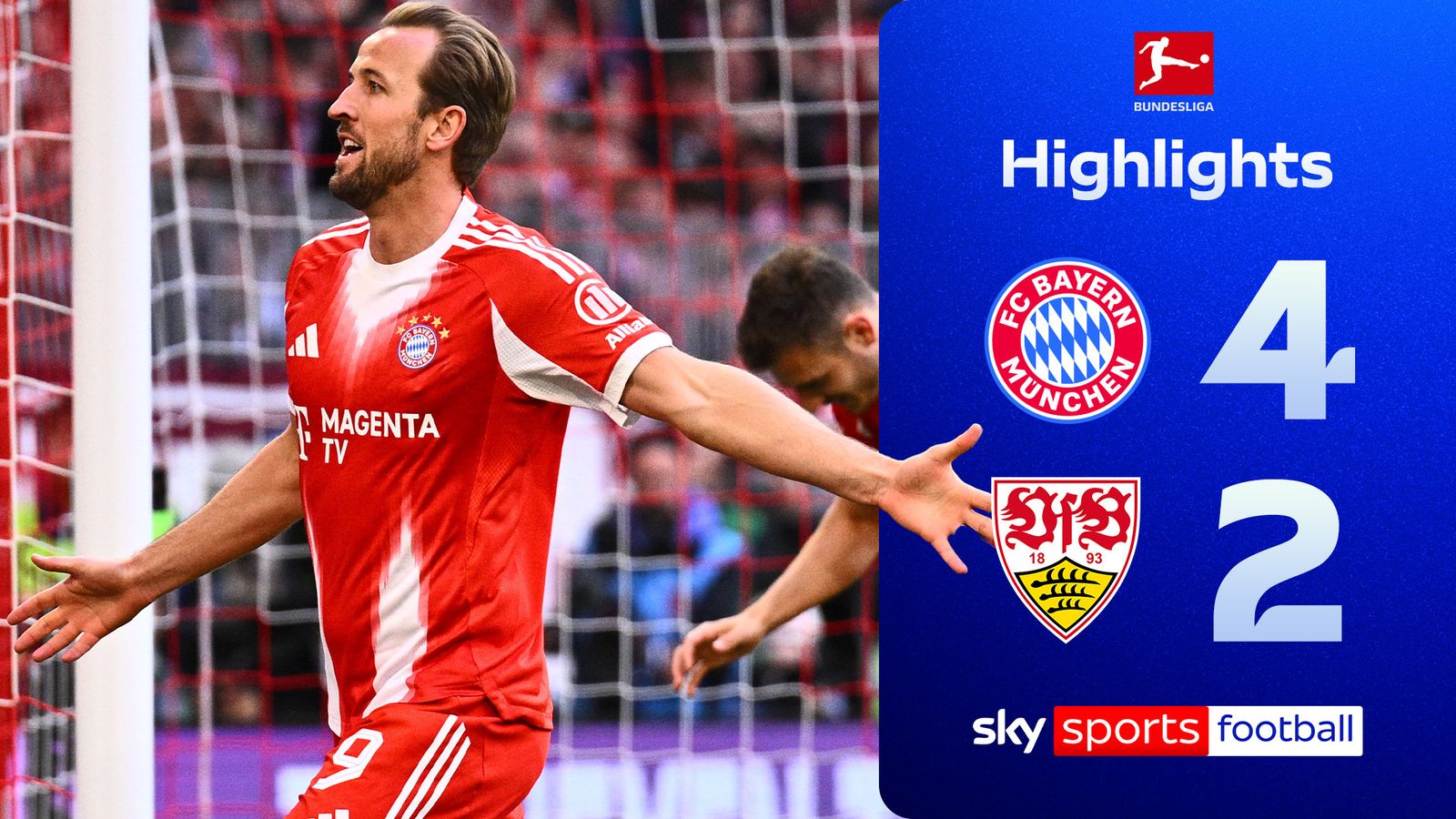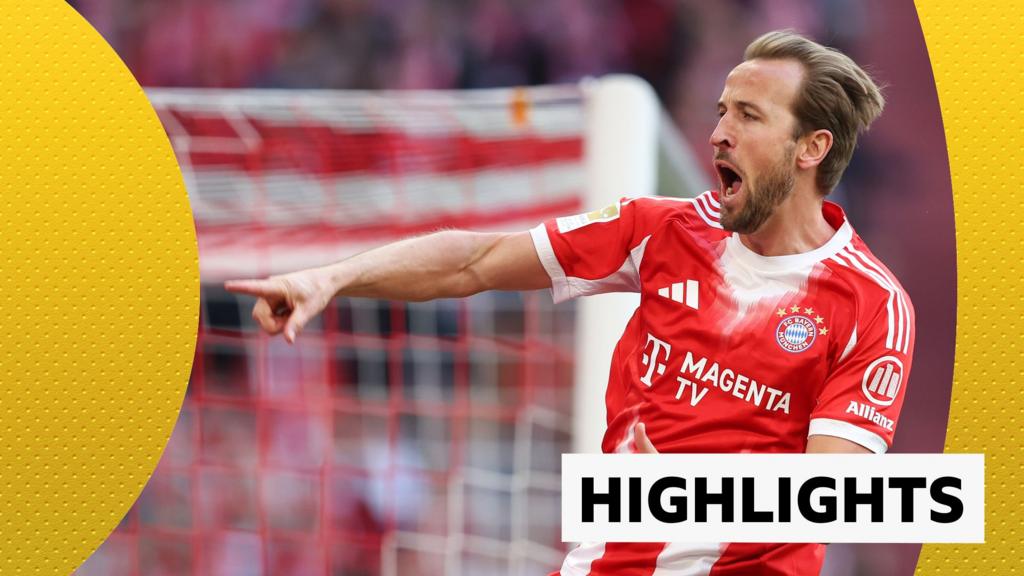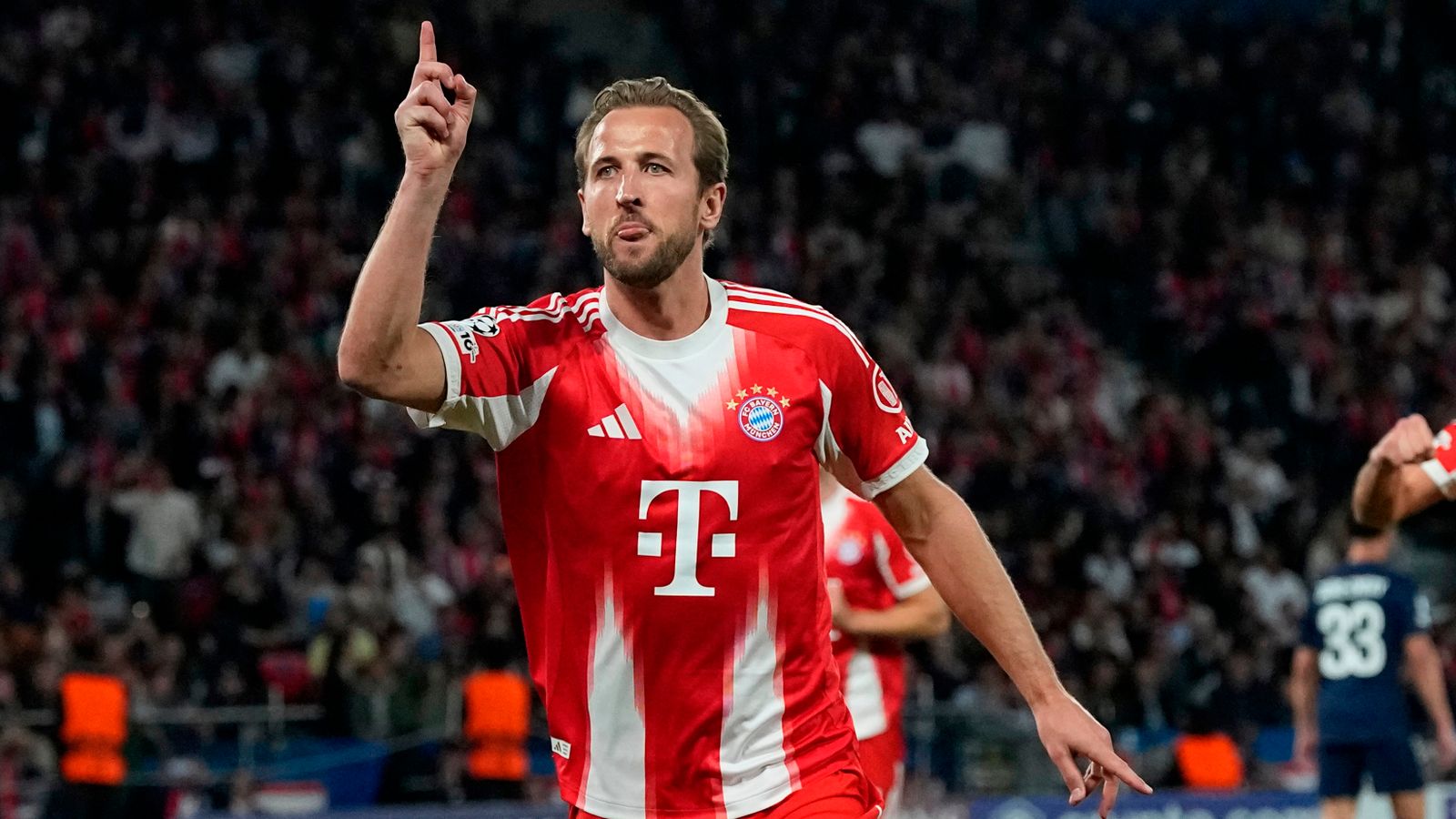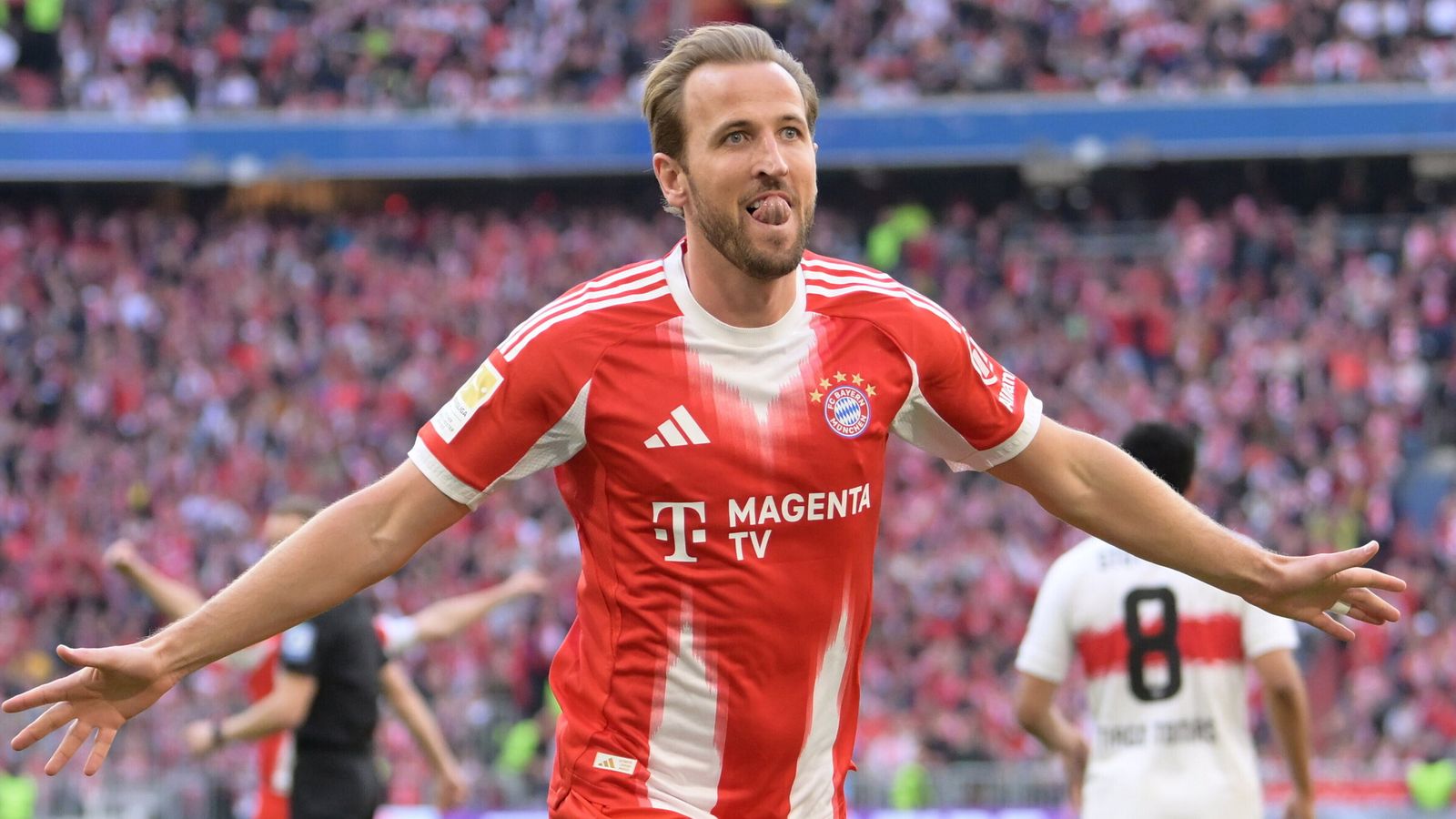
Harry Kane finally has his medal. The exhausting, decade-long narrative about his empty trophy cabinet is officially dead. Bayern Munich wrapped up the Bundesliga title this weekend, as Sky Sports documented in their league-sealing win. Fittingly, Kane was on the scoresheet to kill off the race. The domestic job is done. The shield is staying in Bavaria.
But anyone watching the subdued celebrations on the pitch could read the room. The real season starts in exactly eight days.
On April 28, Bayern step into the Champions League semi-finals. For this club, everything up to this point has been a prolonged, high-stakes training exercise. Winning the domestic league is a baseline requirement in Munich, not a crowning achievement. The Bundesliga title merely buys the manager enough oxygen to figure out how to win in Europe.
And right now, Bayern have glaring tactical leaks. Elite European opposition will ruthlessly exploit them if they aren't plugged immediately.
The illusion of a clean sheet
Let's look at the league-sealing performance. On paper, it was a comfortable win. The title is secured. Kane got his goal. Manuel Neuer kept a clean sheet. But the underlying mechanics of their buildup play were incredibly sluggish.
For the first thirty minutes, Bayern struggled to bypass a standard mid-block. Dayot Upamecano and Kim Min-jae circulated the ball in a passive, predictable U-shape. They completely refused to play line-breaking passes through the central channel. The tempo was walking pace, allowing the opposition block to easily shift side to side without expending any real energy.
This stagnation forced Kane to drop deep into his own half just to get a touch of the ball. We've seen him do this for years at Tottenham. But when your primary goalscorer is forced to operate as a deep-lying playmaker, your offensive structure is fundamentally broken.
Jamal Musiala was constantly making runs into the space Kane vacated, but the timing was always a fraction of a second off. It worked against domestic opposition because Bayern's sheer talent disparity eventually forces a breakthrough. The 1-0 scoreline flatters the performance. That lazy buildup will not work in a Champions League semi-final.
A fundamentally broken pivot
The bigger issue is the midfield pivot. It remains a massive structural liability. Joshua Kimmich and Leon Goretzka have played together for years, yet their spatial awareness in defensive transition looks worse now than it did three seasons ago.
When Bayern lose the ball in the final third, their counter-pressing structure is entirely disconnected. The gap between their attacking line and the double pivot is consistently fifteen yards too large. Opposing teams with raw transition speed have repeatedly carved straight through the center of the pitch.
We saw it twice this weekend. A simple, vertical progressive pass bypassed both Kimmich and Goretzka in an instant. That left the center-backs completely exposed in a terrified backpedal. You cannot give that kind of space to elite European wingers. They will put you in the ground.
If you allow players of that caliber to run directly at your back line with no midfield filter, you are accepting defeat. Looking at their domestic campaign, their expected goals against in transition moments is alarming. They are conceding high-quality shots at a rate that would relegate a mid-table side.
The only reason it hasn't cost them the league is Neuer's elite shot-stopping and the sheer volume of goals they score at the other end. But you cannot outscore your structural flaws in Europe.
The defensive line itself compounds the problem. Bayern play a very aggressive high line, which is standard for modern possession-dominant teams. But the pressure on the ball from the front line is wildly inconsistent. Leroy Sane and Kingsley Coman are brilliant on the ball, but their out-of-possession work rate often drops off a cliff after the first wave of the press is beaten.
If you hold a high line without intense, coordinated pressure on the ball carrier, you are begging to be punished by balls over the top. Eric Dier has had a surprisingly solid season since his arrival, but his recovery pace is non-existent. If an attacker gets on his shoulder with open grass behind him, the footrace is over before it begins.
Kane cannot fix everything
Kane's individual brilliance has completely papered over these cracks defensively. He isn't just finishing the chances provided to him; he is creating them out of absolute nothingness. His shot map this season is absurd. He is shooting from distance, scoring headers from dead-ball situations, and punishing the slightest defensive errors.
He is vastly overperforming his expected goals, taking low-percentage shots from difficult angles and burying them with zero backlift. That is the mark of a world-class striker. But it is a terrible foundation for a tactical system.
That level of finishing variance is not sustainable across a brutal two-legged European tie. Eventually, the tactical system has to generate high-quality, high-probability chances. Bayern's system currently relies too heavily on Kane pulling a rabbit out of a hat in the 78th minute. If the opposition center-backs successfully manage to isolate him, who steps up?
Sane's decision-making in the final third will also be under a microscope. He has a habit of taking an extra touch when the passing lane to Kane is wide open. In the Bundesliga, he gets away with it. Against elite European defenders, that passing window closes in half a second. He has to release the ball earlier on April 28.
The tactical pivot required
So, how do they fix this before the semi-final? The coaching staff has to make a highly unpopular decision regarding the midfield profile. They need a dedicated, destructive ball-winner to anchor the pivot. Someone who stays strictly disciplined and sweeps up the transition threats, even if it means sacrificing passing range.
The current configuration is simply too adventurous. You cannot play two box-to-box number eights and expect to survive a Champions League semi-final against a team that attacks with vertical speed. Kimmich might need to be permanently shifted to right-back to accommodate a more defensive-minded midfielder. It is a move that always generates intense media scrutiny in Munich, but it is necessary.
They also need to change how they utilize their wide players. Sane and Serge Gnabry have spent the last month hugging the touchline, isolating themselves against double teams. They need to invert more aggressively, flooding the half-spaces.
This forces the opposition defense to narrow, opening up the flanks for overlapping fullbacks like Alphonso Davies. More importantly, it gives Kane short, quick passing options when he drops deep. This allows him to link play and immediately spin back into the penalty area instead of trying to hit forty-yard diagonal switches.
When you look at the underlying defensive metrics of the remaining teams in the competition, Bayern stand out for all the wrong reasons. Manchester City and Real Madrid both concede fewer than 0.8 big chances per 90 minutes from direct counter-attacks. Bayern are conceding nearly double that. You cannot enter a tactical chess match against elite managers while bleeding high-danger chances every time you commit men forward. The math simply does not support a deep European run with a defensive profile this volatile.
Compare this current iteration to the 2020 treble-winning squad. That team had Thiago Alcantara dictating the tempo and breaking lines with supreme confidence. This team relies entirely on individual ball-carrying to break deep blocks. It is a slower, far more predictable method of attacking.
The clock runs out on April 28
The clock is ticking loudly. Eight days until the first leg. The league title gives them a brief moment of respite. They can rotate heavily this coming weekend, resting key starters and completely hiding their tactical adjustments from opposition scouts.
With the FIFA World Cup kicking off on June 11, players are heavily incentivized to peak right now. Kane is looking to carry this momentum into the summer. Musiala wants to prove he is the undisputed future of German football. But club glory comes first, and the Champions League is the only currency that matters at this club.
The pressure inside Säbener Straße is immense. Bayern haven't looked truly convincing in Europe all season. They've scraped through previous rounds through raw individual quality rather than collective dominance. The semi-final is where the margins shrink to zero.
If Bayern trot out the same disconnected midfield structure on April 28, they will be dismantled. The domestic triumph will become a forgotten footnote in a season defined by European failure. Fans will celebrate the Bundesliga title tonight, but the anxiety regarding next week is entirely justified.
The final verdict
My prediction for the first leg? Bayern will attempt to tighten up, but the structural flaws are too deeply ingrained at this point in the calendar. You cannot install a completely new, cohesive counter-pressing system in eight days.
They will concede in transition early in the match. I expect a chaotic, high-scoring affair. Bayern will rely heavily on the Allianz Arena crowd and Kane's lethal finishing to stay alive in the tie. But my read is they drop the first leg 2-1.
They have the offensive firepower to turn it around in the second leg on May 5. But they are making it unnecessarily difficult for themselves. They are walking a tightrope, and the safety net is gone.
Read Next
- Arsenal's fullback conservatism will cost them in Europe
- Bayern’s Bundesliga walkover reveals a deep obsession problem
- Bayern Munich wrap up Bundesliga title in dominant fashion
- Man City and Real Madrid are about to break football again
- 🏴 England World Cup 2026 — Three Lions Hub
- ⭐ UCL 2026 — Champions League Quarter-Finals Hub