A caretaker trapped in purgatory
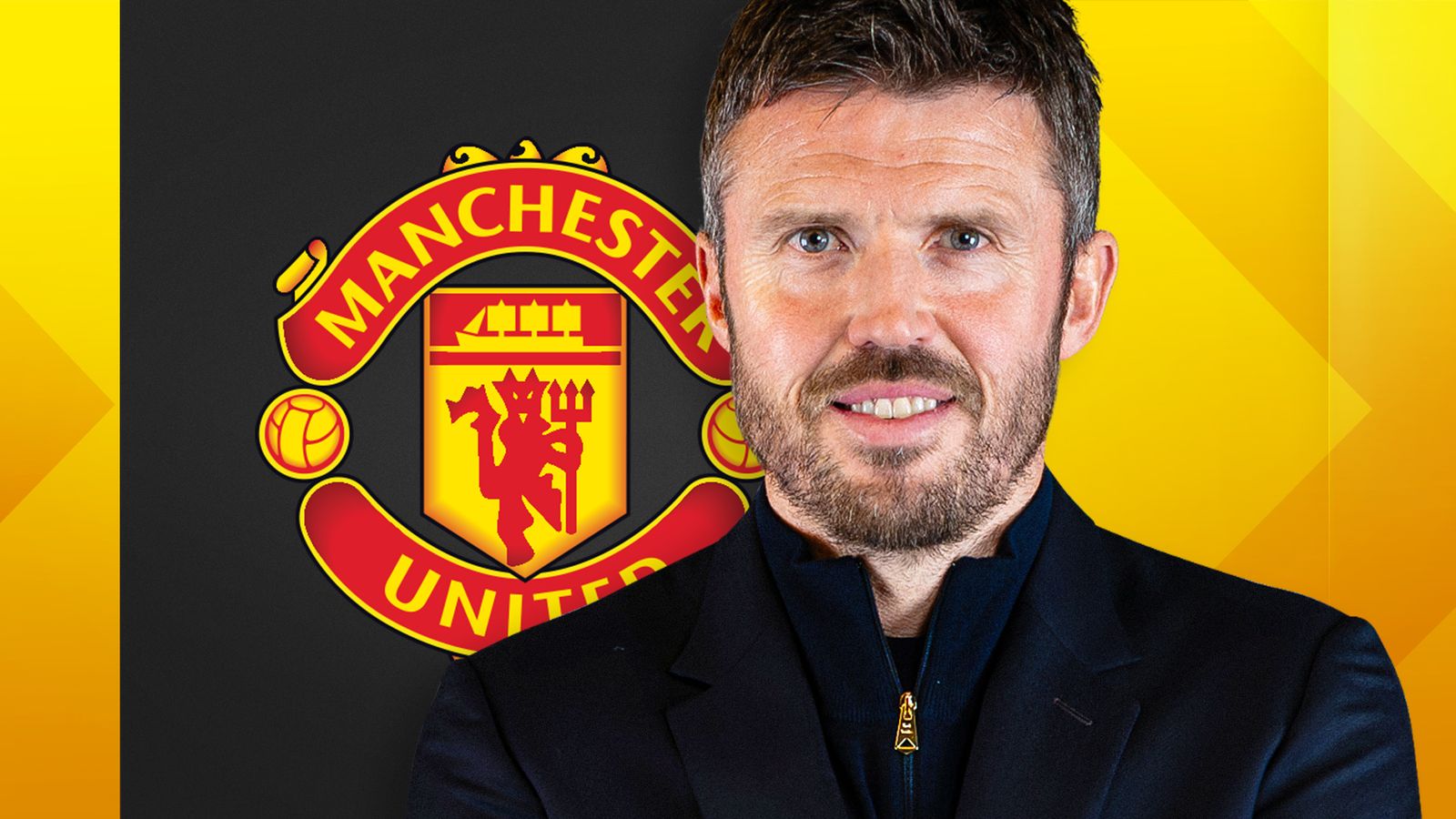
Michael Carrick’s pre-match press conference on Thursday afternoon was a masterclass in deflection. When pressed about his future at Old Trafford beyond the end of May, he admitted his future is out of his hands. It is exactly the sort of passive, non-committal stance that slowly drains the energy out of a football club. Manchester United are stumbling through the final weeks of the 2025/26 campaign, and the air of temporary management has infected every facet of their play.
The INEOS sporting department, despite their aggressive posturing over the winter, have yet to confirm who will be sitting in the dugout come August. That hesitation leaves Carrick effectively serving as a substitute teacher for a squad of highly paid internationals. They face Arsenal at Old Trafford this Sunday in a fixture that demands absolute clarity of purpose. Instead, United look disorganized, disinterested, and tactically adrift.
Carrick’s tenure has been a series of compromises. He is trying to implement a possession-based game with a squad built for chaotic transitions. The result is a hybrid system that fails at both. The players look caught between two distinct philosophies, hesitant on the ball and sluggish when trying to win it back. Arsenal, by contrast, arrive in Manchester as a perfectly calibrated machine. Mikel Arteta’s side are ruthless against disjointed pressing structures, and United currently boast one of the most porous midfield units in the top half of the Premier League table.
The fatal flaw in United's high block
To understand why United are struggling, you only have to look at the tape from the last month. Carrick has rigidly adhered to a 4-2-3-1 formation that theoretically shifts into a compact 4-4-2 out of possession. On paper, it is standard Premier League practice. In reality, it is a structural disaster waiting to be exploited.
The primary issue lies in the coordination of their pressing triggers. Bruno Fernandes and Rasmus Hojlund are given the mandate to jump on the opposition centre-backs when the ball is circulated across the backline. However, the wide players—typically Marcus Rashford on the left and Alejandro Garnacho on the right—are consistently a half-second too slow to follow the press. They fail to jump onto the opposition full-backs, creating massive, glaring passing lanes through the half-spaces.
Opponents don't even have to play complex combinations to break through. A simple, firm pass breaks the initial line of pressure, bypassing Fernandes and Hojlund entirely. Suddenly, the opposition is running downhill at a United double pivot that is stretched hopelessly thin. Kobbie Mainoo is currently doing the running of three men in the centre of the park. He constantly steps out to plug the gaps left by the initial failed press, but his midfield partner—often an aging Casemiro or a tactically limited Scott McTominay—rarely tucks in to cover the vacated central channel.
It is, quite frankly, tactical negligence. You cannot operate with a high defensive line if there is zero sustained pressure on the ball carrier. When the ball is exposed, the back four must drop. Instead, United’s defenders routinely hold their high line while the midfield is bypassed. Aston Villa exposed this flaw repeatedly. Newcastle punished it without mercy. Arsenal will view this structural chaos as an all-you-can-eat buffet.
Arsenal's 3-2-5 will tear the left side apart
Arteta doesn’t need a specialized game plan for Sunday. Arsenal’s standard 3-2-5 in-possession shape is practically custom-built to dismantle United’s current block. The focus will almost certainly be down Arsenal’s right flank, targeting the space behind Marcus Rashford and outside of Luke Shaw.
Watch Bukayo Saka’s positioning in the opening twenty minutes. Rather than hugging the touchline, Saka will likely drift slightly infield, dragging Shaw into the half-space. This movement creates an overlapping runway for Ben White. Because Rashford has shown a consistent, season-long reluctance to track opposition full-backs into his own defensive third, White will frequently find himself arriving unmarked. Arsenal will generate 2-v-1 overloads against Shaw time and time again.
Then there is the influence of Martin Odegaard. The Norwegian thrives in the exact pockets of space that United’s disjointed midfield fails to protect. When Mainoo is dragged wide to deal with the Saka-White overload, Odegaard will drift into the central zone just at the edge of the penalty area. If Casemiro fails to track him—a frequent occurrence in recent weeks—Odegaard will have the time and space to slide passes through to Kai Havertz or Gabriel Martinelli.
United also face a massive problem when they actually manage to win the ball back. Arsenal’s counter-press is suffocating. Carrick’s side struggle desperately to build from the back under pressure. Without Lisandro Martinez, they lack a reliable, progressive passer in the first phase of build-up. Andre Onana is routinely forced to bypass the midfield entirely, launching hopeful balls toward Hojlund. The Danish striker will be completely isolated against the imposing duo of Gabriel Magalhaes and William Saliba. Arsenal will win the first contact, Declan Rice will sweep up the second ball, and the red wave will simply crash down on United’s penalty area all over again.
Searching for an out-ball in transition
If United are to salvage anything from this match, it must come via rapid, vertical transitions. Arsenal’s aggressive high line naturally leaves vast tracts of space behind their defense. This is particularly true down their left side, where Oleksandr Zinchenko or Takehiro Tomiyasu frequently invert into the midfield to create an overload in the centre.
Garnacho represents United’s only reliable out-ball. If United can disrupt Arsenal’s rhythm and immediately look long, there is a foot race to be won. Mainoo’s ability to intercept passes and immediately drill a forward ball into the channels will be the defining factor. United must bypass the midfield entirely; trying to play intricate combinations through the centre of the pitch will only play into the hands of Rice, who reads the game better than almost any holding midfielder in Europe right now.
But creating the opportunity is only half the battle. The problem for United all season has been execution in the final third. Garnacho has the raw pace to beat his man, but his decision-making inside the penalty area remains erratic. He frequently opts for low-percentage strikes from tight angles rather than lifting his head and finding a late runner. Fernandes is often visibly frustrated, throwing his arms up as another cut-back opportunity is ignored. It is the defining hallmark of Carrick’s short reign: fleeting moments of individual danger that are ultimately squandered by a lack of composure and collective cohesion.
The shadow of INEOS and the absence of belief
Beyond the passing networks and the expected goals data, there is a heavy psychological component to this fixture. Old Trafford used to be an intimidating venue for visiting teams in May. Now, it feels more like a waiting room. The match-going fans know Carrick is not the long-term solution. The players know it. The opposing dugout certainly knows it.
When the manager admits his future is out of his hands, it strips away his authority. How do you demand a player track back deep into the 90th minute when that player knows you probably won't be managing him next season? You can see the lack of conviction in the way United defend set-pieces, in the way they react to going a goal down, and in their general body language during difficult moments.
Arsenal do not suffer from this existential dread. They are a team forged completely in Arteta’s image. Every player understands their specific role within the system, every pressing trigger is coordinated, and there is a fierce, collective belief in what they are doing. The contrast between the two camps on Sunday will be jarring. One team is actively chasing a championship; the other is desperately trying to reach the summer without suffering further humiliation.
United will likely show some early fight. The home crowd demands at least twenty minutes of high-intensity running, and players like McTominay will throw themselves into tackles to get the Stretford End engaged. But raw emotion cannot mask severe structural deficiencies over the course of a full match. Arsenal have superior tactical clarity, a far more cohesive midfield, and the absolute certainty of a team that knows exactly who they are.
The Verdict
Expect Arsenal to weather the initial storm. They will absorb United’s chaotic early energy, slow the tempo down, and establish complete control through Rice and Odegaard. Once they settle into their 3-2-5 shape in the attacking half, the overloads on the flanks will slowly suffocate United's full-backs.
This won’t be a wild, end-to-end classic. It will be a methodical, clinical dismantling. Arsenal will exploit the spaces behind the United midfield, create high-quality cut-back opportunities, and leave Old Trafford with a comfortable victory. Carrick will face the post-match cameras, offer another set of weary, practiced platitudes, and the painful countdown to the end of the Manchester United season will tick closer to zero.
Prediction: Manchester United 0-2 Arsenal
Read Next
- Michael Carrick is Manchester United's most dangerous gamble
- Man United's board is hanging Michael Carrick out to dry
- Michael Carrick is fixing the tactical mess at Manchester United
- United's wage bill is a joke while Liverpool braces for a brutal summer
- ⭐ UCL 2026 — Champions League Quarter-Finals Hub