The most predictable trophy in human history
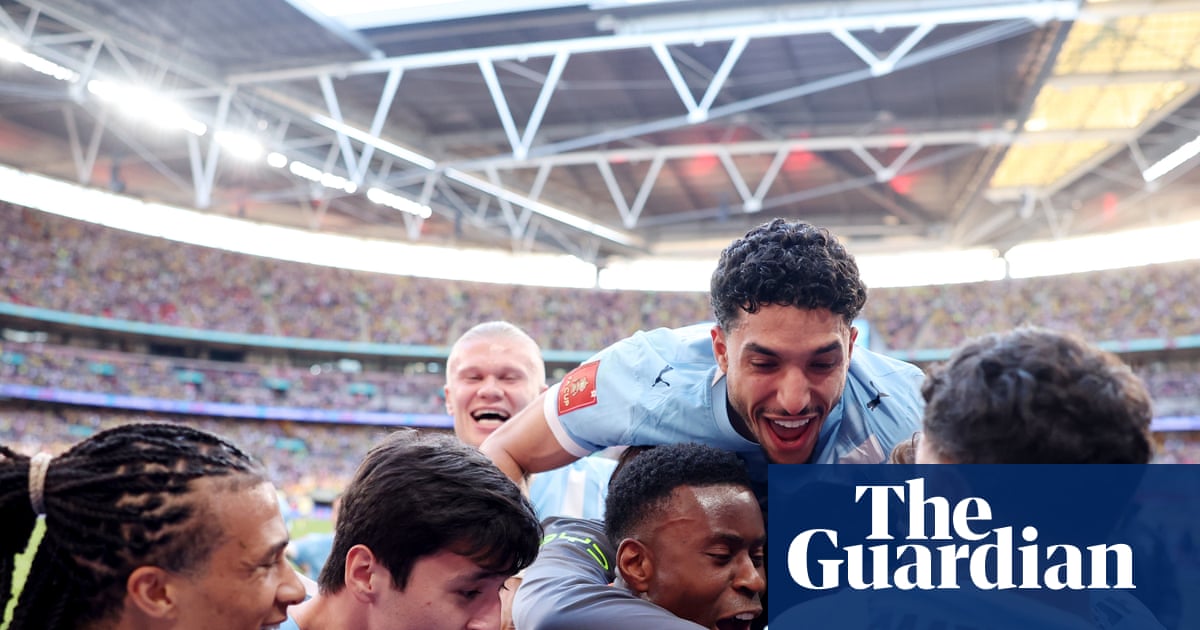
Another year, another trip to Wembley, another piece of silver for the blue half of Manchester. If you went to the pub on Saturday expecting a classic underdog story, you were probably disappointed by the time the second goal hit the back of the net. Manchester City winning the FA Cup has become the footballing equivalent of a software update. It is efficient, it is necessary for their internal systems, and it is completely devoid of any soul.
We have reached a point where watching Pep Guardiola’s side celebrate is like watching a billionaire find a twenty-pound note on the sidewalk. It is nice for them, sure, but it does not change their lives. Meanwhile, the rest of us are left wondering why we spent two hours of a perfectly good Saturday afternoon watching a foregone conclusion. The game itself felt like a training exercise where one team had all the cheat codes and the other was playing with a broken controller.
The efficiency is the problem. There is no friction in City’s game anymore. They do not scramble for wins; they manufacture them. When the final whistle blew, the players looked more relieved that the season was winding down than ecstatic about the silverware. It is a strange era for the sport when the most prestigious domestic cup in the world feels like a checkbox on a corporate to-do list.
The Football Weekly verdict on a hollow victory
The crew over at Football Weekly had the unenviable task of trying to make this sound interesting on Monday morning. As The Guardian reported, Max Rushden was joined by the usual suspects to dissect the remains of the weekend. Barry Glendenning sounded exactly as cheerful as you would expect, which is to say he sounded like a man who had just been told his favorite pub was being turned into a luxury apartment complex.
John Brewin and Dan Bardell tried to find some tactical nuance, but let’s be honest, there is only so much you can say about Rodri controlling a midfield like a traffic cop. The conversation eventually veered into the territory we all know is coming. With the UCL Final just 10 days away on May 28, the focus is already shifting to whether City can do the double-double or whatever ridiculous mathematical feat they are chasing this time.
The panel touched on the strange atmosphere at Wembley. It was loud, yes, but it lacked that jagged edge of desperation. When City win, the air goes out of the room. You can appreciate the brilliance of Kevin De Bruyne finding a gap that shouldn't exist, but it’s hard to fall in love with a machine. It’s like being asked to admire the engineering of a very expensive vacuum cleaner. It works perfectly, but you wouldn't write a poem about it.
The real drama was north of the border
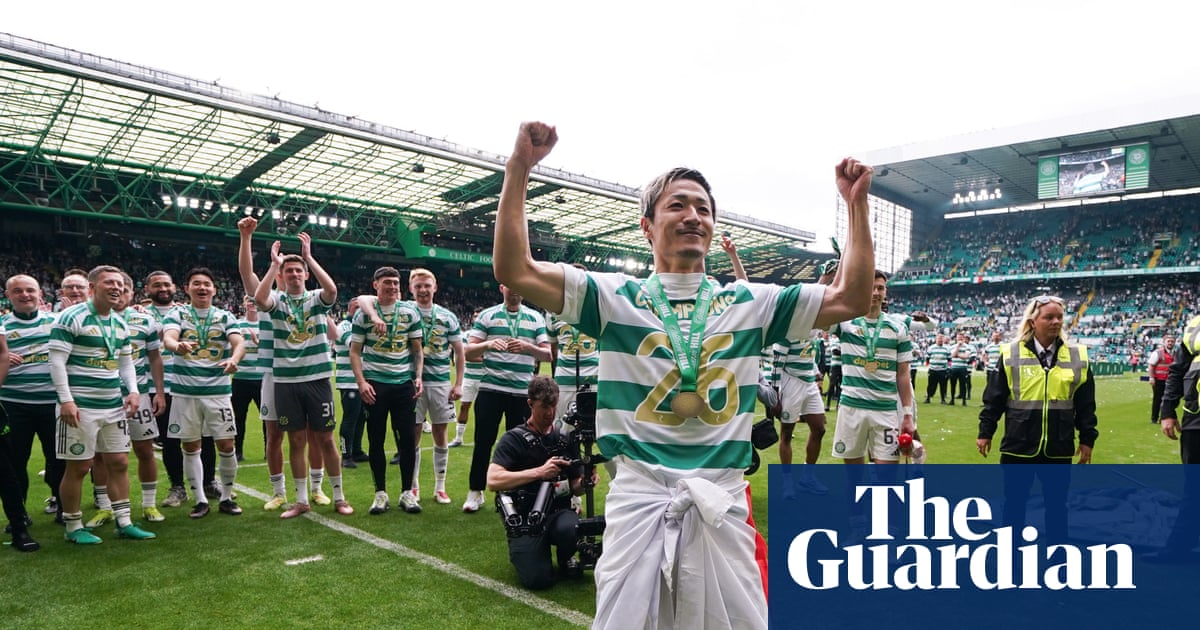
While City were clinical, the scene at Celtic Park was pure, unadulterated chaos. Hearts traveled to Glasgow with hope, and they left with their chests stepped on. Ewan Murray joined the panel to discuss the 'Hearts heartbreak,' and you could hear the fatigue in his voice. This is what football is supposed to feel like—awful, draining, and deeply unfair.
Hearts fans have spent the season believing they could finally bridge the gap, only to have the door slammed in their faces at the death. Celtic doing what Celtic does isn't much different from City's dominance in terms of results, but the emotional stakes feel entirely different. In Scotland, every inch of ground is fought for with a level of spite that the Premier League has long since traded for global marketing rights.
The contrast between the two matches was jarring. One was a display of financial and technical superiority that felt inevitable from the tenth minute. The other was a messy, loud, emotional wreck that left half the stadium in tears and the other half in a state of delirium. I know which one I’d rather watch if I wanted to remember why I started following this stupid sport in the first place.
The dark cloud that won't go away
We have to talk about the elephant in the room, and no, I’m not talking about Erling Haaland’s physical stature. The 115 charges still loom over every trophy City lifts like a persistent rain cloud at a garden party. Every time a commentator mentions 'the legacy of Pep,' there is an asterisk the size of a stadium sitting right next to it. It makes the entire spectacle feel brittle.
The Premier League is in a weird spot. We are told this is the greatest era of the competition, but it is also the most predictable. City have turned a 38-game marathon into a victory lap. Their bench on Saturday probably cost more than the entire starting eleven of most mid-table teams. That is not a critique of the players—they are incredible—but it is a critique of a system that allows one team to hoard all the talent and then act surprised when nobody else can keep up.
Is it even possible for City to have a 'bad' game anymore? Even when they are off, they are still better than 95 percent of the planet. They win when they play well, and they win when they play poorly. For a neutral, that is the definition of a boring product. We are watching a team that has solved football, and it turns out the solution is just having infinitely more resources than everyone else.
Looking ahead to the global stage
With the domestic season essentially wrapped up in England, the countdown to the FIFA World Cup 2026 is officially on. We are only 24 days away from the kickoff on June 11. Maybe that’s what we all need. A break from the relentless, repetitive dominance of state-backed clubs and a return to the glorious randomness of international football.
The World Cup represents a reset button. In that tournament, you can't just buy a new left-back because your current one had a slightly sub-par Tuesday. You are stuck with what you’ve got. That level of limitation breeds the kind of creativity and desperation that is currently missing from the top end of the English game. We might actually see an underdog win a game they aren't supposed to.
But before we get there, we have to suffer through the Champions League final hype. Expect ten days of pundits telling us that City are 'favorites' as if that is some sort of profound insight. If they win that too, the season ends on a note of utter predictability. It will be another trophy, another parade, and another set of fans wondering if the sport is ever going to be competitive again.
The price of perfection is boredom
There is a critical point that needs to be made here. City’s perfection is impressive, but it is also exhausting. We are being asked to celebrate a team that has removed the possibility of failure. Without the risk of losing, the joy of winning starts to evaporate. You can see it in the eyes of the fans in the stands—they expect to win. There is no tension, only the relief of meeting an expectation.
The FA Cup used to be the place where the impossible happened. Now, it’s just the place where City goes to collect their mail. If the 2026-27 season doesn't bring some kind of meaningful challenge to this hegemony, we might as well just hand them the trophies in August and spend the rest of the year watching highlights of the 1990s when the league was actually a mess.
Hearts losing to Celtic was miserable for their supporters, but at least it felt real. It felt like something was at stake. City winning at Wembley felt like a £100 million commercial for a project that doesn't need any more advertising. We are living through the era of the super-club, and frankly, I'm ready for a change of pace. Bring on the World Cup, bring on the chaos, and for the love of the game, let's hope someone, somewhere, finds a way to make City sweat.
The FA Cup final should be a peak, a culmination of a journey. Instead, this one felt like a stop on a very long, very expensive train ride to a destination we've already visited five times. The beers at the pub were cold, the company was good, but the football was just... expected. And that might be the saddest thing you can say about a cup final.