The build-up to Portugal's opener against DRC
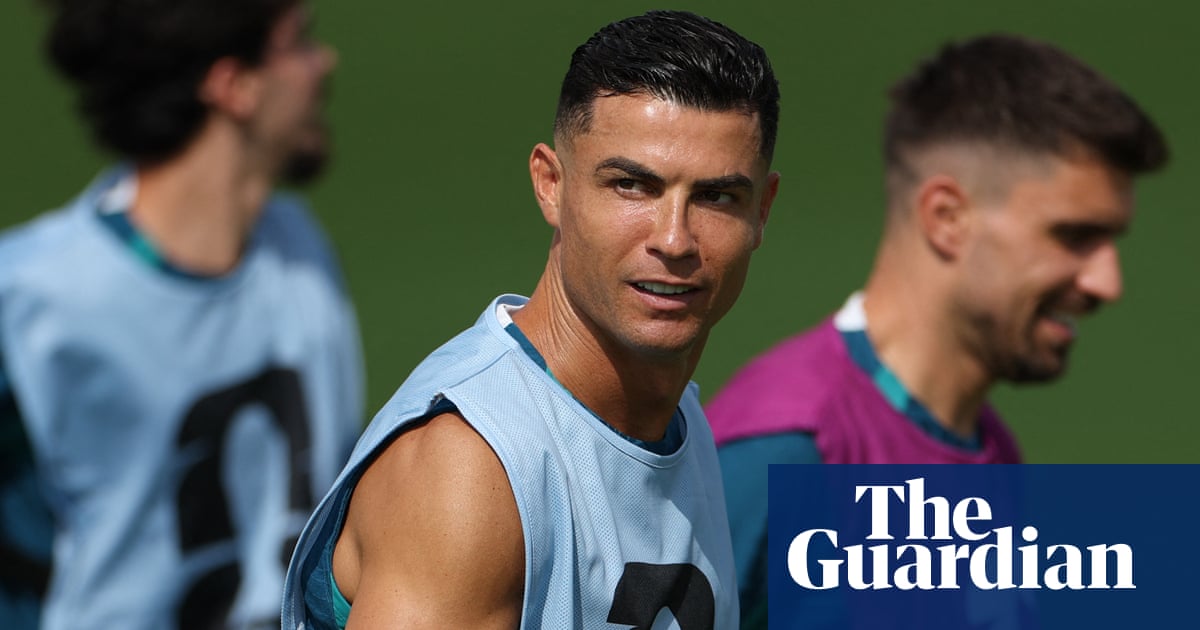
Cristiano Ronaldo is set to embark on his sixth consecutive World Cup appearance this Wednesday at NRG Stadium in Houston. The venue, legendary for its rodeo history, will now host a different kind of spectacle as the veteran forward looks to prove he still possesses the agility to dictate play against the Democratic Republic of Congo.
The build-up has been dominated by questions regarding his role within the squad. At this stage of his career, the transition from undisputed talisman to a rotational strategic asset has created friction in public expectations. Coach Roberto Martinez maintains that the veteran remains central to the game plan.
Ronaldo remains a lightning rod for tactical debate
The decision to feature a 41-year-old starter at the highest international level invites skepticism. While his movement inside the penalty area remains lethal, the defensive transition phase for Portugal suffers when he stays high up the pitch. Opponents have identified this gap as a primary target for counter-attacks during the group stage.
Martinez defended the inclusion during Monday night's media availability. He pointed toward training metrics and the gravity Ronaldo creates near the opposition goal. When defenders abandon their zones to track him, space opens for runners like Rafael Leao and Bruno Fernandes.
The team functions through his positioning as much as his finishing. He provides the structure that allows our younger playmakers to operate in pockets of space.
That quote captures the reliance Martinez places on the captain, yet it highlights the potential tactical flaw. If the match against DRC becomes a track meet, Portugal could find themselves defensively exposed. A team needs to balance legacy with current output, and the reliance on a single focal point can sometimes freeze a creative offense.
Pressure mounting at NRG Stadium
Wednesday's fixture is more than a standard group match. Portugal enters the tournament under immense scrutiny, with fans expecting a deep run. Historically, the team has struggled with early-round complacency, and the DRC side is built on a physical, high-pressing identity that thrives on disrupting rhythm.
If Ronaldo fails to score or influence the build-up by the 60th minute, the calls for a substitution will grow louder. The rotation of the squad often mirrors the tension between individual milestones and team performance. Managing this balance has become the central subplot of Portugal's summer.
The 2026 World Cup has seen previous tournament stars struggle to regain their peak form after long club seasons. Ronaldo enters this tournament off the back of a grueling domestic campaign. Fatigue, rather than skill decline, typically determines how a player performs in the late stages of their career.
Expectations for this match are high, but the reality for Portugal remains dictated by their ability to defend against speed. If they cannot control the midfield to mitigate the counter, the captain’s legacy may be overshadowed by an early tournament exit. The preparation window has closed; now the performance dictates the narrative. Analysts are waiting to see if his conditioning holds for a full 90 minutes.
The DRC defense will likely employ a man-marking scheme on set pieces. Ronaldo remains among the best in the air, creating a constant threat on corners and free kicks. Tactical execution will rely on whether the midfield can deliver accurate service into the box.
If Portugal manages to secure a comfortable win, the criticism regarding his leadership will subside. However, a draw or loss will turn up the heat on the coaching staff. For now, the focus is entirely on Houston. The world watches to see if one final run is possible.
Read Next
- Kylian Mbappe injury concerns mount despite France's World Cup win over Senegal
- Jalal Hassan’s blunder was a World Cup horror show for the ages
- Ghana's visa meltdown is handing the World Cup to everyone else
- Thomas Partey is sidelined for Ghana's World Cup opener
- 🏆 World Cup 2026 — Full Coverage Hub
- 🇵🇹 Portugal World Cup 2026 — A Seleção Hub