The Florence survival and the tactical shift
The final whistle in Florence did more than just confirm a result; it signaled the arrival of a version of Crystal Palace that few expected to see this late in the season. Navigating a knockout tie at the Stadio Artemio Franchi requires a level of emotional discipline that has often eluded this squad in domestic competition. In the second leg against Fiorentina, Palace demonstrated a defensive compactness that felt choreographed rather than desperate. They played with a mid-block that restricted the space between the lines, forcing the Italians into wide areas where their crossing was largely ineffective.
Despite the early nerves and a penalty that allowed Fiorentina to pull one back, the response from the visitors was calculated. Many teams would have retreated into a deep shell after conceding from the spot, but Palace maintained their verticality. The shape remained rigid, ensuring that the half-spaces were occupied whenever Fiorentina tried to progress through their creative midfielders. It was a performance built on the understanding of spatial geometry, where every player knew exactly when to trigger the press and when to drop off.
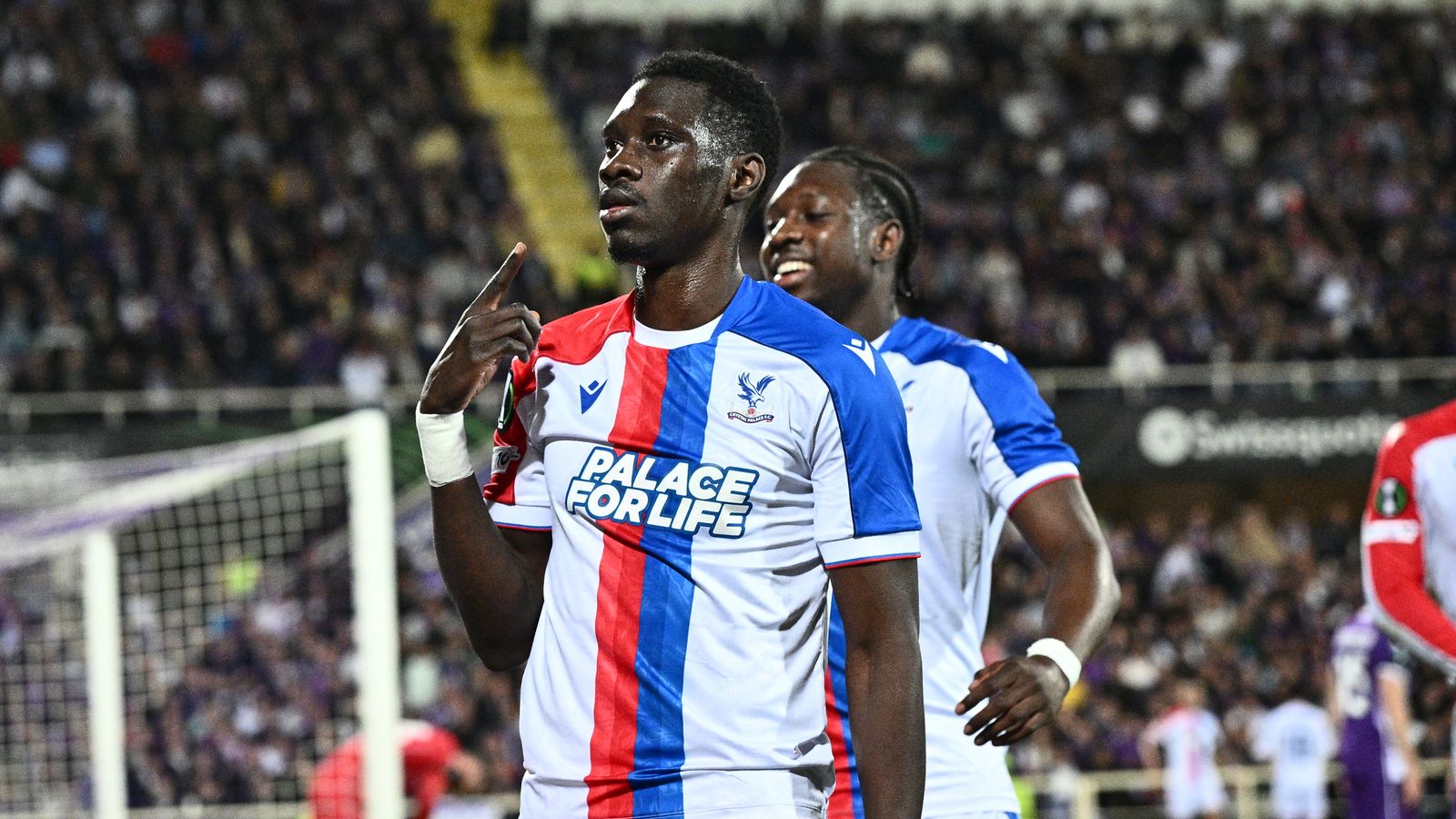
As Sky Sports reported during the match, Palace eventually weathered the storm to reach their first-ever European semi-final. This wasn't just about luck or a goalkeeper standing on his head; it was about a structural superiority that allowed them to absorb pressure without fracturing. They looked like a team that had spent weeks drilling these specific defensive rotations, and the payoff was a place in history.
The Guessand-Pino pivot and tactical flexibility
One of the most revealing moments of the quarter-final was the decision to replace Evann Guessand with Yeremy Pino. Guessand had struggled for much of the first hour, failing to provide the outlet needed to relieve the pressure on the back four. His hold-up play was erratic, and he frequently lost the physical battle against the Fiorentina center-backs. While his work rate off the ball cannot be questioned, he lacked the technical security to keep possession in the final third when the team was under siege.
Pino's introduction changed the dynamic of the transition. He offered a different profile—a player who could drift between the lines and turn quickly, forcing the Fiorentina markers into uncomfortable decisions. Suddenly, the long balls that were coming back at the Palace defense were being controlled and recycled. This tactical tweak was the catalyst for the period where Palace began "cruising" toward the finish line. It highlighted a growing sophistication in the dugout, recognizing that a change in personnel was needed to alter the geometry of the game.
However, the reliance on these mid-game adjustments points to a larger issue that must be addressed before the semi-final. Palace cannot afford to start games as passively as they did in Florence. A more clinical opponent would have punished their early lethargy long before the penalty was awarded. The lack of an early goal threat remains a significant concern, as they often require a defensive crisis to spark their attacking intent.
Defensive metrics and the semi-final hurdle
Looking at the data from the quarter-final second leg, the resilience is backed by the numbers. Palace registered a total of 28 clearances inside their own penalty area, with sixteen of those coming in a frantic twenty-minute spell in the second half. Their ability to manage the chaos of a high-pressure European night is a development that will serve them well in the upcoming semi-final. They aren't just surviving; they are actively managing the tempo of the opposition's attacks.
The next opponent will likely present a different set of challenges, particularly in terms of individual quality in one-on-one situations. While the collective block worked against Fiorentina's predictable wing-play, the semi-final will require a higher level of individual defensive responsibility. The full-backs, in particular, will need to be more aggressive in their positioning to prevent elite wingers from cutting inside. Relying on a low block for 90 minutes is a high-risk strategy that rarely pays off against the top-tier sides remaining in the competition.
There is also the matter of physical fatigue. The squad looked visibly drained by the 85th minute in Italy, with several players struggling to track back during transitions. With the semi-final first leg scheduled for April 28, the recovery protocol will be just as important as the tactical meetings. Rotation in the domestic league might be necessary, even if it risks a slide in the table, because the chance to reach a European final is a once-in-a-generation opportunity for this club.
A critical look at the discipline gap
For all the praise directed at their defensive shape, the penalty concession was a avoidable disaster. It was the result of a lapse in concentration that nearly invited a full-scale collapse. In a European semi-final, these margins are non-existent. You cannot give away a penalty against the run of play and expect the rest of the team to bail you out. It was a sloppy challenge, born from a failure to track a third-man run, and it exposed a vulnerability in the way Palace handle late entries into the box.
The team also needs to improve their efficiency on the break. They squandered three clear-cut opportunities to kill the game off before the final minutes, often choosing the wrong pass or hesitating when the shot was on. Against a semi-finalist, you might only get two such chances in the entire tie. If Palace want to move beyond being a feel-good story and actually lift the trophy, they must find a way to be more ruthless when the game opens up.
The list below outlines the three tactical pillars that will determine if Palace can survive the semi-final stage:
- Midfield Screen: The double pivot must maintain a distance of no more than 10 meters from the center-backs at all times.
- Transition Speed: The ball must move from the defensive third to the wingers in under four seconds to catch the opponent's full-backs out of position.
- Set-Piece Efficiency: In a tight tie, a single corner could be the difference; Palace need to capitalize on their height advantage.
The road to the final in May
The semi-final is not just a game; it's a test of whether the club has truly outgrown its mid-table identity. There is a sense of belief in the dressing room that didn't exist six months ago. You can see it in the way they celebrate small victories—a blocked shot, a won header, a successful offside trap. They are starting to enjoy the dark arts of defending, and that is a dangerous trait for any opponent to face.
The upcoming semi-final on April 28 will be the biggest night in the history of the club. The atmosphere at Selhurst Park for the home leg will be hostile and intense, but the tactical execution will need to be cold and clinical. They have shown they can handle the "storm" of an away day in Italy. Now they need to show they can be the ones creating the pressure, dictating the terms of engagement from the opening whistle.
Crystal Palace have earned their place at this table. They didn't stumble into the semi-finals; they fought through a grueling quarter-final and emerged with a tactical blueprint that works. If they can tighten the defensive errors and integrate Pino more effectively from the start, there is no reason they won't be in the final on May 28.
The Final Call
Expect a cagey first leg where Palace prioritize a clean sheet over attacking flair. They will look to keep the game tight, potentially aiming for a 0-0 or a narrow lead to take into the second leg. The tactical discipline shown in Florence is now the baseline, not the exception. It won't be pretty, and the fans might get nervous, but this team knows how to suffer for a result.
I am predicting a professional 1-0 win for Palace in the first leg of the semi-final. They will snatch a goal from a set-piece and then put on a defensive clinic that frustrates the opposition for the remainder of the night. It is a bold call, given the quality of the remaining teams, but the structural integrity of this side is currently at an all-time high. The dream of a European trophy is no longer a fantasy; it is a tactical possibility.