How season-ending injuries happen
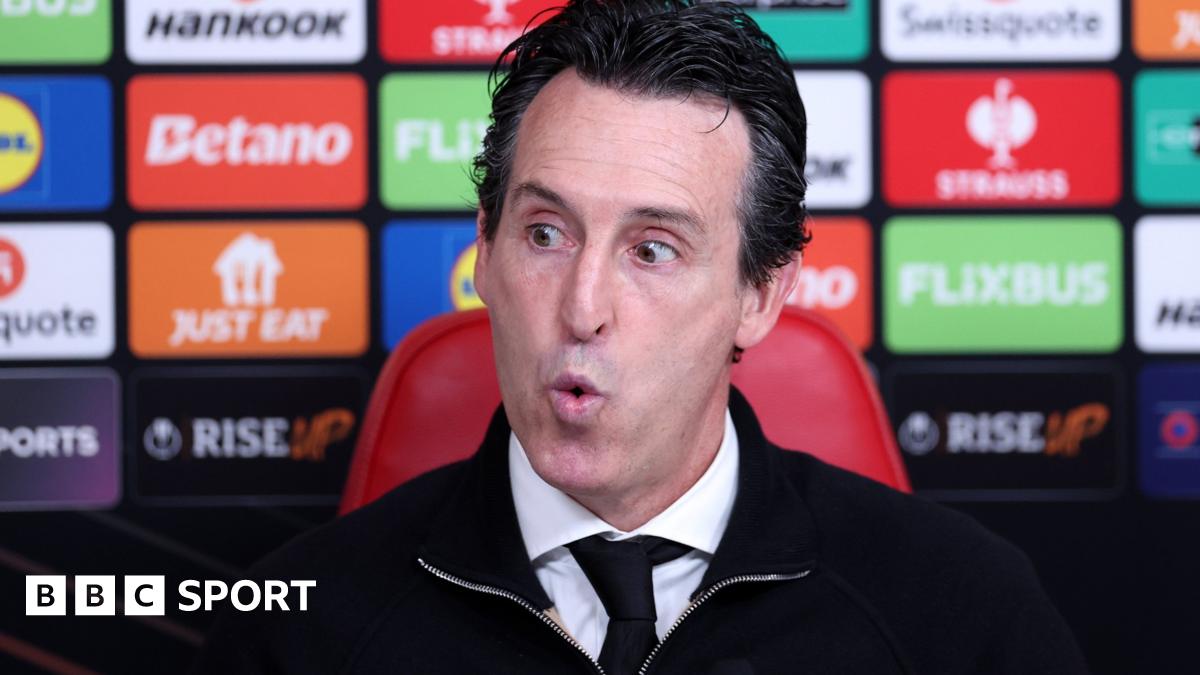
Speaking to Sky Sports, Unai Emery did not mince his words after Aston Villa's Europa League semi-final against Nottingham Forest. Elliot Anderson went in late, studs raised, and avoided a red card. The Spanish manager stated bluntly that the challenge could have broken an ankle.
He is absolutely right. When we look at the biomechanics of a high-speed football tackle, the margins between a bruised shin and a shattered tibia are terrifyingly thin. Anderson's challenge possessed all the hallmarks of a career-threatening impact.
The mechanism of injury in these scenarios is well documented in sports medicine. A player has their foot planted firmly on the turf. An opponent arrives late, applying massive kinetic energy directly to the lower leg or ankle joint. Because the foot is trapped by the studs in the grass, the joint absorbs the entire impact.
If the tackle strikes the lateral side of the ankle, the force aggressively inverts the foot. The anterior talofibular ligament is the first to stretch. If the force exceeds the ligament's tensile strength, it tears, resulting in a Grade III sprain.
If the contact occurs slightly higher, above the ankle mortise, it targets the syndesmosis. This is the dense fibrous tissue connecting the tibia and fibula. A tear here results in a high ankle sprain, a notoriously frustrating injury that can cost a player 10 to 12 weeks of the season.
The bone-breaking threshold
Then there is the worst-case scenario. If the sheer force of the tackle hits the fibula directly while the foot is anchored, the bone snaps. That is a distal fibula fracture, often accompanied by a dislocation of the ankle joint itself.
This is the exact nightmare Emery was referencing. A fraction of a second, or a millimeter of different contact, was the only thing preventing a catastrophic injury.
"He could have broken his ankle!"That was Emery's entire assessment, and it holds up to medical scrutiny.
Aston Villa's medical staff had to sprint onto the pitch to assess the damage. The immediate on-field check for this type of trauma is incredibly tense. The physios must rule out structural damage before allowing the player to stand.
- They perform a squeeze test on the calf to check the syndesmosis integrity.
- They palpate the medial and lateral malleolus to check for localized bone pain.
- They ask the player to perform active dorsiflexion and plantarflexion against resistance.
Only when the joint is deemed stable can the player resume running. But adrenaline masks a huge amount of pain. It is extremely common for a player to finish the half, sit down in the dressing room, and find their ankle has swollen to the size of a tennis ball.
VAR fails its primary objective
The anger radiating from the Aston Villa dugout was entirely justified. The video assistant referee system was introduced to English and European football with one primary selling point. It was supposed to eliminate obvious refereeing errors, specifically concerning serious foul play.
Yet, the system failed entirely during this critical semi-final. The officials in the booth have access to dozens of camera angles and can review the point of contact in extreme slow motion. They can see the intensity, the height of the boot, and the vulnerability of the tackled player.
The failure to upgrade Anderson's challenge to a red card is a damning indictment of current officiating standards. The referees constantly hide behind the subjective threshold of what constitutes a clear error. This is a cowardly approach to player safety.
If a tackle endangers the safety of an opponent, the rules mandate a red card. There is no subjective gray area when studs make contact with an ankle joint at high speed. The current implementation of VAR prioritizes the flow of the game over the physical wellbeing of the athletes.
It is a critical flaw in the system. The people operating the technology are terrified of re-refereeing the game. As a result, they ignore challenges that belong in the dark ages of the sport.
A dark history of broken legs
English football fans have seen this exact tackle go wrong too many times. We know exactly what happens when the victim is a split-second slower to react.
In 2008, Eduardo da Silva suffered a horrific broken leg and dislocated ankle following a tackle by Martin Taylor. The mechanism was identical to what we saw from Anderson. It was a late, clumsy challenge on a planted leg.
Two years later, Aaron Ramsey suffered a double fracture of his lower leg against Stoke City. Again, the tackle was aggressive, late, and hit a planted leg.
More recently, Harvey Elliott suffered a fracture-dislocation of his ankle against Leeds United. The visual of Elliott screaming on the turf is burned into the memory of anyone who watched it.
In every single one of those tragic incidents, the offending player did not set out to break a leg. They were simply late to the ball and reckless with their momentum. Intent is irrelevant in sports medicine, because the physics of the impact determine the injury.
Anderson was reckless. By leaving his feet and exposing his studs, he lost control of his own body mass. He surrendered his ability to pull out of the tackle. That recklessness is exactly what the red card was invented to punish.
The psychological toll of a near-miss
We often talk about the physical recovery from injuries, but the psychological impact of a near-miss is profound. When a player narrowly avoids a broken ankle, it changes how they play the rest of the game.
The nervous system remembers trauma. A player who just watched studs scrape down their ankle will subconsciously hesitate in their next fifty-fifty challenge. They will pull out of tackles a fraction of a second early.
In a high-stakes match like a Europa League semi-final, that hesitation can cost a team the tie. The player might physically be able to run, but their defensive timing is destroyed by the entirely rational fear of getting hurt.
This tackle did not happen in a vacuum. We have to look at the broader context of the football calendar right now. Teams are playing their fiftieth or sixtieth match of the season.
Aston Villa and Nottingham Forest are both fighting immense physical fatigue. When players are exhausted, their decision-making degrades rapidly. They dive into tackles they would normally stay on their feet for.
Their timing is compromised by heavy legs. This is where the referee has to step in and manage the danger. An exhausted player is a dangerous player.
The tactical fallout
If the referee does not draw a hard line early with yellow and red cards, tired players will continue to make sloppy, dangerous challenges. Emery knows this. His fury at the officials was not just about the single tackle by Anderson.
Aston Villa survived the tackle without a broken bone, but the tactical dynamic of the match shifted completely. Forest kept eleven men on the pitch when they absolutely should have been reduced to ten.
Playing a man down forces a team into a low block. It ruins their pressing triggers and forces their wingers to play as auxiliary fullbacks. Villa were robbed of that massive tactical advantage by a hesitant VAR booth.
Instead, Forest maintained their shape and their numbers. Anderson was allowed to continue influencing the midfield battle. The injustice of the decision clearly frustrated the Villa players, leading to a loss of focus in the immediate aftermath.
Emery will use this sense of injustice to fuel his team. He is a master of creating a siege mentality. He will point to the VAR failure as evidence that the footballing authorities are against them.
But behind closed doors, he will be having very serious conversations with his medical staff. He will demand constant monitoring of the affected ankle over the next forty-eight hours. The inflammatory response often peaks two days after the initial trauma.
What looked like a lucky escape on the pitch could still turn into a nagging ligament issue that ruins the rest of the month. Aston Villa escaped a catastrophe this time, but the authorities need to wake up before another player's career is permanently altered.