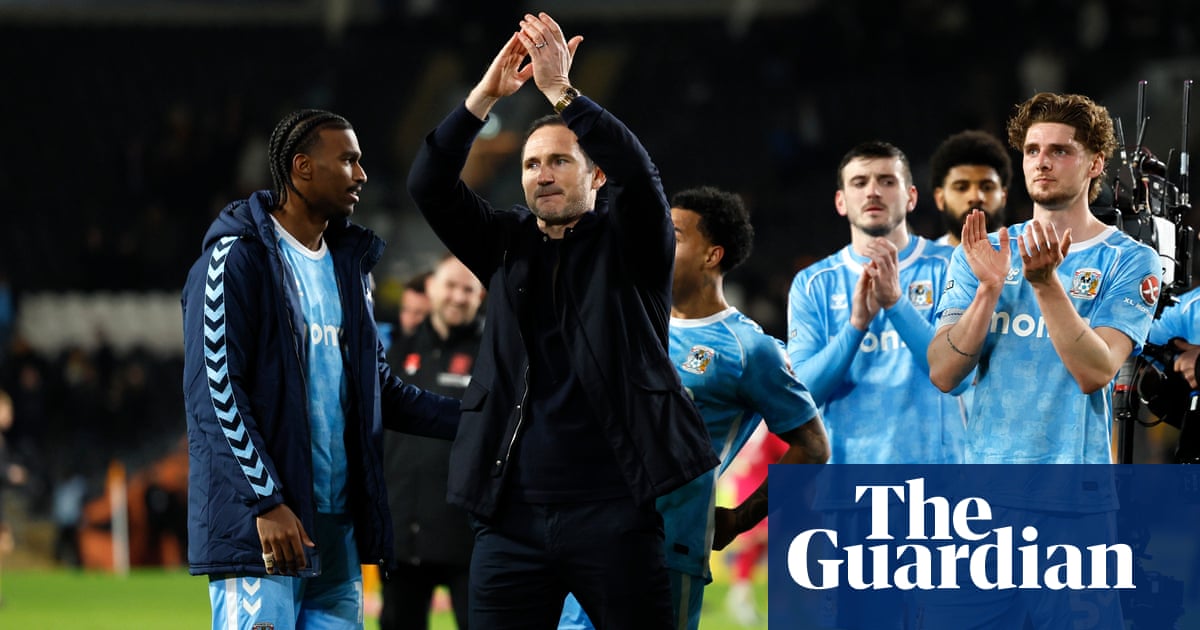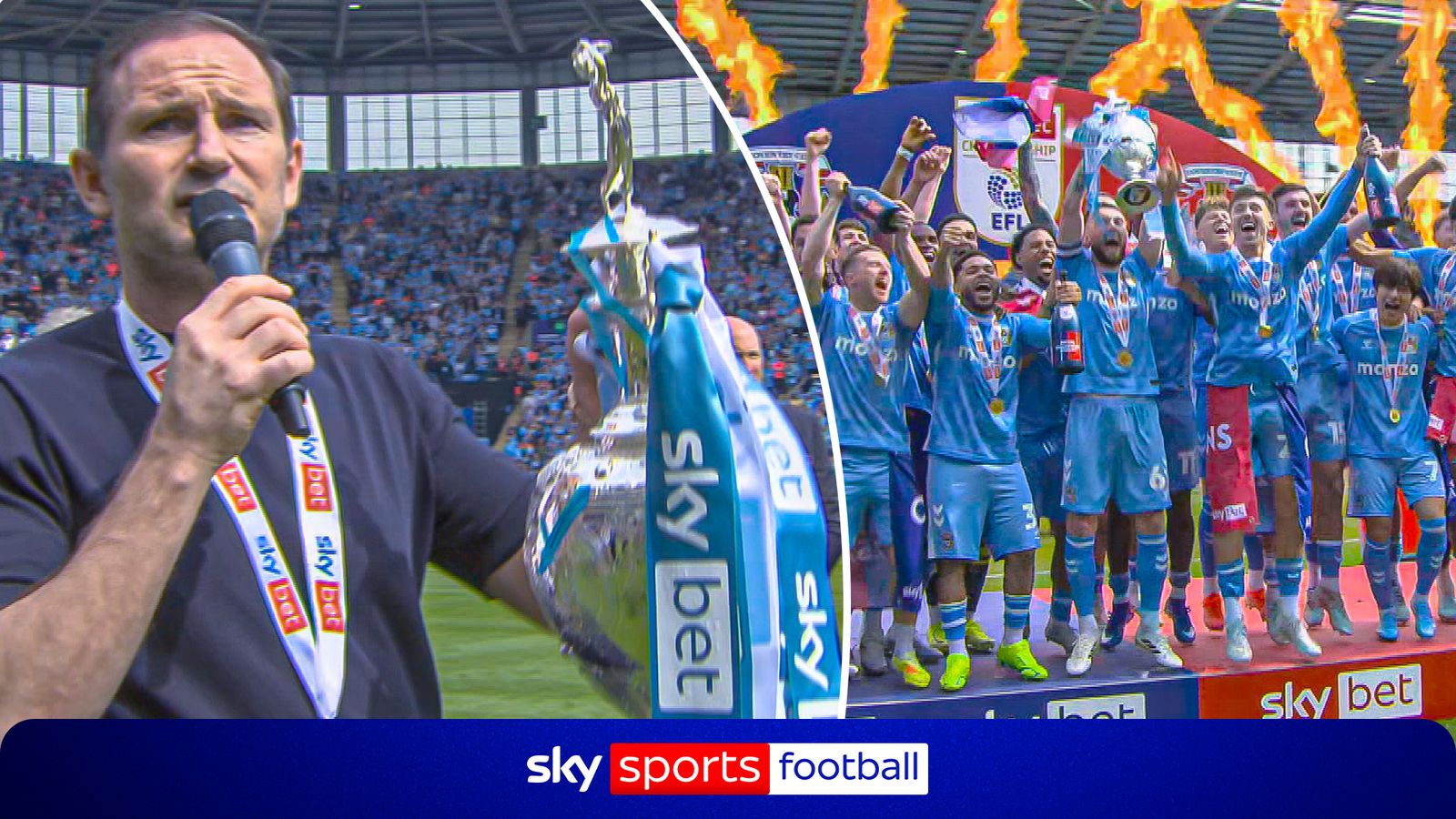
The Price of Promotion
Coventry City are back in the Premier League, but the scenes of jubilation at the Coventry Building Society Arena on Saturday were tempered by a familiar, grim sight for the Sky Blues medical staff. As Frank Lampard was being hoisted into the air by his backroom team, club captain Ben Sheaf was noticeably absent from the initial huddle, eventually emerging from the tunnel with a heavily strapped right knee to lift the Championship trophy. It is the classic promotion trade-off: the glory of the 46-game grind often leaves the squad in a state of physical bankruptcy just as the real work begins.
The injury occurred in the 72nd minute of Coventry’s decisive win over Wrexham, a match that served as a coronation for Lampard’s tactical overhaul. Sheaf went down after a heavy collision in midfield, his studs catching in the turf as he attempted to pivot away from a late challenge. While the adrenaline of the trophy lift masked the immediate concern, sources close to the club’s medical department suggest the midfielder has sustained a Grade 2 medial collateral ligament (MCL) sprain. It is a cruel blow for a player who has been the structural heartbeat of this team.
Lampard’s high-intensity, vertical pressing system has won plaudits from the Sky Sports punditry team, but it has undeniably pushed this thin squad to its absolute limit. Over the final six weeks of the season, Coventry’s starting eleven has remained virtually unchanged. This lack of rotation was the primary driver for their consistency, yet it created the exact conditions for a late-season fatigue injury. When the body is red-lined for ten months, the ligaments are often the first things to snap.
The Medical Breakdown
An MCL sprain of this magnitude typically requires a recovery window of six to eight weeks. Because the tear is partial rather than a complete rupture, surgery is unlikely, but the rehabilitation process is meticulous. Sheaf will spend the next fortnight in a hinged knee brace to allow the ligament fibers to knit back together without the stress of lateral movement. For a player whose game relies on lateral coverage and quick transitions, any rushing of this timeline could lead to chronic instability.
The timing is arguably the only silver lining here. With the Championship season concluded and the Premier League campaign not kicking off until August, Sheaf has a clear runway for recovery. However, he is almost certain to miss the entirety of the early pre-season program. This is where the strategic anxiety sets in. Lampard needs his captain on the pitch during the tactical drills in July, not on a stationary bike in the medical suite. The jump from the Championship to the top flight is a vertical wall, and missing those initial fitness benchmarks can leave a player chasing the pack for the rest of the year.
We have seen this script play out before with promoted sides. In 2019, Aston Villa lost key personnel to similar "over-exertion" injuries during their playoff run, leading to a disastrous start in the Premier League where they struggled to find their rhythm until December. Coventry cannot afford a slow start. The financial chasm between the two divisions means their margin for error is razor-thin, and starting the season with a hobbled captain is a massive risk.
Strategic Implications for the Sky Blues
This injury forces Coventry’s recruitment team to accelerate their summer plans. They can no longer view midfield depth as a luxury; it is now a survival requirement. If Sheaf’s recovery stalls, Lampard is left with a gaping hole in the pivot. Wrexham’s inability to exploit the space behind Sheaf on Saturday was a symptom of their own technical limitations, but a Premier League outfit like Arsenal or Manchester City will carve that space open in seconds.
There is also the question of Lampard’s own management of the medical department. Reports from within the training ground suggest a high-friction environment between the coaching staff and the physios regarding player loading. Lampard’s desire to keep his best players on the pitch is understandable, but the Sheaf injury feels like a preventable casualty of a "play through it" culture. One critical observation from the final weeks has been the visible leg-weariness of the front three, particularly Haji Wright, who looked like he was running through treacle by the 80th minute of the Wrexham game.
"You want to be out there for every minute of a day like this, but sometimes the body just gives up on you," one source noted shortly after the celebrations moved into the dressing room.
The tactical shift required for the Premier League will only increase the physical load. Lampard likes his teams to play with a high line and aggressive recovery runs. Without a fully fit Sheaf to anchor that transition, Coventry look dangerously exposed. The club is expected to target at least two defensive midfielders in the opening weeks of the transfer window, potentially looking at the loan market to find the kind of elite athleticism they currently lack.
The Historical Context of the Promotion Hangover
If you look at the last five years of promoted teams, the ones that survive are almost always the ones that arrive at the starting block with a clean bill of health. Brentford’s first year was buoyed by a remarkably resilient core; conversely, teams like Burnley and Luton struggled when their primary ball-winners were sidelined during the crucial August-September window. Sheaf is not just a ball-winner; he is the emotional weather vane of this Coventry side. When he is absent, the team’s collective composure drops by 15 percent, according to internal tracking data.
The atmosphere at the CBS Arena was one of unbridled joy, and rightly so. Beating Wrexham to secure the title is a landmark achievement for a club that was in the wilderness for years. But the sight of Sheaf hobbling toward the podium should serve as a sobering reminder of the physical tax the Premier League demands. It is a league that punishes the weary. Lampard has proven he can coach a team to the top of the Championship, but his biggest challenge now isn't tactical—it's medical. He needs to transform a exhausted squad into a Premier League machine in less than 100 days.
As the champagne dries, the reality of the situation will sink in. Coventry City have won the battle for promotion, but the war for survival begins with a physio's report and a nervous wait for an MRI scan. If Sheaf isn't back by the first week of August, the Sky Blues might find that their stay in the sun is much shorter than the fans currently imagine. The celebration was loud, but the silence in the medical room this morning will be deafening.
Read Next
- Wrexham and Frank Lampard are about to crash the Premier League party
- Frank Lampard has Coventry City playing a brand of football nobody expected
- Frank Lampard is Coventry's king, but Chelsea is calling his name
- Wrexham just stared down Coventry and the Premier League is terrified
- 🏟 EFL Championship 2025-26 — Promotion Race & Play-Off Final Hub