
The fallout of the latest statement
Galatasaray have officially launched a scorched-earth campaign against Turkish officiating. The club issued a blistering statement accusing referees of having what they describe as "evil inside" them, bringing the domestic Super Lig to a chaotic standstill only days after the club announced the total suspension of relations with the Turkish Football Federation.
The move marks a departure from standard diplomatic protests common in European football. Rather than targeting specific bad calls or VAR controversies, the current leadership is attempting to delegitimize the entire body of officials currently employed by the federation. The club is clearly betting that high-pressure tactics will yield institutional changes before the league reaches its final matchday.
The history of the dispute
Tension in the Turkish top flight has been simmering all season. The federation’s handling of disciplinary hearings and the perceived lack of transparency regarding referee performance reviews have fueled constant debate across the Istanbul giants. Galatasaray’s leadership is now weaponizing this frustration to gain leverage in a boardroom drama that is beginning to overshadow the racing for the league title.
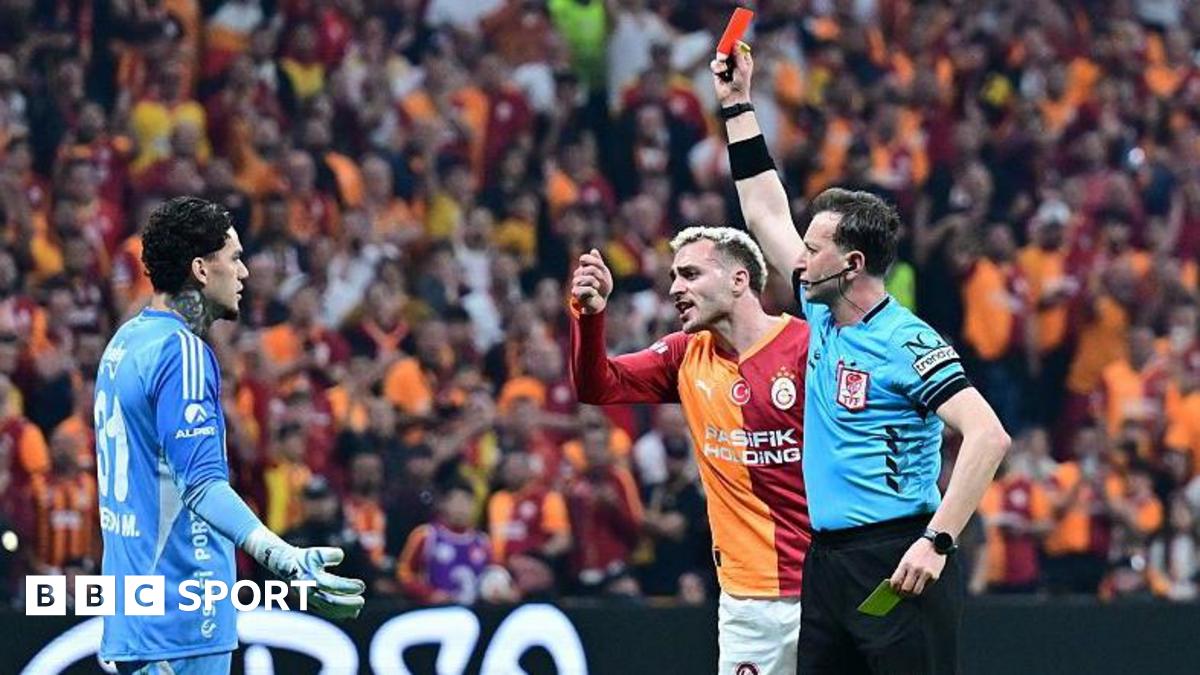
Galatasaray accuse referees in Turkey of having "evil inside" them just days after suspending relations with the Turkish Football Federation.
The decision to formalize these accusations suggests a collapse in communication. When a club publicly labels the match officials as having inherently "evil" motives, the window for mediation closes. It forces the federation into a corner where they must either discipline a massive club or concede that their officiating ranks suffer from deep-rooted integrity issues.
Why this matters for the league
The broader implications for the league are bleak. As BBC Sport reported, this escalated rhetoric suggests we are approaching a point where the fixtures themselves could be threatened by administrative boycotts. A league cannot function if its most prominent participant refuses to engage with the governing body, and the current instability is driving away potential commercial interest at an incredibly sensitive time.
Critics point out that this inflammatory language serves as a convenient distraction from the club's own sporting inconsistencies during this campaign. By manufacturing an external enemy, the management protects the players and coaching staff from accountability during internal slumps. It is a classic move, but one that risks alienating neutral fans who are tired of the constant circus surrounding the Super Lig offices.
The timing is also poor for the federation. They are currently struggling to manage the optics of a league where every match feels like a disciplinary hearing waiting to happen. If the federation does not provide a concrete investigation into the quality of officiating, they lose control of the narrative. Allowing a club to publicly shame referees without evidence crosses a line that typically results in heavy litigation or massive fines.
From a footballing perspective, the product remains sound, but the administrative shell is crumbling. Investors and international media partners look for stability when ranking leagues, and this crisis provides the exact opposite of that. The path forward remains obscure, but it is clear that the status quo is dead.
The board’s refusal to engage with the federation likely means these issues will persist until after the final whistle of the 2026 season. If neither side is willing to blink, a full-scale institutional reform is the only potential path to resolution. Until then, every match involves a heavy cloud of suspicion that renders the actual result secondary to the post-match press release. It is a waste of a season for players who deserve to be the focus of the news cycle.
Expect further fallout in the coming week. The federation will be forced to respond to the "evil" claims, and the club will likely double down on its refusal to talk. Whether this leads to a formal investigation or an ugly legal battle in the courtrooms, the Turkish game is going through its darkest chapter of the year. There is little middle ground left for the parties involved to occupy.
Read Next
- West Ham's lucky escape leaves everyone screaming at the telly
- Esteban Andrada just nuked his own career in 90 seconds
- Man Utd will expose Liverpool's midfield gaps on Monday
- Arsenal and City are trapped in a digital pressure cooker
- 🔥 Turkish Süper Lig 2025-26 — Istanbul Derby Hub
- 🇹🇷 Turkey at the 2026 World Cup — Full Coverage Hub


