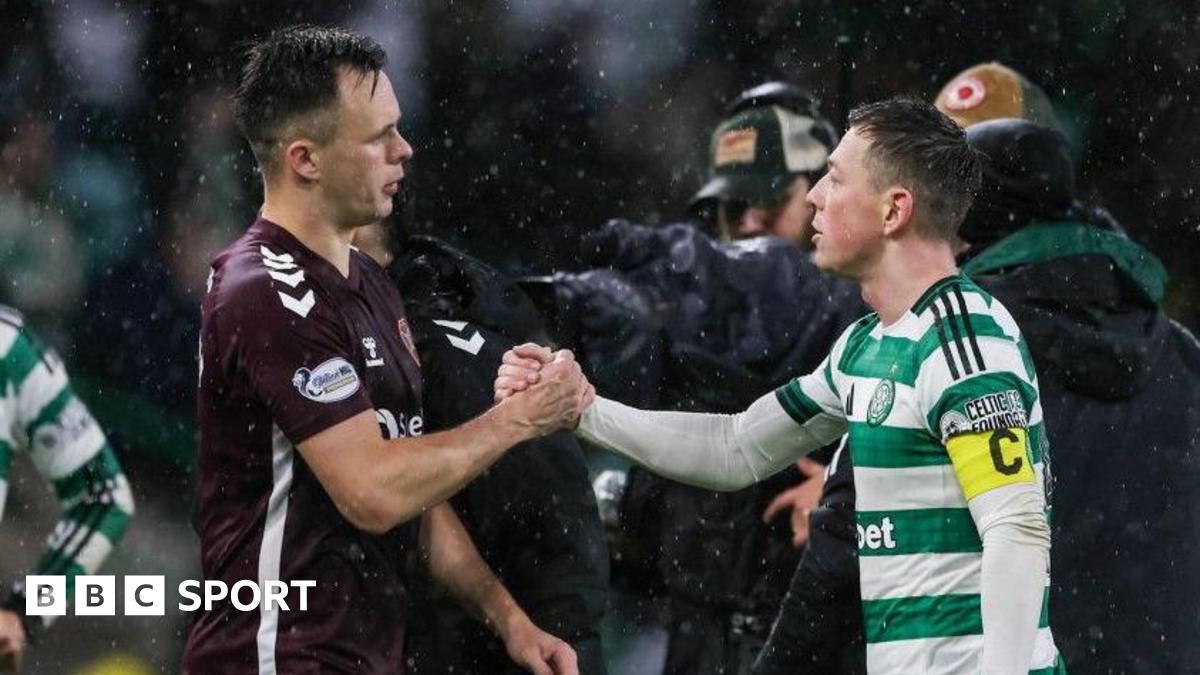
The weight of 41 years and the failure of financial gravity
41 seasons have passed since a team outside of Glasgow lifted the Scottish league title. Sir Alex Ferguson was managing Aberdeen. The year was 1985. Since then, the financial gravity of Celtic and Rangers has flattened the rest of the country.
The Old Firm have monopolized the championship, trading it back and forth while the rest of the division fought for scraps. But today, that unbroken streak faces its greatest existential threat in four decades.
Hearts are 90 minutes away from doing the impossible. As Sky Sports reported, we are looking at a final-day decider in a season unlike any other. It all comes down to a single afternoon. The implications stretch far beyond the borders of Edinburgh and Glasgow. This is a stress test of modern football economics.
To understand the scale of what Hearts are attempting, you have to look at the balance sheets. The wage gap between the Old Firm and the rest of the Scottish Premiership is usually an insurmountable wall. In a typical season, Celtic's wage bill outstrips Hearts by a factor of roughly seven to one.
European prize money has only widened that chasm. Champions League qualification guarantees tens of millions in baseline revenue, allowing the Glasgow clubs to stockpile talent. For Hearts to be in this position after 37 matches defies every accepted scaling law of modern football.
They have not relied on variance or lucky streaks. They have grinded out results through tactical discipline, a relentless pressing structure, and brutal defensive organization. Their points-per-pound efficiency is the highest we have seen in European football this decade. They are operating on a fraction of Celtic's budget but matching them stride for stride. It is a profound indictment of how Celtic have spent their money.
The boardroom shield and the 1014th match
In the opposition dugout stands a figure who represents both Celtic's glorious past and their chaotic present. Martin O'Neill has returned to navigate the club through a turbulent period. This final-day clash marks exactly his 1014th game in football management.
The veteran manager has seen almost everything the sport has to offer, but even he admits the current situation is extreme. O'Neill understands exactly what is at stake. He has managed expectations perfectly all week.
"If you are fortunate enough to get so far, you'll see a lot in 1014 matches in football management."
It is a classic piece of O'Neill rhetoric. He is drawing the pressure onto himself, shielding his players from the intense media scrutiny that has plagued Celtic all season. You do not survive 1000-plus matches on the touchline without mastering the dark arts of press conference deflection.
But there is a darker undercurrent to this fairytale finale. As the Daily Mail forcefully pointed out, O'Neill's presence is acting as a convenient cover for a deeply dysfunctional Celtic hierarchy.
The board created this mess. From disastrous recruitment cycles to a bloated, mismanaged wage structure, Celtic's executives have systematically squandered their financial advantage. They have signed players who do not fit any recognizable tactical system. They have bloated the squad with high-earning reserves.
Using a club legend as a human bulletproof vest to absorb fan anger is an abdication of executive responsibility. It is frankly negligent. The structural decay at Parkhead is exactly why Hearts are even in this position. Celtic should have had this league wrapped up by March. Instead, their internal mismanagement has handed Hearts the keys to the castle.
The ghosts of 1986 and Helicopter Sunday
History is heavy in this part of the world. The BBC correctly labelled this a titanic title duel, but it is also a deeply psychological one. Scottish football has a long, cruel memory for final-day collapses.
The parallels between 1986 and 2026 are impossible to ignore. Exactly 40 years ago, Hearts went into the final day needing only a draw against Dundee to secure the championship. They had gone 27 games unbeaten. They lost 2-0, derailed by two late goals from Albert Kidd.
Meanwhile, Celtic thrashed St Mirren 5-0 and snatched the title on goal difference. The trauma of that collapse is baked into the DNA of the Edinburgh club. For four decades, the 1986 collapse has been the defining tragedy of Hearts' modern history.
The Daily Mail looked back on Scottish football's most famous final-day fixtures, and the list is heavily tilted toward Celtic's own trauma. While 1986 favored them, 2003 and 2005 were brutal.
In 2003, O'Neill's Celtic lost the title on goal difference to Rangers despite winning 4-0 on the final day. In 2005, the infamous Helicopter Sunday saw Celtic lose 2-1 to Motherwell in the dying minutes, handing the title to Rangers. The final day of a Scottish Premiership season is historically a meat grinder for nerves.
Today, the roles from 1986 are reversed. Hearts are the challengers, trying to hold their nerve, while Celtic desperately cling to their historic entitlement. The pressure on both sides is suffocating.
If you are a Hearts fan, the anxiety is structural. You expect disaster because history has taught you to expect disaster. But this current Hearts squad is built differently. They do not carry the baggage of the 1980s. They are a modern, data-driven team that has exploited market inefficiencies to build a genuine title contender.
Tactical breakdowns and the 'guns blazing' gamble
Let's look at the raw numbers. In a normal title-winning campaign, Celtic expect to drop points in no more than six or seven fixtures across the 38-game schedule. This season, they have bled points consistently against bottom-six opposition. They have looked tactically stale, relying on individual brilliance rather than cohesive attacking patterns to break down deep defensive blocks.
Hearts, conversely, have treated every fixture against non-Old Firm opposition with ruthless efficiency. They have maximized their points return in the matches they are expected to win, ensuring they arrived at this final day with mathematical parity. This is not a fluke run of form. This is a sustained, 10-month demonstration of superior squad utilization.
O'Neill's assertion that Celtic will go 'all guns blazing' suggests a chaotic, high-variance approach. That might be exactly what Hearts want. If Celtic push men forward and leave spaces in transition, Hearts have the speed to punish them.
We have seen Celtic struggle against low blocks all season. When they commit bodies forward without proper rest defense, they are incredibly vulnerable to quick transitions. Celtic's defensive metrics have been regressing since October. They are conceding high-quality chances at a rate that should alarm any serious analyst.
Their expected goals against in away fixtures points to a soft center. They are masking defensive deficiencies with sheer attacking volume. But against a disciplined Hearts side, volume is rarely enough.
Hearts, by contrast, have mastered the art of suffering without breaking. Their defensive block is the tightest in the league. They force opponents into wide, low-percentage crosses. If Celtic revert to aimless balls into the box, Hearts have the aerial dominance to clear their lines all afternoon. The tactical matchup heavily favors a team willing to sit deep and strike on the counter.
What this means for the future of the league
If Hearts win, it fundamentally breaks the narrative of Scottish football. It proves that the Old Firm are not invincible. It shows that smart recruitment, elite coaching, and tactical cohesion can overcome sheer financial mass.
A Hearts victory would force a total recalibration of how Scottish clubs operate. It would destroy the excuse that you need a massive budget to compete. It would be the healthiest thing to happen to the Scottish Premiership since Aberdeen's triumph in 1985.
If Celtic win, it will be celebrated as a triumph of resilience. The highlight reels will show O'Neill pumping his fists. But the underlying rot will remain untouched. The board will likely use an O'Neill masterclass to justify their own existence, papering over the cracks of a deeply flawed operation.
The fairytale ending will obscure the hard truth that Celtic are structurally broken and only survived because they had more money to burn on mistakes.
We are looking at 90 minutes that will dictate the next decade of Scottish football. Everything is on the line. The 41-year drought. The 40-year ghost of Albert Kidd. The 1014th match of a legendary managerial career. The total failure of financial dominance. By 5:00 PM today, the history books will either add another predictable chapter, or they will be rewritten entirely. The eyes of the world are watching.
Read Next
- Hearts are 90 minutes away from destroying the Old Firm monopoly
- Hearts pushing Celtic to a final day decider is breaking our brains
- Hearts, Celtic, and the penalty that broke Scotland in half
- Celtic are about to win the league despite the Wilfried Nancy chaos
- ⚽ Scottish Premiership 2025-26 — Celtic vs Rangers Hub