The statistical shockwave of a first-minute goal
There is a harsh reality embedded within the data of major cup finals: if you concede in the opening sixty seconds, you are almost certainly going to lose. Historically, across the last two decades of elite European competition, teams that allow a goal in the first minute fail to win in regulation 82% of the time. The entire tactical framework painstakingly constructed over a week of training is instantly incinerated. That is exactly the situation Atlético Madrid found themselves in last night when Ander Barrenetxea scored at the 1-minute mark.
The immediate consequence of that goal was a violent shift in the match state. Diego Simeone’s sides are entirely predicated on controlling space rather than the ball. They excel when they can sit in a compact 5-3-2 mid-block, restrict access to the central channels, and trigger aggressive pressing traps when the opponent plays into the half-spaces. Barrenetxea’s strike robbed them of that luxury.
Real Sociedad, a team that normally averages north of 55% possession in La Liga under Imanol Alguacil, intelligently abandoned their usual script. They immediately dropped their defensive line ten yards deeper. Their Passes Per Defensive Action (PPDA), which usually sits at a proactive 10.5, likely ballooned closer to 16.0 for the remainder of the first half. They challenged Atlético to break down a set defense, fully aware that Simeone’s midfield lacks the elite progressive passing required to reliably unlock low blocks.
Atlético's predictable but flawed attacking metrics
To understand why Atlético struggled so profoundly in possession, you have to look at their passing network. Without a true progressive deep-lying playmaker, their build-up play relies heavily on their center-backs stepping into midfield. When Real Sociedad dropped their block, they specifically cut off passing lanes to the central midfielders. This forced Atlético’s wide center-backs into an uncomfortable volume of possession. They were attempting diagonal long balls that carried a completion rate of under 40%, constantly turning the ball over and feeding into Real Sociedad's transition game.
To their credit, Atlético did eventually find a way through, but the underlying numbers tell a story of hard work rather than fluid creation. Ademola Lookman’s equaliser in the 19th minute was a brilliant individual action, but it masked a structural problem. Lookman has been a fascinating statistical outlier this season. He consistently generates high Expected Threat (xT) from wide, isolated areas, often bailing out a stagnant attacking shape with raw dribbling volume.
Lookman's goal stabilized the scoreline, but it did not fundamentally fix Atlético's possession problem. They spent long stretches circulating the ball in a sterile U-shape around Real Sociedad's defensive block. When you examine their shot map for the first half, it is overwhelmingly clustered outside the penalty area. They were settling for low-probability efforts of 0.05 xG or worse, unable to penetrate the penalty box.
Real Sociedad absorbed this blunt force and waited for transition moments. Their patience was rewarded just before the break. When Mikel Oyarzabal placed the ball on the penalty spot at 45+1’, the analytics heavily favored the Basque side. Oyarzabal is a statistical freak when it comes to penalties. His career conversion rate hovers at an elite 88%, far above the European average of 76%. He utilises a stutter-step technique that completely removes the goalkeeper's predictive ability. He waits until the keeper commits his center of gravity, then calmly rolls the ball into the vacant space. He executed it flawlessly to send his team into the tunnel up 2-1.
Julian Alvarez and the late-game surge
The second half descended into a gruelling tactical stalemate. Real Sociedad defended brilliantly, limiting Atlético to aimless crosses. It took a moment of sheer desperation and individual quality from Julian Alvarez to drag his team back from the abyss. The Argentine fired home an equaliser in the 83rd minute, shifting the momentum entirely.
Alvarez’s late goals are a staple of this Atlético side, but they highlight a glaring dependency. Teams that rely heavily on goals scored after the 80th minute often suffer from structural attacking flaws earlier in matches. They require the chaotic, stretched environment of a late game to find space. While it makes for brilliant theater, it is a highly volatile method of winning football matches.
At 2-2, with less than ten minutes remaining, Atlético had Real Sociedad on the ropes. The Basque side looked physically shattered. Their midfield spacing had expanded, and the passing lanes that were closed in the first half were suddenly gaping open. This was the moment for Simeone to throw men forward and secure the trophy in regulation.
Simeone's costly tactical cowardice
Instead, Simeone blinked. Rather than pressing his advantage, he reverted to his most destructive default setting: extreme conservatism. He pulled his wingbacks deeper and instructed his midfield to prioritize rest-defense over chance creation. The thirty minutes of extra time were a tactical wasteland.
The combined Expected Goals (xG) for the entirety of extra time was almost certainly below 0.3. Atlético, despite having superior attacking personnel on the pitch, refused to take any risks in possession. They were terrified of a Real Sociedad counter-attack, keeping six men behind the ball even when advancing into the final third. They willingly accepted the lottery of a penalty shootout.
This decision deserves intense scrutiny. For a club that has spent hundreds of millions on attacking talent, choosing to play for penalties against a regional rival is inexcusable. Simeone’s reluctance to trust his own forwards in high-leverage situations actively harms his team's chances of winning major silverware. He played not to lose, and in doing so, guaranteed a coin flip.
The Unai Marrero anomaly
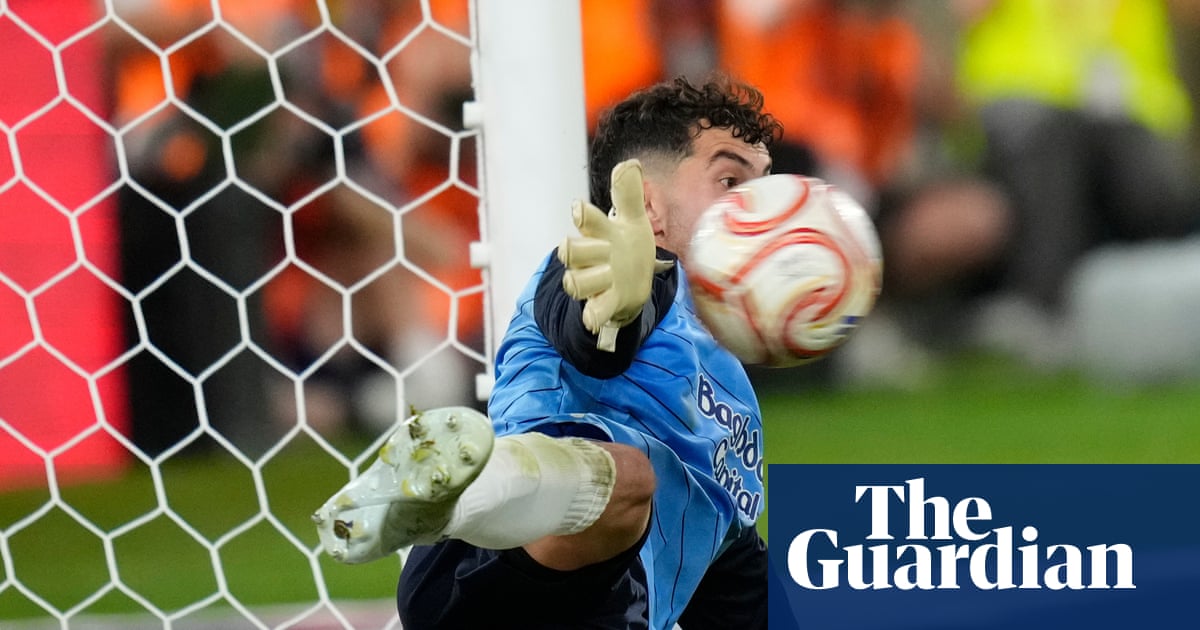
Simeone’s conservative gamble might have worked in a standard simulation, but football occasionally throws up uncontrollable variables. As the shootout loomed, Real Sociedad introduced Unai Marrero. The 24-year-old substitute goalkeeper, born in San Sebastián, was thrust into the most high-pressure situation imaginable.
Data models struggle to accurately predict the performance of a substitute goalkeeper entering a match purely for a shootout. The baseline save rate is already low, but a keeper coming in cold lacks visual tracking rhythm and muscle warmth. According to historical penalty data, a goalkeeper saving two out of five penalties in a shootout is a roughly 4.5% probability event. Marrero shattered those models.
The psychology of a penalty shootout heavily favors the shooter. The pressure is entirely on the player stepping up to the spot. But when a manager brings on a substitute goalkeeper specifically for the shootout, that dynamic shifts slightly. It creates a sudden seed of doubt in the mind of the taker. Has this keeper been studying me? Does he know my preferred corner? Marrero used that psychological edge beautifully. His footwork on the line was deliberate, feinting to one side before exploding in the opposite direction. It was a brilliant display of controlled chaos.
He didn't just guess correctly; he actively read the biomechanics of Atlético's penalty takers. The Guardian match report correctly highlighted his heroics, but that underplays the rigorous preparation involved. Real Sociedad's goalkeeping department will have compiled extensive dossiers on every Atlético player. Marrero executed that scouting report perfectly. He stood tall, delayed his dive until the absolute last fraction of a second, and secured the trophy.
Validation for Zubieta
Real Sociedad’s victory is a massive vindication of their academy structure. They do not possess the financial resources to engage in bidding wars with Europe's elite. Instead, they rely on Zubieta, their famed youth setup. Barrenetxea, Oyarzabal, and Marrero are all direct products of that system. They share a granular understanding of the club's tactical identity.
Winning a major trophy with a core of homegrown players proves that elite coaching and intelligent development can still overcome brute financial force. They out-thought Atlético Madrid tactically, absorbed their pressure structurally, and held their nerve psychologically.
Atlético Madrid, conversely, are left facing uncomfortable questions. They have an expensive squad capable of breathtaking football, yet they are still managed by a coach who fundamentally distrusts attacking play when the stakes are highest. Until Simeone is willing to release the handbrake in critical moments, his side will continue to fall short in matches they have the personnel to dominate. Real Sociedad didn't just win a shootout; they exposed a structural flaw that money cannot fix.
Read Next
- Real Sociedad’s Copa del Rey final test reflects Matarazzo’s tactical growth
- Real Madrid's dressing room crisis is wrecking Liverpool's summer plans
- Eddie Howe is staring down the barrel of his St. James' Park legacy
- Cardiff and Bromley hit the jackpot while Stockport falters
- 🏆 Copa del Rey Final 2026 — Spanish Cup Hub