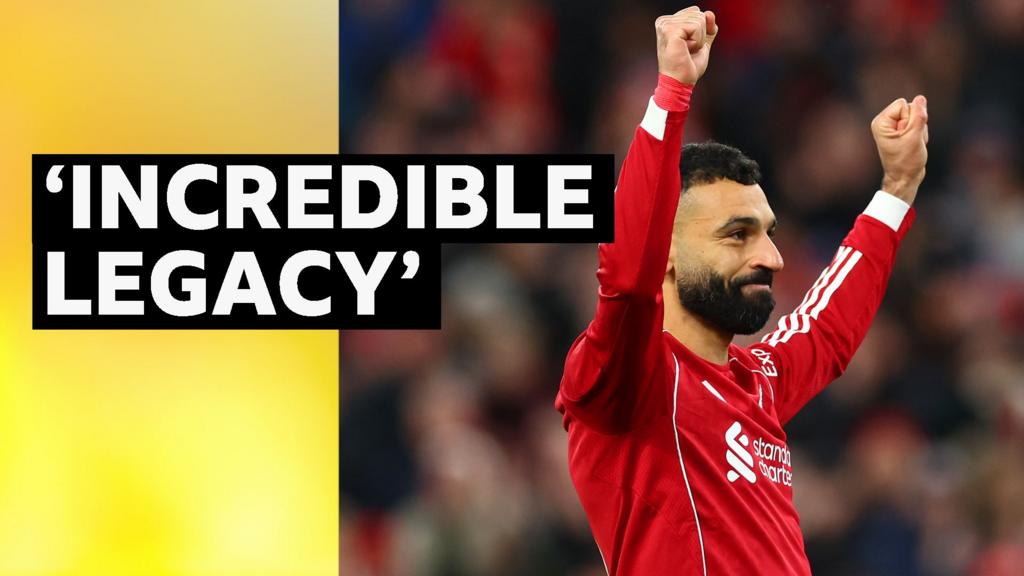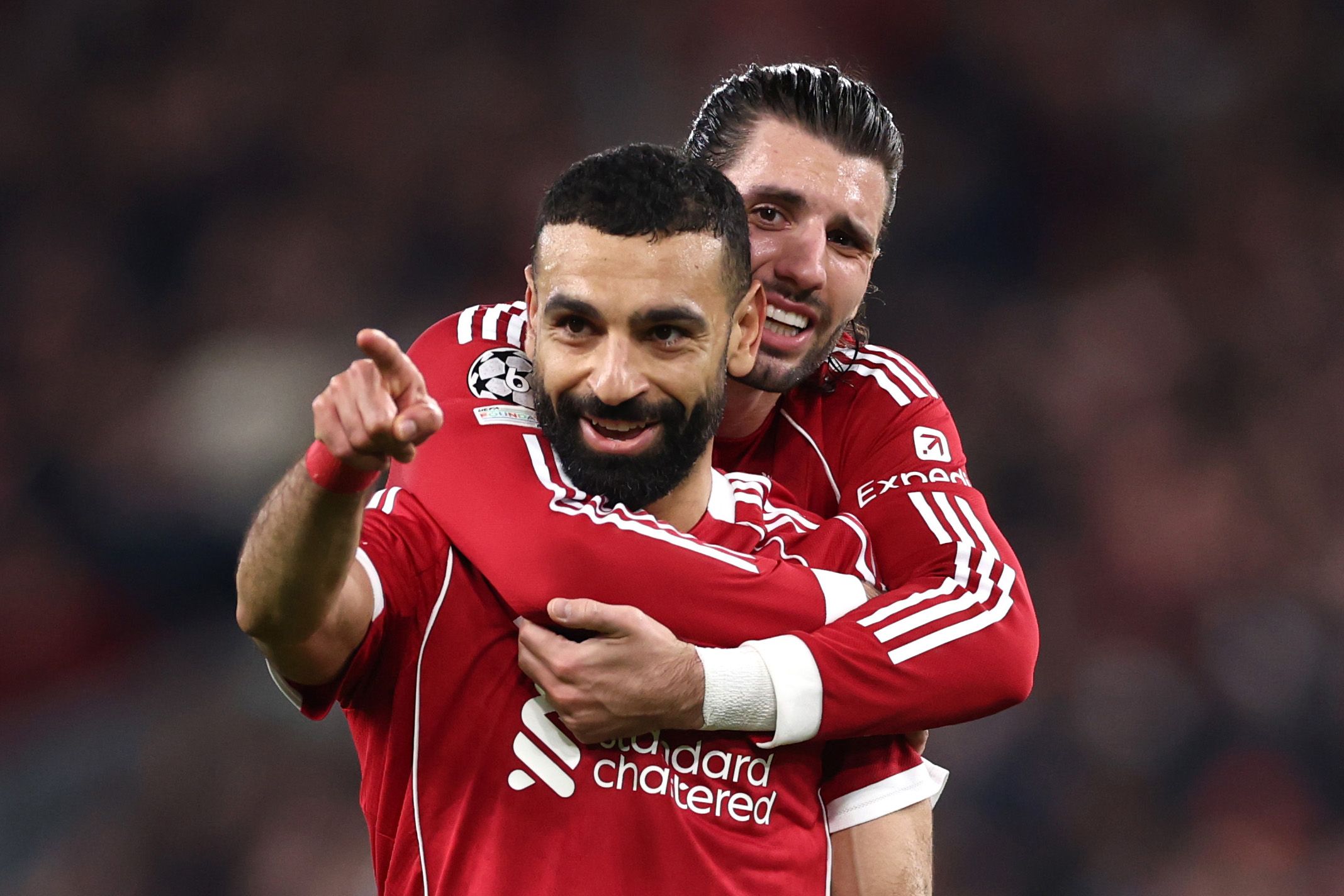
The sheer weight of the 93-minute mark
Since Mohamed Salah walked into Anfield in August 2017, he has maintained a Premier League scoring or assisting rate of once every 93 minutes. It is a figure that defies the natural gravity of a nine-year career at the highest level. Most elite forwards enjoy a three-year peak followed by a managed decline. Salah has simply refused to descend.
As The Guardian reported, his first real impact came in a 4-0 demolition of Arsenal in 2017. He ran 60 yards to score that day, a pure transition threat. Today, he operates as a high-functioning playmaker from the right-half space. The pace has slowed, but the output has remained chillingly consistent.
The announcement of his departure this summer leaves Liverpool with a statistical chasm. We aren't just talking about replacing a winger. We are talking about replacing a player who has averaged 23.1 league goals per season across nearly a decade on Merseyside. The numbers suggest this isn't just the end of an era; it's the removal of the team's floor.
Why the Ronaldo comparison is a distraction
Jamie Carragher recently argued that Salah’s Premier League legacy now sits above that of Cristiano Ronaldo. When you look at the raw data, it is difficult to find a counter-argument. Ronaldo’s 2007-08 season was perhaps a higher individual peak, but Salah has delivered that level of production for four times as long. Consistency is the most under-appreciated trait in modern scouting.
Ronaldo left Manchester United with 84 Premier League goals in 196 appearances. Salah passed that milestone in his fourth season at Liverpool. If we judge strictly on domestic impact, Salah’s 162 goals (as of this morning) put him in a bracket that Ronaldo never truly occupied in England. He has become a volume shooter who maintains elite efficiency, a rare combination in any era.
Critics often point to Thierry Henry as the gold standard for the 'greatest foreign export.' Henry’s goal involvement rate was 0.71 per game. Salah currently sits at 0.74. While Henry possessed a more aesthetic grace, Salah operates with a brutal, functional efficiency that translates better to the heavy-metal football of the 2020s. He is less of a dancer and more of a demolition expert.
The tactical gravity of the right-hand half-space
To understand Salah is to understand the geography of the pitch. Over the last three seasons, 42% of Liverpool's progressive passes have ended in the zone Salah occupies. He doesn't just finish moves; he dictates the tempo of the entire final third. When he isn't on the pitch, Liverpool's pass completion in the penalty area drops by nearly 8%.
This tactical gravity allows the overlapping full-back—previously Trent Alexander-Arnold, now Conor Bradley—to exploit vacated space. Opposing managers are forced to commit a double-pivot to the left side of their defense just to track Salah’s diagonal runs. This creates a 5v4 numerical advantage for Liverpool in central areas. You cannot quantify that impact with goals alone, yet he still provides them.
His evolution into a creative hub is the secret to his longevity. In 2018, Salah recorded 1.4 key passes per 90 minutes. This season, that number has climbed to 2.6. He has compensated for a loss of top-end sprint speed by developing an elite peripheral vision. He is currently on track to record his fourth season with 10+ goals and 10+ assists, a feat only matched by Wayne Rooney.
The Liverpool pantheon: Rush, Hunt, and the King
Ian Ladyman recently wrote that Salah has surpassed Ian Rush and Roger Hunt as Liverpool’s greatest-ever forward. It is a bold claim that usually triggers a generational war. However, the data supports the shift. Rush was a supreme poacher who benefited from a team that dominated 70% of the ball. Salah has done it in an era of unprecedented parity and defensive sophistication.
"Ian Rush was a supreme finisher, Roger Hunt's numbers were unbelievable and Kenny Dalglish was a genius - but Salah is the greatest of all."
Rush scored 229 league goals for Liverpool, but it took him 469 games to do it. Salah is currently at a significantly higher strike rate despite playing as a wide forward rather than a traditional number nine. The physical demands of his role are higher. He is required to press, track back, and transition, yet his finishing remains as cold as a pure poacher's.
Even Roger Hunt’s legendary 1961-62 season, where he scored 41 goals in the second tier, feels different in context. Salah’s 32-goal haul in 2017-18 came against some of the most expensive defensive units ever assembled. He has thrived in the most difficult environment in the history of the sport. To do it for nine years without a major injury is a statistical anomaly.
A rare moment of inefficiency: The post-AFCON slump
No analysis is complete without addressing the flaws. Salah has developed a recurring pattern of post-tournament fatigue. In 2022 and 2024, his goal conversion rate dropped from 19% to a mere 11% in the months following the Africa Cup of Nations. During these periods, he often becomes a 'shot-monster,' taking low-probability efforts out of frustration.
This season, we saw a similar dip in February. He went three games without a shot on target for the first time in four years. When Salah stops scoring, he can occasionally become a liability in the defensive transition. His tackle success rate has plummeted to 22% this year, suggesting he is increasingly being protected by the system rather than contributing to it.
There is also the matter of his penalty reliance. Remove his 25 successful spot-kicks and his goal-per-game ratio drops slightly below the elite tier of Alan Shearer. While a goal is a goal, the 'open-play' Salah has looked human at times during the 2025/26 campaign. He is still the best on the pitch, but the margins are finally starting to thin.
The succession problem: Is Olise the answer?
Liverpool are reportedly looking at Michael Olise as a potential successor, as Mirror Football suggested. Olise is a gifted technician, but the numbers are sobering. He currently averages a goal or assist every 155 minutes. That is a 60-minute deficit compared to the man he is replacing. Liverpool would need to find those missing 15 goals a season from elsewhere in the squad.
The club spent heavily on Darwin Nunez and Cody Gakpo, but neither has shown the clinical edge required to anchor a title-winning attack. Nunez’s xG overperformance is a concern; he consistently requires five chances to score once. Salah usually only needs two. The recruitment team isn't just looking for a winger; they are looking for a miracle of efficiency.
Replacing Salah is likely a two-man job. The board may need to sanction two signings to match the output of this one individual. As Sky Sports asked, is he the greatest forward the league has seen? If you value a decade of unbroken excellence over a flash of brilliance, the answer is a resounding yes. Liverpool fans should enjoy these final few weeks; the math is about to get much harder.