
Mainoo's absence exposes United's hollow midfield setup
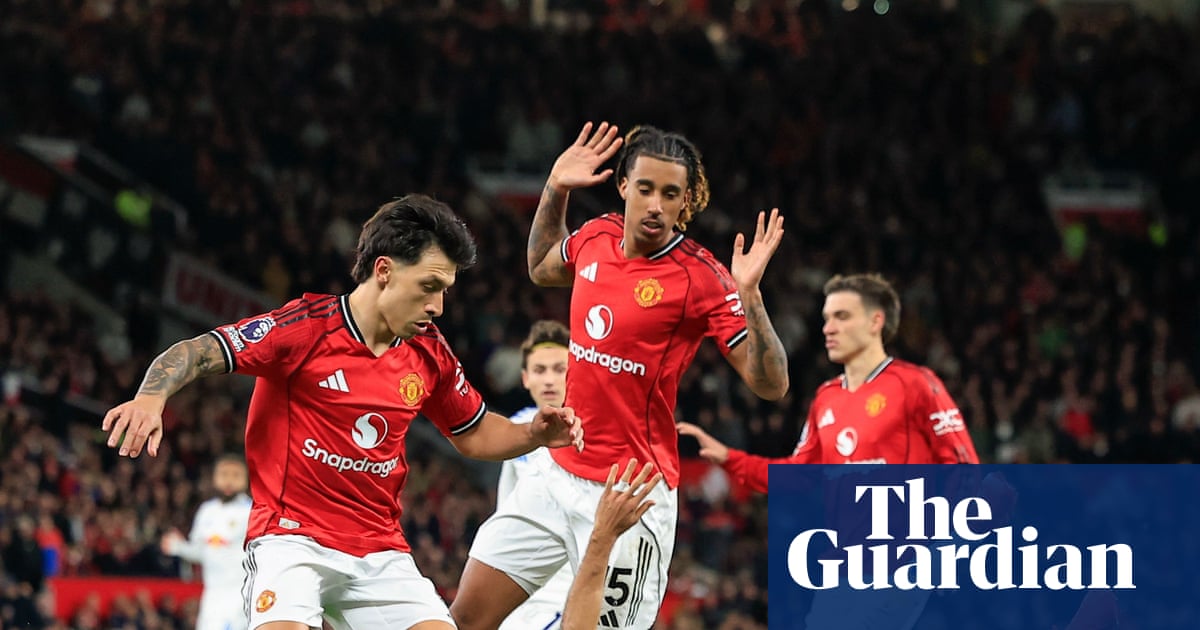
The myth of depth at Old Trafford
Sometimes the most influential player on the pitch is the one sitting in the stands. On Monday night at Elland Road, Manchester United were dismantled by Leeds in a manner that felt entirely predictable the moment the team sheets were released. Ruben Amorim has built a functional, often impressive tactical framework this season.
Yet, this shock defeat laid bare a terrifying reality for the club's hierarchy. The system simply does not work without Kobbie Mainoo operating at its absolute centre.
As Will Unwin sharply noted in The Guardian following the loss, the teenager seems to improve with every minute he is unavailable. It is a cruel paradox, but a common one in structurally flawed teams.
When Mainoo plays, his subtle body feints, his constant scanning, and his rare ability to receive the ball on the half-turn mask the severe deficiencies of the players around him. He acts as a pressure valve. When he sits out, the entire buildup phase collapses into a sluggish, predictable U-shape around the opposition's block.
Against Leeds, the lack of central progression was not just noticeable; it was glaringly fatal. Amorim’s preferred 3-4-2-1 formation is notoriously demanding on its central midfielders.
It requires a double pivot capable of breaking lines under severe, coordinated pressure. Without Mainoo, the responsibility fell to players who treat the football like a live grenade when pressed while facing their own goal. Leeds knew this immediately. They did not sit deep and invite pressure; they aggressively hunted the ball in the middle third, setting specific traps designed to exploit this missing link.
The anatomy of the Mainoo dependency
To understand the collapse, you have to understand exactly what Mainoo does that others in the squad cannot. It is not about Hollywood passes or dramatic tackles. It is about spatial awareness and body orientation.
When the ball travels from a centre-back into the midfield pivot, a typical United reserve midfielder receives it square on. This immediately limits his options to a safe return pass or a desperate clearance. Mainoo receives the ball sideways.
Before the pass even arrives, he has checked his shoulder twice, identified the angle of the approaching press, and adjusted his body shape to let the ball roll across him. This single action dictates the entire tempo of the attack. It instantly eliminates the first line of the opposition press.
Against Leeds, this action was entirely absent. The midfield pivot operated with a painful lack of imagination. The data paints a grim picture. United managed a pathetic 68 percent pass completion rate in the central third during the first half.
They were rattled, incapable of stringing together three passes under duress without turning back toward their own goalkeeper. Amorim was animated on the touchline, repeatedly gesturing for his midfielders to show for the ball in the pockets behind the Leeds press.
But structural bravery cannot be coached into players who inherently lack the technical security to execute the passes. The result was a sterile, risk-averse performance where possession was kept purely for the sake of survival, rather than as a tool to destabilise the opposition.
The Maguire renaissance and the cost of his absence
This is where the absence of Harry Maguire compounded the misery and turned a bad performance into a structural disaster. Over the last eighteen months, Maguire has experienced a bizarre but undeniable renaissance playing as the central pivot in Amorim's back three.
His specific skillset—stepping high into the midfield line and clipping accurate, diagonal balls out to the wing-backs—has quietly become a core attacking mechanism for this side. Without him on Monday night, the defensive line dropped noticeably deeper. Fear dictated their positioning.
The replacement personnel lacked Maguire's aggressive starting position and his willingness to carry the ball into vacant midfield space. Instead, they chose to drop five or ten yards closer to Andre Onana to ensure safe, uncontested possession. This seemingly minor adjustment had catastrophic cascading effects further up the pitch.
By dropping deeper, the defence stretched the physical distance between themselves and the midfield pivot. This forced the central midfielders to cover far too much ground simply to offer a viable passing option.
Consequently, the wing-backs were pinned back, unable to push high and wide to stretch the Leeds defensive shape. Everything became congested. The pitch shrank, playing perfectly into the hands of a team executing an aggressive mid-block.
Leeds' pressing triggers
We must give credit to the tactical setup deployed by the home side. The Leeds coaching staff clearly identified that United’s wide centre-backs were uncomfortable progressing the ball centrally without Maguire dictating the angles and Mainoo offering a secure outlet.
They set up their pressing triggers perfectly. They allowed the wide defenders to step out with the ball, offering a false sense of security. The moment a pass was directed inside toward the congested midfield, the trap snapped shut.
Two, sometimes three white shirts would swarm the receiver, aggressively closing down the space and forcing turnovers in highly dangerous areas. Because United's defensive line was sitting so deep, they were completely unequipped to handle the immediate counter-attacks that followed these turnovers.
Football at this level is heavily dictated by managing transitions. Amorim's success earlier in the campaign was built on an intense, coordinated counter-press immediately after losing the ball. But an effective counter-press demands a compact team shape.
Because the defence was sitting too deep and the attackers were stretching high out of sheer desperation to find space, United were horribly disjointed whenever possession turned over.
The Bruno Fernandes dilemma
The knock-on effect of this midfield paralysis inevitably reached the captain. Bruno Fernandes spent the vast majority of the evening waving his arms in visible frustration.
Deprived of any service between the lines, he began dropping deeper and deeper in a futile attempt to influence the game and connect the disjointed phases of play. By the hour mark, he was frequently picking up the ball 45 yards from the opposition goal, with ten white shirts standing between him and the penalty area.
This completely neutralised United’s most potent attacking threat. Fernandes is devastating when he receives the ball in the final third with runners ahead of him. When he is forced to act as a deep-lying playmaker, launching hopeful diagonals from his own half, the entire attacking structure breaks down.
The forwards became isolated, feeding off scraps and increasingly desperate long balls that were easily dealt with by the Leeds centre-backs. It was a tactical victory for Leeds that required minimal adjustment during the game.
They set their parameters, identified the glaring weaknesses in the United XI, and ruthlessly exploited them for 90 minutes. It was a stark reminder that while Amorim has elevated the floor of this squad, the ceiling remains strictly governed by the availability of a few highly specific profiles.
A glaring failure in squad construction
Let’s examine the broader implications of this defeat. This is not just an unfortunate blip; it is a fundamental flaw in squad construction that has yet to be addressed by the new ownership structure.
The club has spent absolute fortunes over the past five years assembling a collection of functional squad players who do not fit the extreme, specific demands of elite modern football. They have wide players who prefer to isolate their full-back in one-on-one situations, yet they operate in a system that demands rapid, one-touch combinations in the half-spaces.
They have central midfielders who excel at winning second balls and making late tackles, but who absolutely cannot dictate the tempo of a match against a coordinated pressing scheme. The disconnect between the manager's philosophy and the sporting director's recruitment is still painfully evident when you look beyond the starting eleven.
Amorim requires specialists. His system does not tolerate passengers or generalists in key buildup roles. When you ask a player who thrives in a chaotic, transition-heavy game to suddenly orchestrate a patient, possession-based buildup from the back, failure is the only logical outcome.
Monday night was the inevitable result of asking the wrong players to execute a highly complex set of instructions.
The reality check for Ineos
The new footballing hierarchy at Old Trafford has made plenty of noise about raising standards, ruthlessly cutting deadwood, and fixing a broken recruitment operation. This match showed exactly how much hard work remains to be done off the pitch.
Throwing money at obvious, high-profile names will not solve the underlying issue. They need specific tactical profiles to execute highly specific roles within the manager's defined framework.
If your entire method of progressing the ball from defence to attack collapses without an 18-year-old academy product, your system is dangerously fragile. Mainoo is a spectacular talent, potentially generational, but he cannot carry the tactical burden of an entire football club on his shoulders week in and week out.
The same logic applies to Maguire. The fact that an ageing defender, heavily and consistently criticized for years, has become an absolutely irreplaceable cog in the buildup phase is a damning indictment of the alternatives available.
United are not a bad football team, but they are an alarmingly incomplete one. They are capable of executing Amorim’s vision and beating top-tier opposition, provided their exact starting XI is fit and functioning perfectly.
Remove one or two key pieces from the puzzle, and the entire edifice crumbles into dust almost immediately. Leeds exposed that fragility without needing to reinvent the wheel.
Looking ahead to a decisive run
With the sharp end of the season rapidly approaching, Amorim faces a monumental challenge. He has serious questions to answer before their next fixture, and he cannot simply cross his fingers and wait for the medical department to return his preferred starters.
He must find a tactical compromise to make his system function with the players currently at his disposal. If he rigidly sticks to a game plan that his reserve players are technically incapable of executing, this season risks spiraling out of control.
Opposing managers have now been handed a detailed blueprint on how to dismantle this iteration of Manchester United. The honeymoon period is definitively over, and the harsh realities of managing a flawed squad have arrived at Amorim's door.
Read Next
- Michael Carrick is wrong about Lisandro Martinez's red card
- Lisandro Martinez just gave Leeds the keys to survival
- Man United's discipline is gone and the tactics are following
- Michael Carrick’s defensive structure collapses against Leeds
- 🏟 EFL Championship 2025-26 — Promotion Race & Play-Off Final Hub
The Mixer: The Story of Premier League Tactics, from Cantona to Guardiola by Michael Cox
The ultimate tactical breakdown of how the Premier League changed forever.
More Coverage

Manchester United are chasing ghosts with the Leao pursuit
3 hours agoArsenal’s European ambition check is about eighty games overdue
3 hours ago
Tottenham are shaking up the squad with a record-breaking push
3 hours ago
Arsenal weigh up Ethan Nwaneri departure as Premier League interest grows
3 hours ago
Arsenal's transfer strategy remains locked on silverware
3 hours ago
Anthony Gordon to Barcelona is a high-stakes gamble for all involved
3 hours agoMore Analysis
Mainoo and Maguire absence highlights United's recurring defensive fragility
1 month, 2 weeks ago
Manchester United are fixing their midfield obsession
1 month, 1 week ago
Man United's defensive structure will buckle without Lisandro Martinez
1 month, 2 weeks ago
Michael Carrick is officially walking a tightrope at Old Trafford
1 month, 2 weeks ago
Man United's discipline is gone and the tactics are following
1 month, 2 weeks ago