The fear of failure at Old Trafford
There is no hiding place in a fixture like this. When Manchester United and Liverpool meet, the tactical chalkboard often burns up in the first ten minutes. But this Sunday feels different. It feels less about glory and more about survival.
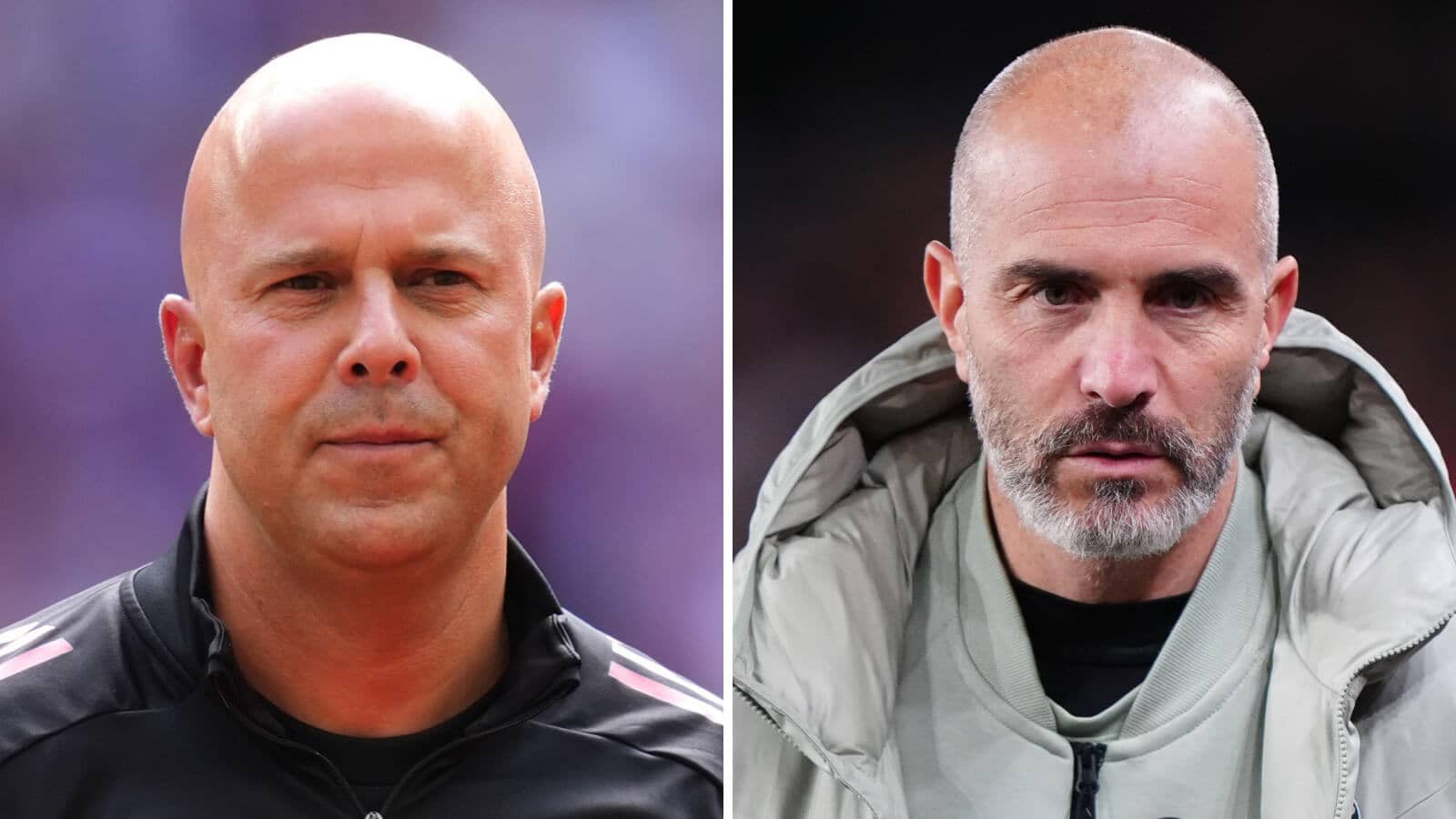
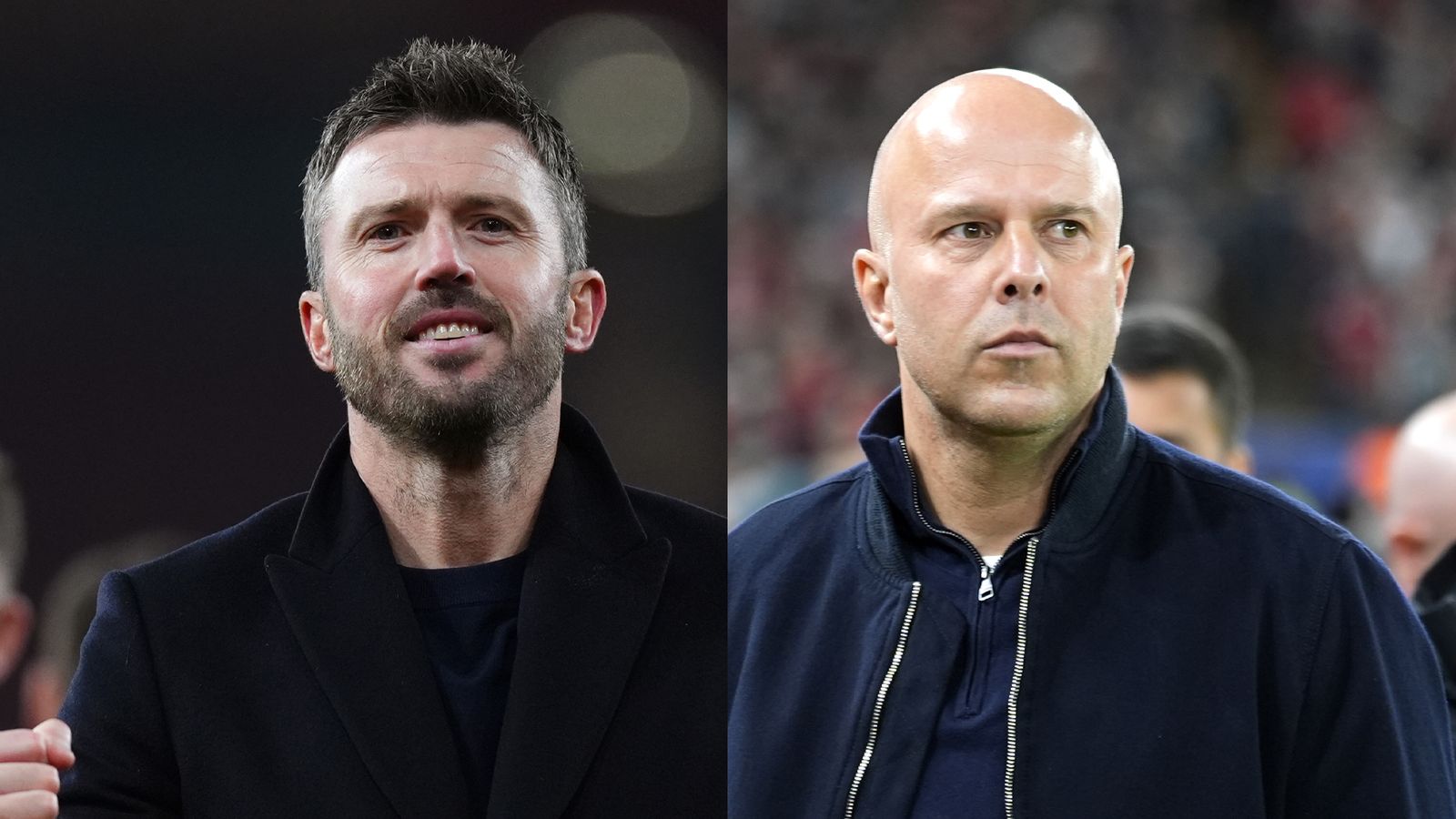
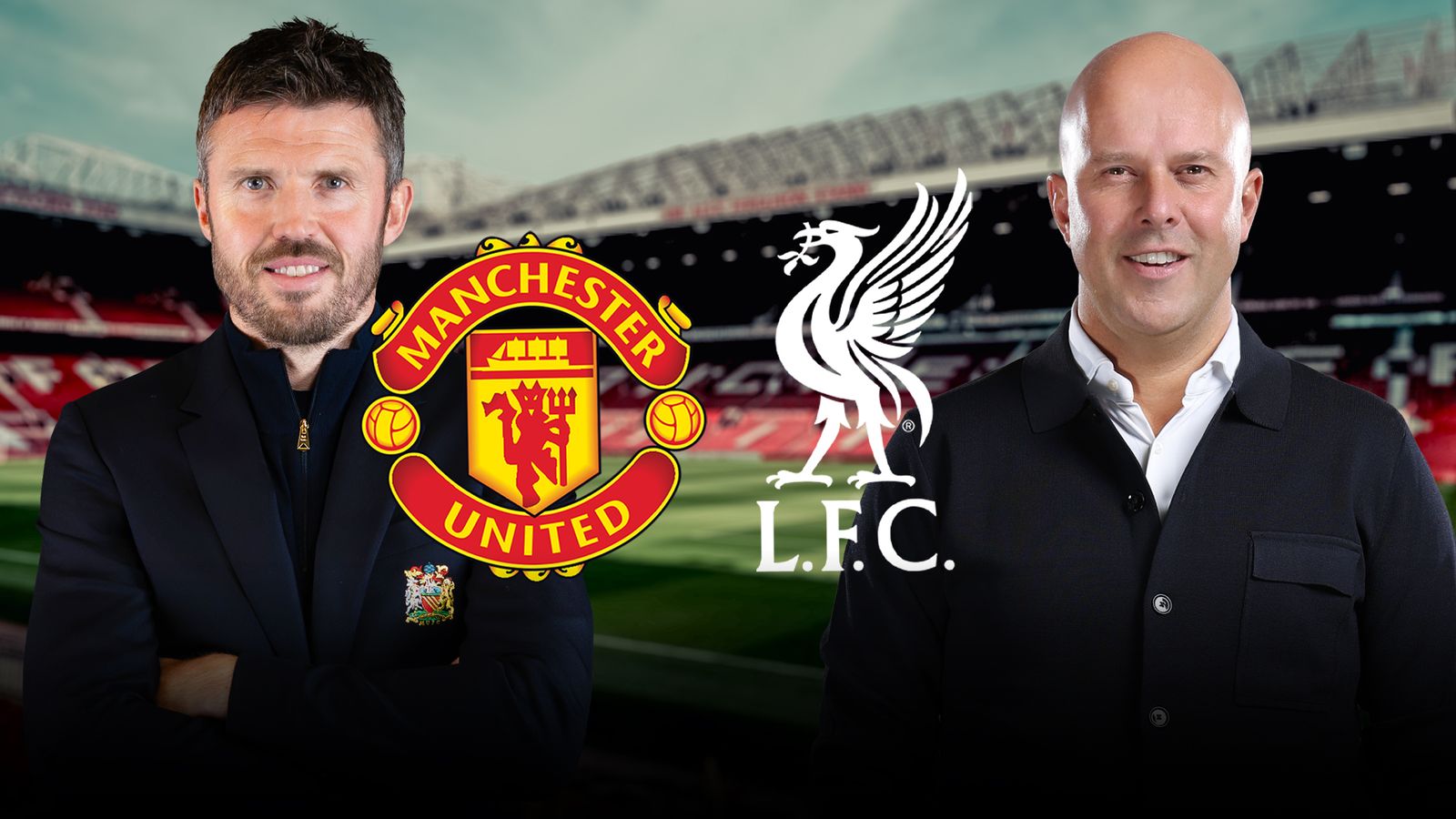
Michael Carrick and Arne Slot are staring down the barrel of a defining weekend. Both managers know that a heavy defeat could permanently fracture their relationship with the fanbase. Gary Neville laid it out perfectly this week: neither man can afford an embarrassment.
The stakes for Sunday at Old Trafford are uncomfortably high. Manchester United against Liverpool is always billed as a spectacle. This time, it feels more like a tactical tightrope walk. Neither manager can afford to slip.
The fear of embarrassment is the dominant emotion heading into this clash. Both managers are fighting to convince skeptical fanbases that they are the right men for the job long-term.
For Carrick, the honeymoon period is over. Taking charge of his former club seemed like a romantic appointment, but the reality has been brutal. United have structural issues that a change in the dugout cannot instantly fix.
Carrick and the double pivot dilemma
Carrick wants control. As a player, he dictated the tempo. As a manager, he is struggling to get his midfield to do the same. His reliance on a structured 4-2-3-1 often leaves United outnumbered in the center of the pitch.
Kobbie Mainoo has been brilliant in flashes, but he is being asked to cover too much ground. When United face a coordinated press, the distance between the midfield and the forward line becomes alarming. Bruno Fernandes drops deep to help, which blunts his final-third impact.
This is a major flaw. You cannot concede the center of the pitch against Liverpool and expect to survive. Carrick must decide whether to pack the midfield with a third central player or trust his wingers to tuck in and disrupt the passing lanes.
If United sit in a mid-block, they risk being suffocated. If they press high, their defensive line lacks the recovery pace to handle balls played over the top. It is a terrible puzzle to solve.
Slot's sterile possession
Liverpool have their own problems. Arne Slot arrived with a reputation for intense, attacking football. Yet, in recent weeks, his team has looked sterile in possession. The quick transitions of the past have been replaced by methodical, predictable build-up play.
They circulate the ball well but often fail to penetrate deep defensive blocks. Liverpool are averaging 64 percent possession over their last five matches, but their expected goals per 90 has dropped to a miserable 1.34. The ball needs to move faster. When Liverpool hesitate, opposing defenses easily reset.
This is where the criticism of Slot is loudest. He has made them solid, but he has stripped away the chaos that made them terrifying. Darwin Nunez looks isolated up front, making runs that his midfielders simply refuse to reward with early passes.
Slot needs a statement victory. Winning at Old Trafford would silence his doubters. But losing, especially if the team looks toothless again, would validate every negative column written about his tenure so far.
Tactical battlegrounds
The game will be decided in the wide areas. Trent Alexander-Arnold remains Liverpool's primary creator, but his positioning under Slot is conservative. He steps into midfield, but rarely overlaps with real conviction.
This gives Alejandro Garnacho an interesting problem. Does the United winger track Alexander-Arnold inside, abandoning his wide starting position? Or does he stay high and gamble on United winning the ball back quickly?
Carrick has to be brave here. If Garnacho forces Alexander-Arnold to defend the channel, Liverpool's entire build-up structure changes. It forces one of their center-backs to drift wide, creating gaps in the middle for Rasmus Hojlund to exploit.
But bravery carries a cost. If Garnacho cheats defensively, Liverpool will overload the right side. Mohamed Salah, even in the twilight of his career, only needs half a yard of space to punish a disjointed defensive line.
The transition trigger
Watch for the first pass after a turnover. Under Slot, Liverpool immediately look to secure possession rather than launch a counter-attack. It is a conservative instinct that infuriates the traveling Kop.
United are the opposite. They are desperate to transition quickly, often forcing passes that aren't on. Mainoo is tasked with breaking the initial counter-press, but if he is caught in possession, United's defense is entirely exposed.
This creates a fascinating dynamic. You have a United team that wants to sprint, playing against a Liverpool team that wants to jog. Whoever dictates the tempo will control the match. If the game becomes a basketball match, United have the edge. If it settles into a slow, tactical chess match, Liverpool will slowly squeeze the life out of Old Trafford.
The defensive frailties
Neither defense inspires absolute confidence. Lisandro Martinez is United's best progressor of the ball from the back, but he is easily isolated against physical forwards. Nunez will pull to his side all afternoon, trying to create chaos in the air.
On the other side, Virgil van Dijk is no longer the unassailable fortress he once was. His reading of the game remains elite, but his recovery pace has visibly waned. When attackers run directly at him, he drops off, inviting shots from the edge of the area.
Both managers are painfully aware of these weaknesses. Neither Carrick nor Slot has fixed their respective defensive transitions. They are simply trying to outscore their problems, which is a dangerous game in a derby of this magnitude. United have conceded seven goals in their last four games, with three of those coming from simple cutbacks.
United's fullbacks push too high, leaving massive spaces in the channels. Liverpool's midfield is too slow to track runners arriving late into the box. It is a recipe for goals, but also a recipe for managerial heart attacks.
The set-piece battleground
Games of fine margins are often settled by dead balls. Liverpool's corner routines have become entirely predictable. They rely heavily on in-swinging deliveries toward the near post, aiming for Van Dijk to flick it on. Opponents have scouted this to death.
United defend these situations with a zonal system that regularly looks disjointed. Andre Onana is reluctant to command his six-yard box, preferring to stay glued to his line. This creates a terrifying dynamic every time Alexander-Arnold stands over the ball.
If Liverpool vary their delivery, aiming for the back post or the edge of the box, they will find space. Carrick needs to instruct his defenders to attack the ball rather than passively guarding space. A failure to clear the first contact will be fatal.
Goalkeeping distribution under pressure
Onana's passing will be severely tested. Slot will undoubtedly set traps, allowing United's center-backs to receive the ball before suddenly closing the angles. If Onana tries to force passes through the center, Liverpool will pounce.
Alisson's role is just as important. United will likely deploy a man-to-man press when the Brazilian has the ball at his feet. The issue is that United's forwards often press in straight lines, making it easy for Alisson to find the fullbacks with clipped passes.
This represents a massive coaching failure on Carrick's part. Pressing is about cutting off passing lanes, not just running hard at the man with the ball. If United press unintelligently, Alisson will simply bypass them, taking four players out of the game with a single swing of his boot.
Here are the pressing triggers fans should watch for:
- When Martinez receives the ball on his weaker right foot, Liverpool's wingers will instantly narrow their shape.
- If Mac Allister drops between the center-backs, United's attacking midfielder must follow him to prevent easy progression.
- Any backward pass to Onana will serve as the immediate trigger for Nunez to sprint and cut off the lateral pass.
What a defeat means
You can survive a loss against a mid-table side. You brush it off, point to the xG, and promise a reaction next week. You cannot survive a humiliating defeat to your biggest rival when your job is already under scrutiny.
A heavy loss for Carrick would accelerate the whispers about his long-term viability. The United board wants stability, but they demand competitiveness. Getting rolled over by Liverpool would suggest he is out of his depth tactically.
For Slot, a defeat would amplify the growing unrest. Liverpool fans demand heavy metal football. They are currently watching smooth jazz. If that smooth jazz leads to a loss at Old Trafford, the patience will evaporate instantly.
Neville was absolutely right. This is about avoiding a catastrophe as much as it is about chasing a victory. The tension will be thick enough to cut with a knife.
The prediction
Both teams are too flawed to completely shut the other out. United will have moments of blistering pace on the counter. Liverpool will dominate the ball and create chances through sustained pressure.
But the fear of losing will ultimately override the desire to win. Expect a frantic opening twenty minutes, followed by a tense, nervous second half where both managers prioritize keeping the back door shut.
Carrick will take a point to stop the bleeding. Slot will accept a draw away from home against a rival. It won't be a classic, but it will be entirely absorbing for all the wrong reasons.
Prediction: Manchester United 1-1 Liverpool.
Read Next
- Arne Slot gets his ultimate weapon back for the run-in
- Manchester United are repeating their worst mistakes with Michael Carrick
- Top 10: The Men at the Center of the Storm in Manchester and North London
- Manchester United consider a blockbuster move for Rafael Leão
- 🏆 Europa League Final 2026 — Full Coverage Hub