Source Credibility: Tier 2
The situation surrounding Marcus Rashford's future is reaching a breaking point. We are currently operating firmly in Tier 2 territory. Multiple established outlets, including TeamTalk and Football365, have dropped significant updates over the last 24 hours regarding his proposed permanent move to Barcelona. The noise is getting louder, but the complications are getting more severe. We are not at the 'here we go' stage yet. The fundamental mechanics of the transfer are currently stalled by financial realities and hardline negotiating stances from Manchester United.
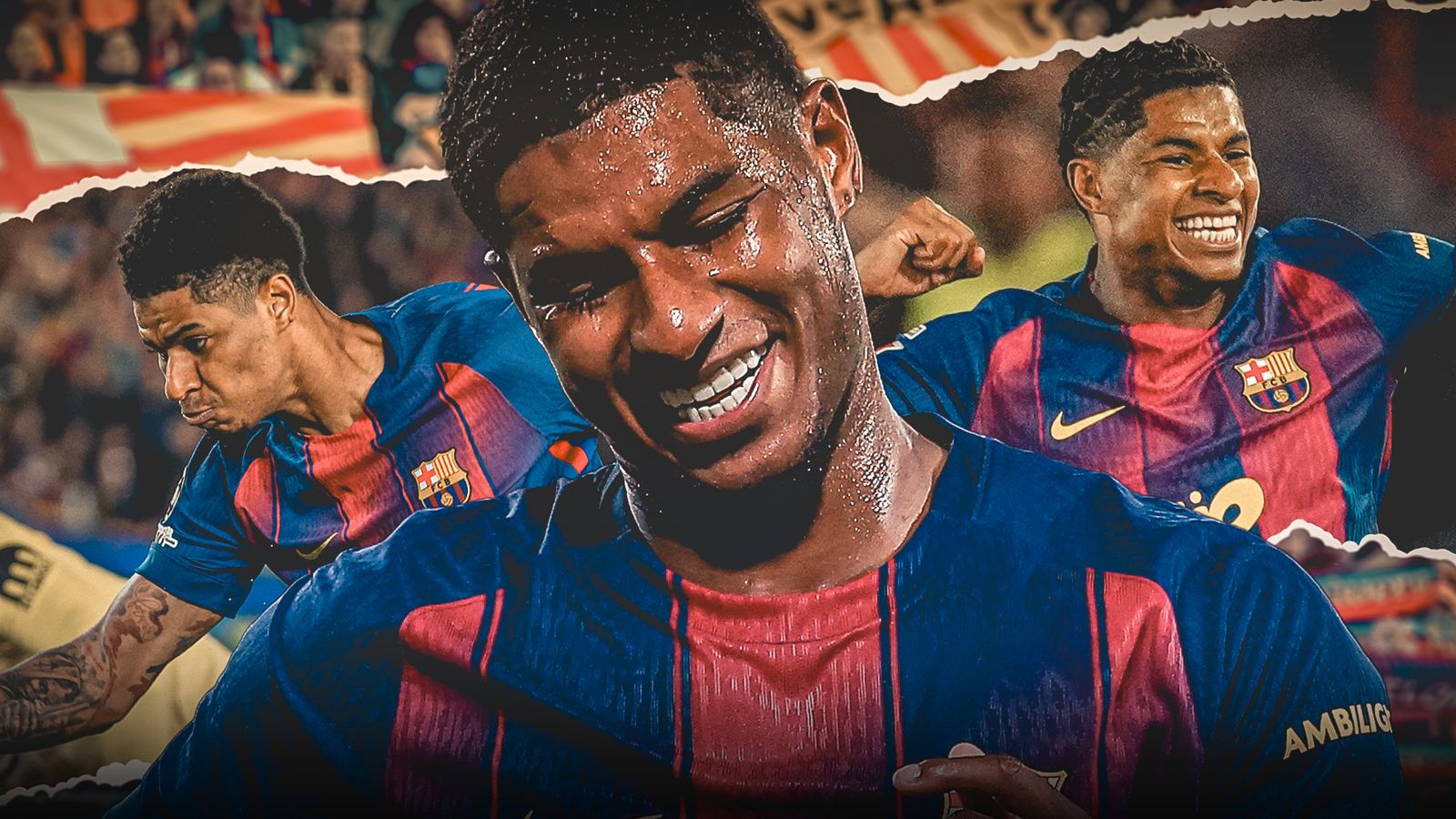
Rashford has spent this season on loan in Catalonia, trying to rebuild his reputation away from the pressure cooker of Old Trafford. The player wants the move made permanent. Hansi Flick reportedly wants to keep him. But the gap between the manager's desires and the boardroom's capabilities is vast. Joan Laporta has spent the last three years executing accounting tricks just to register free transfers. Executing a massive permanent deal for a Premier League forward is an entirely different level of complexity.
The Wage Hike and Financial Reality
The primary roadblock is purely financial. Reports have revealed a scheduled wage hike in Rashford's Manchester United contract. This clause completely alters the dynamics of the negotiation. Premier League salaries are already heavily inflated compared to the rest of Europe. When you factor in an automatic increase, Rashford's wage packet becomes essentially radioactive to any club operating outside of England or Saudi Arabia.
Barcelona cannot simply absorb his full salary. La Liga's strict financial fair play regulations mean Laporta cannot authorize that kind of money without moving significant assets off the books first. The Spanish club is reportedly demanding that Rashford take a severe pay cut to make the move permanent. Players rarely walk away from guaranteed money. The wage hike threatens to price Barcelona out of the deal before the window even officially opens.
There is also the issue of the transfer fee. While a specific asking price has not been universally reported, the numbers being discussed behind the scenes have provoked a strong reaction. According to The Mirror, a prominent Barcelona legend has brutally dismissed the proposed figures as a 'rip-off'. This public sentiment reflects a growing hesitation within the club's hierarchy. Paying a premium fee for an inconsistent winger is exactly the kind of business that destroyed Barcelona's finances in the first place.
Manchester United's Hardline Stance
Manchester United are refusing to play the victim in this scenario. Under the new INEOS regime led by Sir Jim Ratcliffe and Dan Ashworth, the club is aggressively trying to shed their reputation as easy targets in the transfer market. According to recent reports, United have actively decided to block an 'alternative' deal proposed by Barcelona.
In the context of Barcelona's current financial situation, an 'alternative' deal almost certainly means another loan with an option to buy, or a highly structured deal heavily reliant on performance-related add-ons. United are having none of it. They want a clean break. They want guaranteed cash to reinvest in their own squad rebuild. Kicking the can down the road with another loan does nothing to help Erik ten Hag or whoever is managing the club next season.
The decision to block the alternative structure forces Barcelona's hand. It is a calculated gamble by INEOS. They are calling Laporta's bluff, demanding that the Spanish giants either find the cash or walk away. This hardline approach is refreshing for United fans, but it significantly decreases the likelihood of a quick resolution. If Barcelona walk away, United are stuck with a massive earner who clearly sees his future elsewhere.
The Swap Deal Proposition
With cash reserves low in Catalonia, alternative solutions are being debated in the media. Manchester United legend Paul Scholes has publicly weighed in on the saga. According to Football365, Scholes has predicted a messy summer and actively urged United to sanction a swap deal.
On paper, a swap deal sounds like a clean solution to a complex liquidity problem. If Barcelona cannot afford a straight cash transfer, they can offer players of equal value. But the reality of modern football transfers makes swap deals incredibly rare and exceptionally difficult to finalize. You have to align the valuations of two different clubs. You have to convince two different players to accept the moves. You have to negotiate two entirely separate contracts simultaneously.
Who exactly would Barcelona offer? Frenkie de Jong has been linked with United for years, but his deferred wage situation at Barcelona makes him nearly impossible to move. Raphinha is too important to Flick's current system. Ansu Fati carries too much injury risk. A swap deal might provide great podcast fodder, but it is rarely a viable mechanism for completing high-stakes transfers. United are right to be skeptical.
Tactical Fit: Flick's Transition Weapon
If we strip away the financial noise and look strictly at the football, the tactical fit is fascinating. Hansi Flick demands high intensity. He wants his teams to press relentlessly and attack vertically. When Rashford is highly motivated and fully fit, he is one of the most devastating transition forwards in European football. He possesses the raw pace to terrorize high defensive lines.
But we have to be honest about the player's limitations. This is where the critical analysis comes in. Rashford's defensive work rate is notoriously inconsistent. He often fails to track back, leaving his full-back exposed. In Flick's system, every player must contribute to the counter-press. You cannot carry passengers when you lose the ball. If Rashford jogs back against top-tier Champions League opposition, Barcelona's midfield will be overrun.
Furthermore, his decision-making against low blocks remains a massive flaw. When teams sit deep and deny him space to run into, Rashford struggles. He forces shots from low-probability angles. He runs into blind alleys. Barcelona frequently face opponents in La Liga who park ten men behind the ball. In those specific scenarios, Rashford's utility drops drastically. He is not a tight-space combination player. He is a blunt instrument. Paying a massive premium for a player who only thrives in specific tactical setups is a massive risk for a club with zero financial margin for error.
Player Profile and Competing Clubs
At 28 years old, Rashford should be entering his absolute prime. He has incredible physical tools. He has major tournament experience. He has shown he can score 30 goals in a single season when everything clicks. But the inconsistency is impossible to ignore. He is a high-ceiling, low-floor asset. If a deal is struck, it would likely require a long-term four or five-year contract to amortize the cost, further increasing the risk for Laporta.
Interestingly, there is a distinct lack of competing clubs mentioned in the current reporting. Usually, a player of this profile generates a bidding war. But the combination of his massive wage demands and his erratic form has seemingly scared off the likes of Paris Saint-Germain and Bayern Munich. PSG are reportedly focusing their attention on Julian Alvarez instead. This lack of a secondary market severely hurts Manchester United's negotiating position. If Barcelona walk away, United do not have another buyer lined up. They are playing a dangerous game of chicken.
Probability Assessment
Where does this leave us? The probability of this deal getting done before the end of May is effectively zero. The chances of a permanent transfer happening at all this summer sit at roughly 35%.
The will is there from the player, and Flick certainly sees value in the profile. But the financial chasm is just too wide right now. United are refusing to accept a discounted structure. Barcelona cannot afford the straight cash fee combined with the impending wage hike. We are locked in a stalemate.
The expected timeline for any resolution is late July or August. This saga will inevitably drag through the upcoming FIFA World Cup. Both clubs will wait to see if the tournament alters the market dynamics. If a major Barcelona forward stars at the World Cup and attracts a massive bid, Laporta might suddenly find the funds required to secure Rashford. Until then, expect a prolonged standoff.
Expected Impact
If Barcelona somehow engineer a permanent deal, they secure a match-winner who adds much-needed raw pace to their front line. He gives Flick a dedicated transition threat for away fixtures in Europe. But it will severely restrict their ability to strengthen other areas of the squad.
If the deal collapses, the fallout will be spectacular. Rashford will be forced to return to a Manchester United environment that has already moved on. He will arrive at pre-season carrying a massive contract and facing a fanbase that is tired of the drama. For INEOS, failing to move him on would represent a massive early failure in their squad clearance project. Both parties need this transfer to happen, but right now, nobody knows how to pay for it.
Read Next
- Marcus Rashford wants his Barcelona loan made permanent, but can they afford him?
- Man Utd returning to Michael Carrick is the ultimate cry for help
- Manchester United's midfield rebuild hinges on one very expensive Brazilian
- Rashford to Barcelona swap deal is a fever dream we don't need
- ⚽ La Liga 2025-26 — Title Race Hub