
Manchester United’s recruitment frenzy lacks a clear tactical compass

The disconnect between spending and structure
Manchester United are currently operating with the frantic energy of a club that has confused activity with progress. Under the directorship of the INEOS regime, the headlines are dominated by a dizzying volume of targets—ranging from West Ham’s Mateus Fernandes to the pursuit of Tyler Adams—yet the tactical fingerprint of a Michael Carrick-led side remains murky.
The club is reportedly closing in on an £80m deal for Mateus Fernandes, a move that would represent a significant statement of intent despite intense competition from Arsenal, Paris Saint-Germain, and Real Madrid. While he is undoubtedly a high-ceiling prospect, committing such a massive portion of the budget to a single midfielder ignores the need for a cohesive unit. As Football365 recently noted, the club is seemingly operating on a 'deal-first, fit-second' basis, earmarking signings without detailing how they will integrate into a mid-block or high-pressing scheme.
The Arsenal rivalry is a noisy distraction
The pattern of United and Arsenal circling the same players has become the defining feature of this window. We see the same dance with Bradley Barcola, who has reportedly requested an exit from PSG. Arsenal are maneuvering for his signature, likely looking to deepen their attacking rotations, while United remains perpetually 'on alert.' This is not intelligent recruiting; it is reactive posturing.
When a club matches a move because a rival is interested, they lose the analytical edge required to build a title challenger. The pursuit of Lewis Hall from Newcastle United is evidence of this scattergun approach. While Hall offers versatility, his potential arrival feels more like a move to block other clubs’ avenues than a strategic reinforcement of an identified deficiency in Carrick’s defense. Even the failed attempt to poach Myles Lewis-Skelly from Arsenal suggests a front office casting too wide a net in a desperate search for talent rather than profile-matched additions.
The danger of the 'next best thing'
Perhaps the most baffling element is the reported interest in Tyler Adams. Touted by some as an 'industrious' pivot who could provide stability, he is a different tactical profile than the creative heartbeat the club arguably needs further up the pitch. Relying on superlatives like 'better than Rodri' in transfer rumors is a lazy substitute for scouting transparency. If United are truly looking to offload players like Marcus Rashford to balance the books, it suggests that the current squad building is subservient to financial compliance rather than a coherent vision for the upcoming Premier League campaign.
The £100m surplus reportedly unlocked to boost their spending power after the Elliot Anderson collapse is a massive amount of capital to deploy effectively. Without a clear tactical identity, however, this money will likely result in a collection of high-earning individuals rather than a team. Even the failed sale of Nice by Sir Jim Ratcliffe adds another layer of instability, suggesting that the top-down management is stretched thin across multiple footballing projects at a time when focus is required at Old Trafford.
For Michael Carrick, the window is closing, and the board has provided him with a buffet of disparate talent. Unless he can mold these potential signings into a focused formation by the opening weekend, this £200m-plus shopping spree will be remembered as nothing more than a chaotic reshuffling of deck chairs. The efficiency of a club like Arsenal, focused on specific gaps, highlights the luxury United squanders by chasing every high-profile name that touches the market.
EA SPORTS FC 26 Standard Edition
The most authentic football experience on your console.
Frequently Asked Questions
What is the main criticism of Manchester United's current transfer strategy?
Why is the pursuit of Mateus Fernandes considered problematic?
How does competition with firms like Arsenal affect United's recruiting?
What is the concern regarding the potential signing of Tyler Adams?
Why is the interest in Lewis Hall viewed as a scattergun approach?
More Coverage
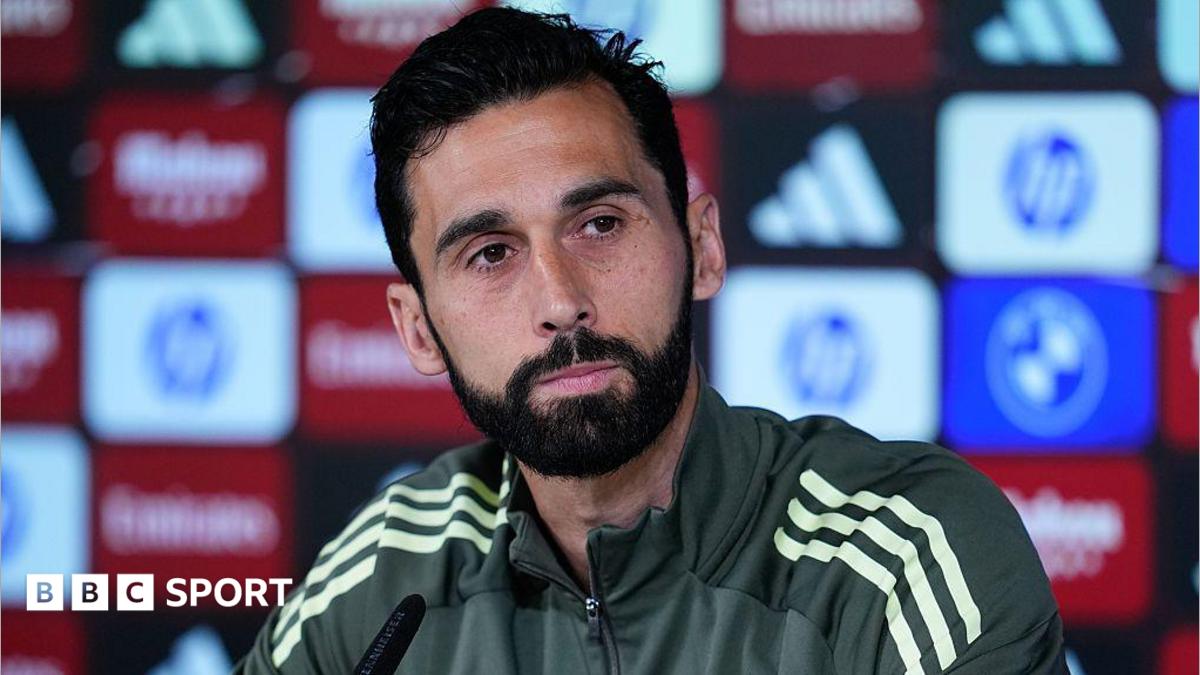
Fulham’s Arbeloa gamble is a massive tactical shift
an hour agoAncelotti's Brazil has a Neymar-sized hole before Morocco
3 hours ago
Arsenal's transfer strategy is getting weird again
5 hours ago
Scotland’s 28-year wait ends against a dangerous Haiti side
6 hours ago
Arsenal fans are losing their minds over the Christos Tzolis rumors
6 hours ago
Arsenal and United launch a two-horse race for Mateus Fernandes
7 hours agoMore Analysis
Qatar vs Switzerland is a masterclass in how to kill a World Cup mood
an hour ago
Jarell Quansah's rise: Why his Liverpool exit was the masterstroke of his career
an hour ago
Messi in Kansas City is the ultimate reality check for US soccer
an hour ago
England's World Cup gear heist is peak farce
an hour ago
Qatar vs Switzerland is already melting down the internet
an hour ago