The discipline collapse behind the 2026 opener
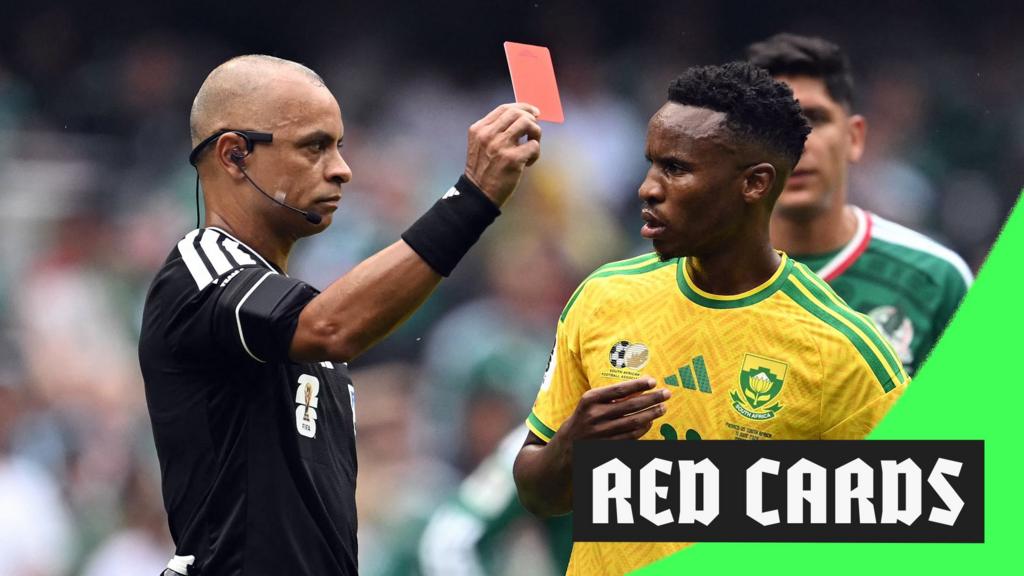
The 2026 World Cup kickoff at the Estadio Azteca was expected to be a controlled coronation for the hosts. Instead, the fixture dissolved into a chaotic display of officiating and indiscipline. Wilton Pereira Sampaio handed out 3 red cards, disrupting any possibility of sustained rhythm or tactical nuance.
Mexico’s approach to the match was fraught with defensive instability. Their reliance on Julian Quinones to carry the attack meant the midfield functioned more as a transition bypass than a building block. When the team loses its structure, defenders are forced into high-risk interventions to recover possession. This was evident when Cesar Montes was dismissed, leaving the backline exposed for the remainder of the contest.
Quantifying the refereeing marathon
The match devolved into a series of stop-start exchanges that stripped the game of its flow. With three players sent off—Yaya Sithole and Themba Zwane for South Africa, and Montes for Mexico—the recent opener result became a testament to poor player composure rather than high-level technical execution.
Referees are often instructed to maintain control during opening fixtures, but Sampaio’s aggressive card distribution suggests a failure in game management by both sides. When a team loses 33% of its available outfield starters to red cards before the final whistle, the tactical game plan is effectively abandoned in favour of defensive survival.
The defensive liability of Mexico's formation
Mexico entered the tournament with an expected advantage, yet they looked vulnerable to quick South African counters through the middle. While the home support provided the necessary energy, the team’s positioning was disjointed. A high press requires coordinated intervals between the forward line and the holding midfielders. Against South Africa, the gaps grew, forcing the center-backs to step out of their block prematurely.
This overextension is a lingering concern. If the coaching staff cannot refine their vertical spacing, they will struggle against more clinical opponents in the group stage. Relying on individual moments of brilliance from Quinones is not a sustainable model for a deep tournament run. The chaotic nature of this match masked the reality: their defensive discipline is currently the weakest link in their internal mechanics.
The victory provides the three points, but the fallout from the red cards forces a scramble for rotations heading into the next matchday. The coaching staff must resolve these spacing issues. Without a more disciplined approach to their defensive transition, the advantage of the Azteca will be negated by their own defensive fragility.
Read Next
- Mexico's World Cup opener was a total refereeing circus
- Mexico have the Azteca advantage for the 2026 World Cup opener
- Mexico have the hunger but their discipline is becoming a liability
- Mexico and South Africa kick off a chaotic month of football
- 🏆 World Cup 2026 — Full Coverage Hub
- 🇲🇽 Mexico World Cup 2026 — El Tri Hub
- 🇦🇫 South Africa World Cup 2026 — Bafana Bafana Hub
- 🇲🇸 WC 2026 Group A — Mexico, South Africa, Korea Republic