The stagnation of the Newcastle project
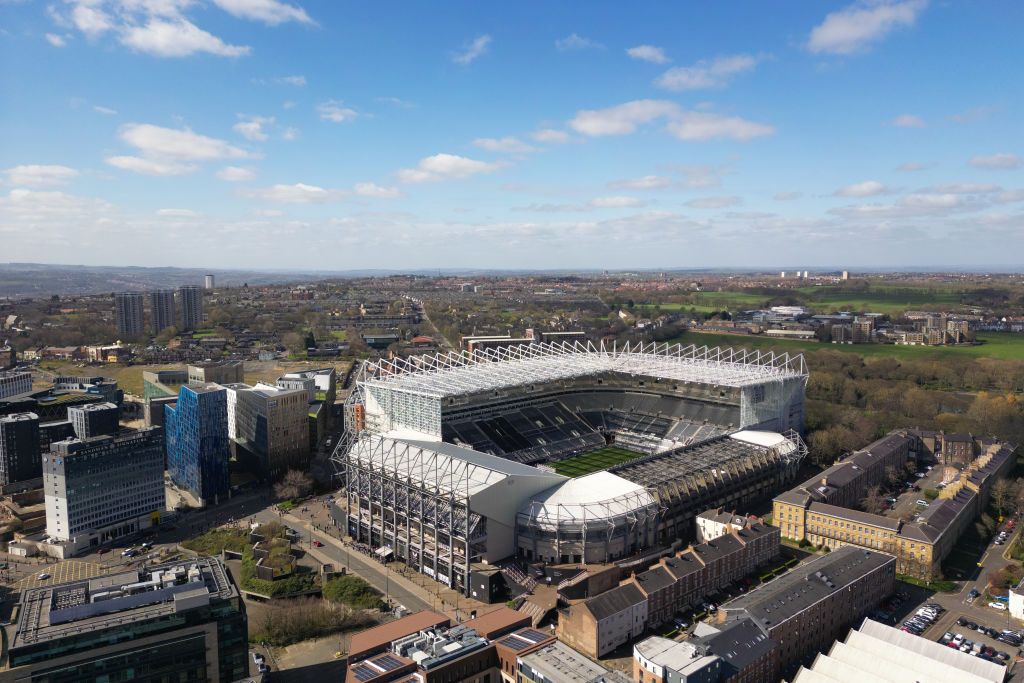
There is a creeping sense of inertia at St James' Park. Newcastle United’s current campaign has been defined by a baffling inconsistency, a series of false dawns followed by familiar structural collapses. This is not simply a hangover from past injury crises. The tactical blueprint that propelled Eddie Howe's side into the European elite three years ago is showing severe signs of wear.
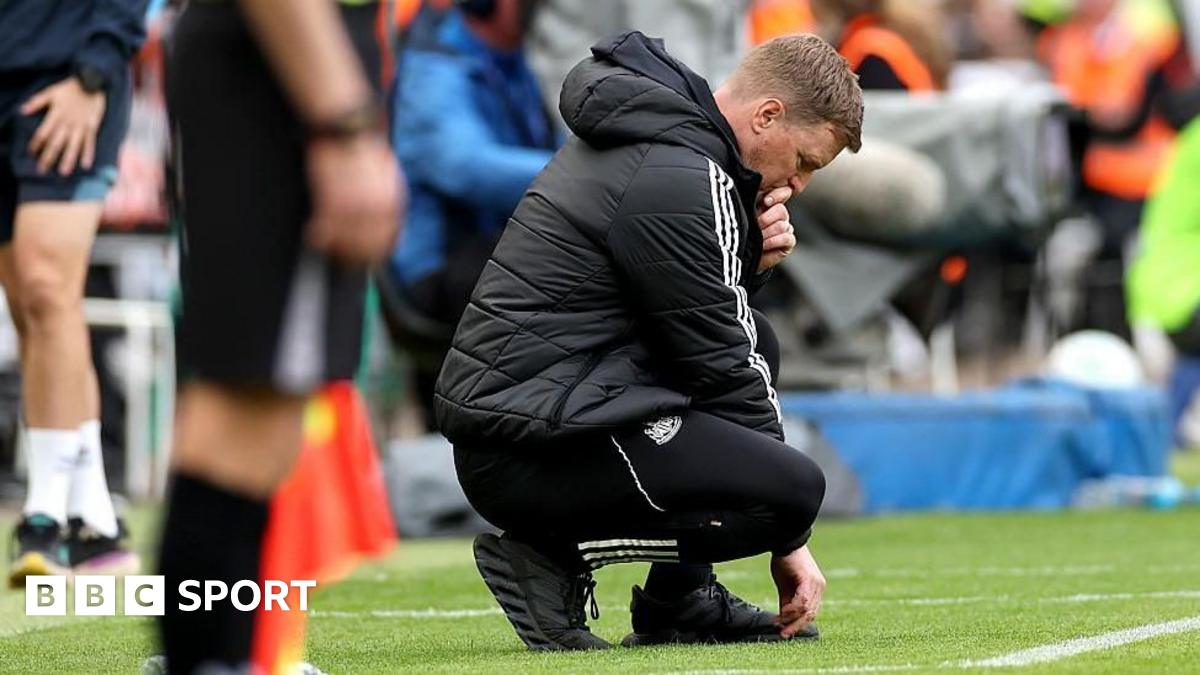
As noted by BBC Sport, the club is hurtling towards a defining summer. Questions are openly circling regarding Howe's long-term future in the dugout. More alarmingly for the fanbase, the reality of financial compliance means significant player sales are no longer just a grim possibility. They are a looming operational necessity.
Newcastle have stopped surprising people. The intense, front-foot identity that defined Howe's early tenure has devolved into a predictable pattern. When the high press works, they look devastating. When it is bypassed, they look startlingly fragile. It is a binary system lacking the nuance required to navigate a grinding Premier League schedule.
Where the 4-3-3 stopped working
To understand why Newcastle find themselves in this predicament, you have to look at the midfield spacing. During their peak under Howe, the 4-3-3 was a suffocating machine. The distances between the front three and the midfield trio were incredibly tight. When possession was lost, the counter-press was immediate, aggressive, and coordinated.
This season, that essential compactness has vanished. Opposing managers have realized that if you can play through the initial wave of pressure from Alexander Isak and Anthony Gordon, the midfield is often completely detached. Sean Longstaff and Joe Willock frequently push too high, leaving massive gaps behind them.
Bruno Guimarães is subsequently left covering vast swathes of grass alone. He is effectively acting as a single pivot in defensive transitions while his central midfield partners are caught high up the pitch. It is a structural flaw that Howe has stubbornly failed to correct over the last eight months.
The reliance on sheer running power over controlled possession was always going to have a shelf life. Elite teams control the tempo; Newcastle still try to force it. When their physical intensity drops by even a fraction, the entire system fractures. Mid-table sides are cutting through the center of Newcastle's shape with alarming ease, exploiting the spaces behind the number eights.
The defensive regression
The knock-on effect of a porous midfield is a defense constantly under siege. Fabian Schär has been a magnificent servant to the club, but his lack of recovery pace is increasingly targeted by quick transitional attacks. Opponents isolate him in the channels, knowing the midfield cover will arrive late.
Sven Botman’s presence has been missed during his various absences, but even when available, the defensive line has dropped noticeably deeper this season. This creates a gaping chasm between the defense and the attacking line, stretching the play exactly how Howe used to forbid.
Look at how easily teams bypass the initial press now. Two years ago, Miguel Almirón would sprint to close down the opposing left-back, forcing a long ball that Botman would comfortably sweep up. Now, the timing is a fraction of a second off.
The opposing full-back has time to find a central midfielder, who then turns and exposes the massive gap left by Longstaff. This disjointed pressing structure forces the center-backs into uncomfortable one-on-one situations. Schär, for all his ball-playing ability, is simply not equipped to defend large open spaces against elite attackers.
Dan Burn's deployment at left-back, once a tactical masterstroke to form a back three in possession, now looks outdated. Speedy wingers repeatedly target his outside shoulder, forcing the entire defensive block to scramble sideways. It is a classic symptom of a team caught between two styles.
They want to press high, but the defense is terrified of the space in behind. The result is a disjointed block that neither presses effectively nor defends the penalty area with authority. The expected goals against metric highlights a team that is conceding far too many high-quality chances.
The financial reality of the summer window
Tactical issues aside, the boardroom faces an incredibly complex puzzle. The Premier League's financial regulations have clamped down on the limitless spending many anticipated following the Saudi takeover. Newcastle have hit their financial ceiling.
To rebuild the squad, they must generate pure profit. The math is brutal and unavoidable. Selling fringe players will not balance the books or provide the necessary funds to overhaul a stale midfield and an aging backline. They have to sell a premium asset.
Guimarães and Isak are the obvious candidates. Both possess the quality to slot into any Champions League squad in Europe. Guimarães has a release clause that has been heavily discussed, while Isak's profile as a complete modern forward makes him incredibly valuable.
Selling either would be a bitter pill for the supporters to swallow. It would signal a step backward in the project's ambition. Yet, it might be the only viable route to constructing a more balanced, deeper squad capable of competing across a 38-game season without collapsing under fatigue.
Has Eddie Howe hit his ceiling?
This brings us to the manager. Howe deserves immense credit for dragging Newcastle out of the relegation zone and instantly transforming them into a top-four side. His coaching improved players like Joelinton beyond recognition.
However, the valid criticism leveled at Howe revolves around his in-game management and tactical rigidity. His substitutions are routinely late and often predictable, typically straight swaps that rarely alter the geometry of the match. When Plan A fails, the response is usually just to run harder.
He rarely shifts into a double pivot or alters the angle of the press to disrupt the opponent's rhythm. The lack of a sophisticated possession structure means Newcastle struggle to break down low blocks. They rely heavily on transitions, set-pieces, and individual brilliance.
In modern elite football, you need the ability to suffocate an opponent with the ball. Howe's teams rarely do. The ownership group has been patient, acknowledging the overachievement of his first full season. But patience is a finite resource in modern football. The expectations have shifted permanently.
What to watch for in the coming weeks
As the season stumbles toward its conclusion, watch how Howe manages the midfield rotations. Does he finally adopt a more pragmatic shape to protect his defense, or does he double down on the chaotic 4-3-3? The final fixtures will serve as a live audition.
This is strictly about the manager trying to prove he can evolve. Pay close attention to the body language of the key players. The rumors surrounding potential summer exits can easily poison a dressing room environment.
If performance levels drop further, it will indicate a squad that has already accepted an impending breakup. The club is at a dangerous crossroads. Mismanage this summer, and the gap to the established top six will widen rapidly.
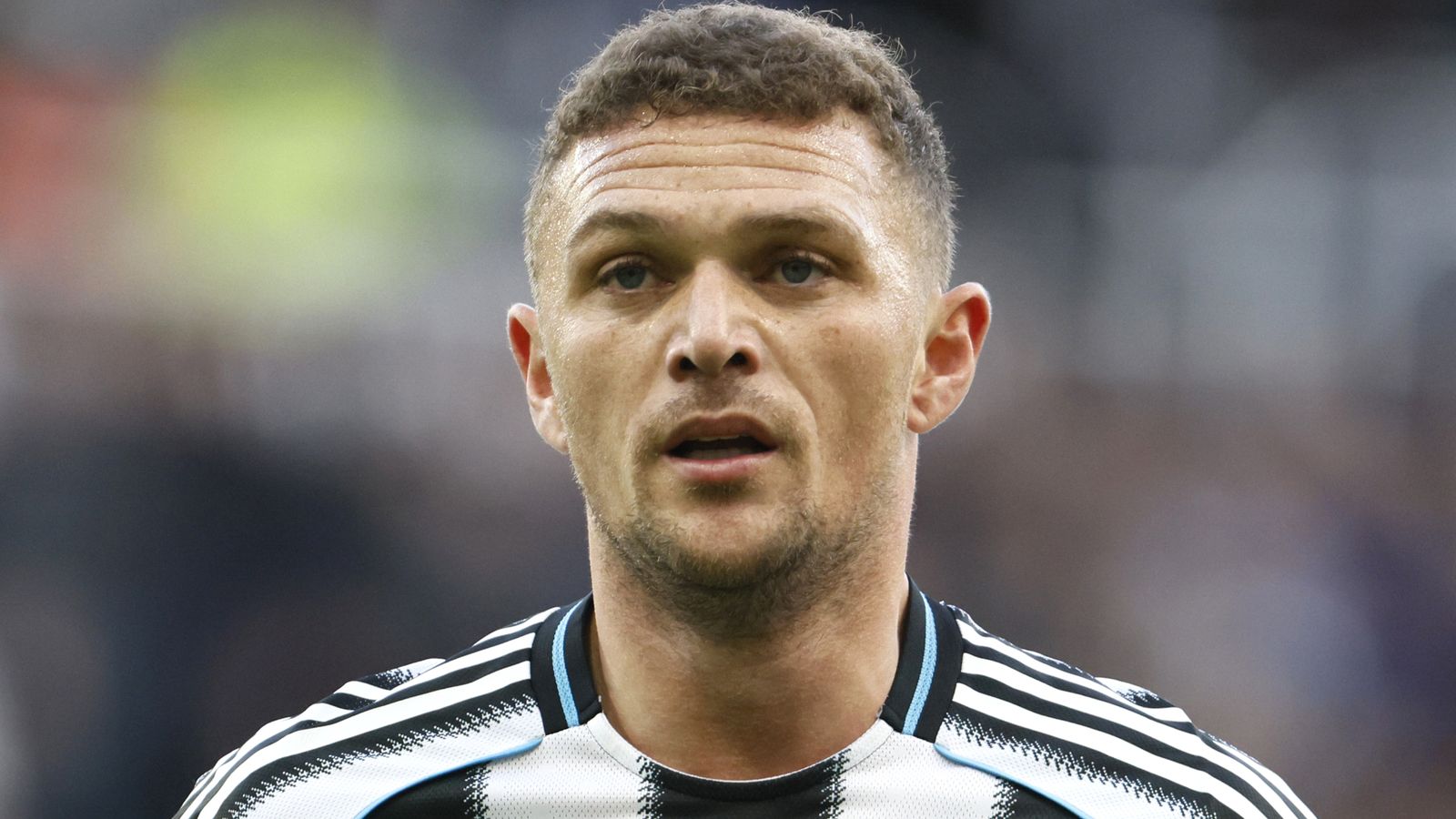
There is also the question of the sporting director role and the recruitment strategy moving forward. The initial phase of the Saudi-backed era was characterized by smart, data-driven acquisitions. Kieran Trippier, Nick Pope, and Burn were pragmatic additions who immediately raised the standard.
Recently, the transfer hit rate has dropped. The club needs to rediscover that ruthless efficiency in the market. The margin for error is non-existent. Every incoming player this summer must fit a precise tactical profile, rather than simply being a recognizable name.
The final verdict
My prediction for this summer is harsh but necessary. Newcastle will be forced to sell one of their marquee names to satisfy the accountants. I expect Isak to depart for a fee approaching £100m. That money will be aggressively reinvested across three or four positions to raise the overall floor of the squad.
As for Eddie Howe, he will likely survive the summer. Replacing a manager while undergoing a major squad overhaul introduces too much instability. However, he will start the upcoming season under immense pressure.
If he fails to demonstrate tactical evolution by October, the ownership will intervene. The romantic phase of the Newcastle rebuild is over. The ruthless reality of elite football has firmly arrived on Tyneside.