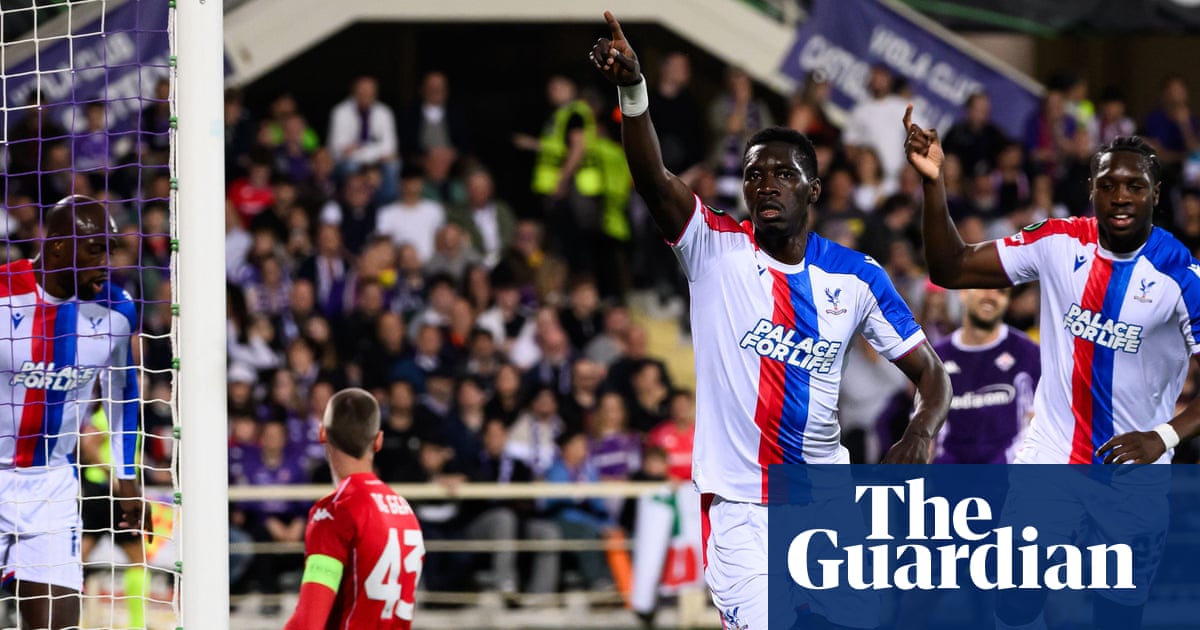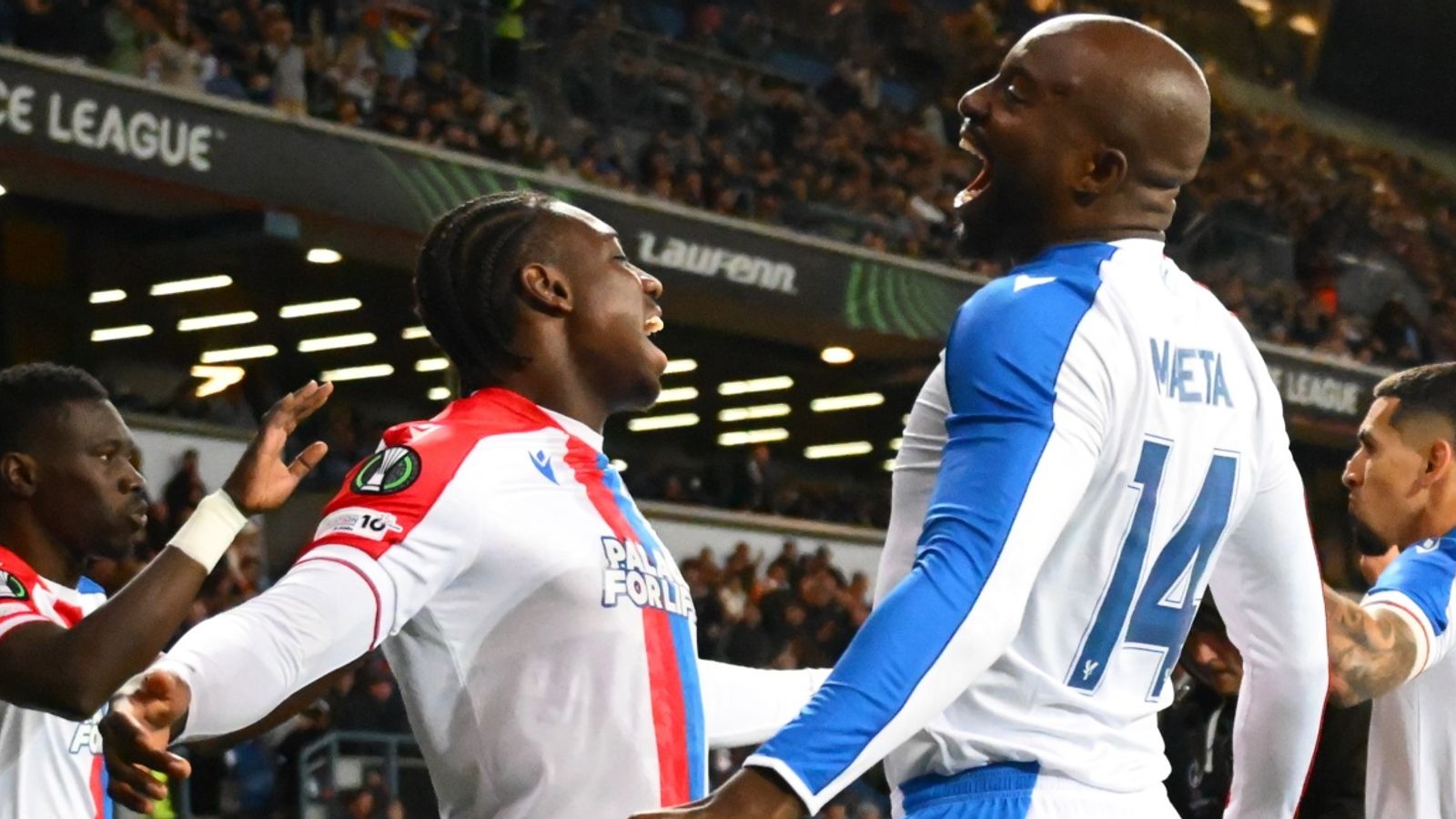
The true cost of Thursday nights
Crystal Palace secured a commanding lead over Shakhtar Donetsk in Poland tonight. The scoreboard reflects a tactical masterclass from Oliver Glasner. The internal medical data tells a much darker story.
Ismaila Sarr made history by becoming the first Palace player to score a European hat-trick. Then, in the 82nd minute, his right hamstring snapped. The winger pulled up sharply while chasing a routine through ball near the touchline.
He collapsed immediately. No contact was involved. He punched the turf twice before the medical staff even crossed the white line.
Initial assessments from the away dressing room point to a Grade 2b tear of the biceps femoris. The timeframe for recovery is unforgiving. Sarr is expected to miss at least six weeks.
His season is entirely over. He will miss the second leg at Selhurst Park next week. He will miss the final four matches of the Premier League campaign.
Glasner's catastrophic rotation failure
This injury was not a freak accident. It was a statistical probability. Glasner has run his starting eleven into the red zone for two straight months.
Palace have played eight matches in the last twenty-four days. Sarr started seven of them. He played 90 minutes against Fulham just three days ago in a match Palace had already killed off by halftime.
Leaving a high-velocity winger on the pitch in a dead rubber is a glaring managerial mistake. Glasner’s refusal to trust his bench has now cost him his most potent attacking weapon.
Sports scientists have warned about this exact scenario for years. The transition from Thursday night European fixtures to Sunday domestic matches creates an unsustainable physiological debt. Muscle fibers do not fully repair within 72 hours.
When you ask a player who relies purely on explosive acceleration to repeatedly hit top speed on inadequate rest, the tissue eventually fails. Sarr was essentially a ticking time bomb.
The medical breakdown of a Grade 2b tear
A Grade 2b classification is specific and nasty. It means the tear occurred at the musculotendinous junction, the precise area where the muscle transitions into the tendon.
This is not a standard strain that heals with ice and a week of rest. The structural integrity of the hamstring is compromised. Blood floods the area immediately, causing immediate inflammation and sharp, localized pain.
Rehabilitation requires complete immobilization for the first five days. After that, Sarr will begin a painfully slow process of isometric loading. Rushing the timeline risks a full rupture, which requires surgical intervention and six months of lost career time.
Palace’s medical department knows this all too well. They dealt with similar setbacks when Michael Olise suffered recurring hamstring issues earlier in his career. The protocol is strict, and there are no shortcuts.
The biomechanics of the breakdown
Hamstring injuries rarely occur in a vacuum. They are the final domino in a long chain of muscular fatigue. Biomechanical analysis of Sarr’s final sprint reveals a loss of pelvic control right before the muscle gave out.
When a player is fresh, their core stabilizes the pelvis, allowing the hamstring to function purely as a brake during the swing phase of a sprint. When fatigue sets in, the core drops. The pelvis tilts forward.
This subtle anterior tilt places immense, unnatural stretch on the biceps femoris precisely when it is contracting the hardest. The muscle simply cannot handle the dual load. The tissue shears apart.
Sarr had already covered over 10.5 kilometers before the incident. He registered fourteen sprints at high intensity. That final run in the 82nd minute pushed a compromised muscle beyond its mechanical limit.
The warning signs were completely ignored
Sources close to the medical department indicate Sarr presented with tightness in his lower back during Tuesday’s recovery session. Lower back stiffness is a classic precursor to hamstring failure.
It indicates the posterior chain is overcompensating for localized fatigue. A cautious manager benches the player. Glasner strapped him up and started him in a European semi-final away from home.
This is the exact reason modern football employs an army of sports scientists. GPS vests collect millions of data points specifically to prevent this outcome. Ignoring the data renders the entire department useless.
The tactical void left behind
Without Sarr, Palace lose their vertical threat. He has recorded top speeds exceeding 35 km/h consistently this season. That pace forces opposing defensive lines to drop five yards deeper.
When defenses drop, Eberechi Eze finds space in the pockets. Without Sarr stretching the pitch, Shakhtar will compress the midfield in the second leg. They will suffocate Eze.
Glasner now has to figure out an emergency solution. Jesurun Rak-Sakyi is the obvious replacement, but throwing a young prospect into a European semi-final is a huge gamble.
Matheus Franca offers another option, but he lacks the raw straight-line speed to replicate Sarr's tactical function. The entire attacking structure has to shift.
Sarr's absence changes the math for the remainder of the season. Palace held a significant psychological advantage after tonight. Now, they are limping home with a tactical hole they cannot patch.
What this means for the Premier League run-in
Palace are currently sitting comfortably in the top half of the table, but their upcoming domestic fixtures are brutal. They face Manchester United this Sunday. They have Chelsea the following weekend.
Without Sarr's pace to keep opposing fullbacks honest, United and Chelsea will pin Palace deep in their own half. Diogo Dalot and Reece James will have complete freedom to overlap.
The tactical ripple effect is severe. Jean-Philippe Mateta will find himself isolated up front. The supply line from the right flank is dead. The entire attacking burden now falls on a heavily marked Eberechi Eze.
The broader industry impact
This injury adds fuel to the ongoing dispute between the PFA and UEFA over the expanded match calendar. Players are hitting breaking points earlier in their careers.
The schedule is expanding while recovery windows shrink. Sarr is just the latest high-profile victim. Medical departments across the Premier League are drowning in soft-tissue injuries, and managers are openly blaming the fixture list.
However, Glasner cannot deflect all the blame. He had the option to rest his star winger. He chose the immediate result over long-term risk management.
That gamble backfired spectacularly in Poland. Palace have their first-leg advantage, as Sky Sports reported, but the cost was entirely unnecessary.
The return leg is set for next week. Selhurst Park will be loud, but Palace will be demonstrably weaker. Glasner has to hope his mistake does not cost the club their first European final.
Historical precedents of European burnout
The Europa Conference League is a poisoned chalice for squads lacking elite depth. West Ham United learned this lesson during their triumphant run in 2023. They won the trophy, but their domestic form collapsed as key players broke down.
Arsenal experienced a similar crisis during their 2018 Europa League campaign under Arsène Wenger. The Thursday-Sunday grind obliterated their defense, leading to a cascade of soft-tissue injuries.
Glasner believed his aggressive pressing system could survive the schedule. He was wrong. The data clearly shows that teams competing in UEFA’s Thursday night brackets suffer a 22 percent increase in muscular injuries compared to their Champions League counterparts.
The lack of an extra recovery day makes a profound difference. Champions League clubs playing on Tuesday have an extra 48 hours of cellular repair before the weekend. Palace players are boarding flights from Eastern Europe at three in the morning on Friday.
They are sleeping on planes, eating disrupted meals, and trying to flush lactic acid during abbreviated tactical sessions on Saturday. It is a recipe for physical breakdown.
Read Next