The Brutal Reality of Single-Leg Playoffs
The international break always brings a wave of anxiety for club managers. The World Cup 2026 single-leg playoffs operate on an entirely different level of stress. There is no safety net, no second leg to correct a tactical error, and no room for pacing. It is do-or-die football, and that intensity translates directly to the physical toll taken on the players.
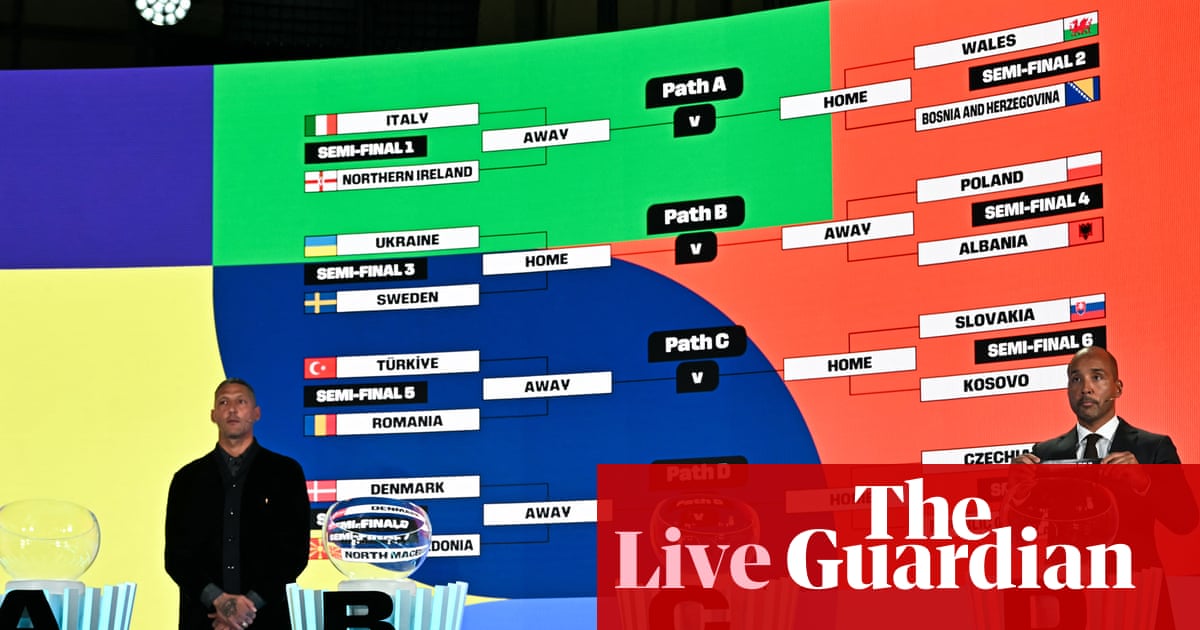
Tonight's slate of fixtures features Wales taking on Bosnia-Herzegovina, the Czech Republic facing the Republic of Ireland, and Italy clashing with Northern Ireland. These are pressure cookers. The speed of the game increases dramatically, and the tackles carry extra weight. Players already carrying micro-tears from a grueling club season are asked to push their bodies to the absolute limit.
It rarely ends well for everyone. The medical staff on the touchline are frequently the busiest people in the stadium. Tonight, it didn't take long for the first casualty to emerge, and it was the worst possible name for fans in Istanbul and Madrid.
The Arda Güler Incident
As The Guardian reported from the live action, the news was blunt: "We have our first of the night. Arda G..." The young Turkish playmaker went down early. While the exact diagnosis is pending an MRI, the mechanics of a sudden stoppage in a high-stakes match almost always point to a soft tissue failure.
When an agile player like Güler goes to the turf, suspicion immediately falls on the hamstrings or calves. He relies heavily on sudden deceleration and rapid changes of direction. That specific biomechanical profile puts an enormous, continuous load on the posterior chain.
For Turkey, the impact is devastating. They built their entire attacking framework around his ability to operate in the half-spaces. Losing him abruptly forces a complete tactical rewrite on the fly, substituting genuine creativity for a more pragmatic, likely direct approach. It is a massive failure of contingency planning by the national team setup.
The panic extends far beyond the stadium. In the Spanish capital, the alarms are ringing loudly. Real Madrid’s medical department will be demanding immediate updates, fully aware of the nightmare scenario unfolding.
A Deeply Frustrating Medical History
To understand the gravity of this setback, you must look at Güler's medical history. The 21-year-old is highly familiar with the treatment table. His initial arrival at Real Madrid was derailed by a sequence of physical breakdowns that tested his mental resilience just as much as his body.
He was forced to undergo surgery for a meniscus issue in his right knee shortly after joining the club in 2023. That type of procedure requires careful rehabilitation to ensure the joint mechanics are fully restored. But the real problems surfaced during the ramp-up phase.
As he pushed to regain match fitness, his muscles rebelled. He suffered a rectus femoris tear, a significant injury to one of the primary quadriceps muscles. Just as he recovered from that, another muscular setback followed. It is a frustrating pattern for young players transitioning to a higher intensity of football. The cardiovascular system adapts much faster than the tendons and muscle fibers.
Over the last year, he seemed to have finally turned a corner. He added visible muscle mass and looked far more robust in physical duels. This latest stoppage feels like a severe regression. It is a harsh reminder that his body remains vulnerable to the relentless demands of the modern calendar.
Real Madrid’s April Crisis
Look closely at the calendar, because the timing is a disaster for Carlo Ancelotti. Today is March 26. Real Madrid face the first leg of their Champions League Quarter-Final on April 7. That is exactly 12 days from now. The second leg follows rapidly on April 14.
In the world of sports medicine, a 12-day turnaround for a muscular injury is a fantasy. Even a minor Grade 1 hamstring strain requires a minimum of 14 to 21 days for the tissue to heal and for the player to complete a functional return-to-play protocol. If the scan reveals a Grade 2 tear, you are looking at four to six weeks on the sidelines.
Ancelotti meticulously managed Güler's workload for months. The strategy was built entirely around unleashing him during this exact period. The Italian manager needed Güler to start domestic league matches, providing necessary rest for Jude Bellingham, Vinícius Júnior, and Rodrygo ahead of the massive European nights.
Without Güler, that rotation plan disintegrates completely. The veteran core will be forced to play heavy minutes across both competitions. The risk of secondary injuries to Madrid's star players skyrockets as fatigue accumulates. A single muscle pull tonight has the power to ruin a season in May.
The Craig Bellamy Factor
While the Güler situation commands attention, the physical demands are equally extreme elsewhere. Look at the Wales camp. Manager Craig Bellamy was in a defiant mood before kickoff against Bosnia-Herzegovina.
"Do you know why I’m so calm? Because we’re such a good team."
Bellamy never reached a major tournament with Wales during his playing days, a failure that clearly drives his intense managerial style. As a player, Bellamy was a physical dynamo who relied on relentless pressing. He demands that exact same physical profile from his current squad.
Playing in a Bellamy system requires peak aerobic capacity. The players are asked to initiate high-intensity presses repeatedly over 90 minutes. In a single-leg playoff against a robust Bosnian side, the physical load is staggering.
The Welsh medical staff spent the last week heavily focused on recovery and injury prevention. Managing the training load leading into a match like this is a massive challenge. You want the players sharp, but you cannot afford heavy legs. One poorly timed sprint in the 80th minute could result in a torn hamstring, abruptly ending a World Cup dream.
The Broader Crisis of the Calendar
We cannot discuss these injuries in isolation. The overarching issue is the fundamentally broken football calendar. Players are expected to perform at an elite level for 11 months of the year. They participate in expanded club tournaments and endless international qualifiers without relief.
The human body simply does not have the capacity to recover from this volume of high-intensity sprints, rapid changes of direction, and heavy collisions. The recovery windows between matches have shrunk to a few days. The off-season is barely long enough for a proper physical reset. This is the reality of the sport right now.
The Czech Republic versus Republic of Ireland fixture is a perfect example of a different risk profile. It is a highly physical, combative match. The danger there is less about non-contact muscle strains and more about contact injuries. Ankles get rolled under heavy tackles, dead legs result from knee-on-knee collisions, and the general trauma accumulates over a bruising 90 minutes.
When fatigue sets in, a player's reaction time drops by fractions of a second. That is all it takes to arrive late to a tackle and suffer a severe impact injury. The medical teams for both the Czechs and the Irish will be on high alert tonight, armed with ice packs and preparing for a war of attrition.
The Immediate Outlook
As the night unfolds, the focus remains split between the scorelines and the medical tents. For Arda Güler, the next 24 hours are paramount. An MRI scan will dictate not just his immediate future, but potentially the trajectory of Real Madrid's season.
If it is a worst-case scenario, he misses the entire Champions League quarter-final tie. Ancelotti will have to rely heavily on Brahim Díaz to fill the creative void. Díaz is a brilliant dribbler, but he lacks Güler's precise passing range, making the Madrid attack slightly more predictable.
For managers like Craig Bellamy, the goal is simple survival. Get through the 90 minutes, secure the victory, and pray that the medical report on Monday morning is clean.
The playoffs are designed to be dramatic. They provide the highest possible stakes for the fans watching at home. But for the players on the pitch, and the medical professionals tasked with keeping them intact, nights like this are an exercise in sheer survival. The physical toll is immense, and the consequences will be felt long after the final whistle.
Read Next
- Real Madrid scanned Mbappe's wrong knee in historic medical failure
- Italy are staring down another World Cup disaster in Bergamo
- Top 10: Most Iconic Moments in Football History
- Andy Woodman's massive gamble as Bromley shift to Project Champions
- ⚽ La Liga 2025-26 — Title Race Hub
- ⭐ UCL 2026 — Champions League Quarter-Finals Hub
- 🇹🇷 Turkey at the 2026 World Cup — Full Coverage Hub