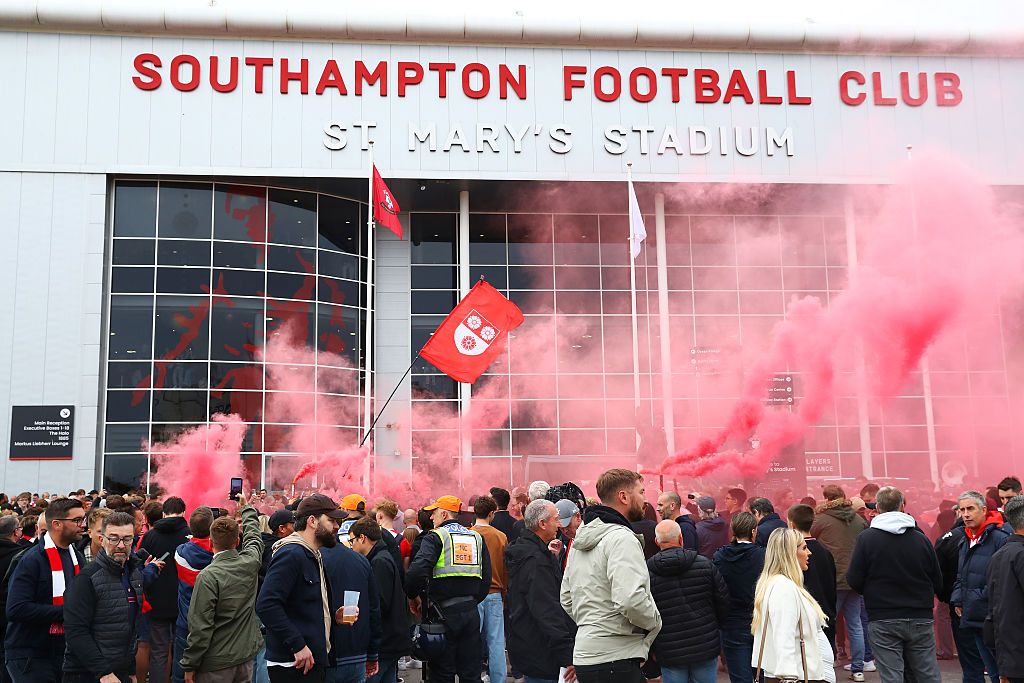
The £170 million asterisk
The Championship play-off final is routinely cited as a £170 million game. That figure isn't just a media buzzword; it represents a hard, calculated leap in broadcast revenue, commercial sponsorships, and guaranteed parachute payments. For a club like Southampton or Middlesbrough, bridging the gap between the second tier and the Premier League alters the financial trajectory of the institution for a decade. Yet, as we sit here on May 12, 2026, the integrity of that exact windfall is hanging by a bizarre legal thread.
Middlesbrough are currently preparing for a play-off semi-final second leg against Southampton. But the football on the pitch might actually be secondary to what is happening in the boardroom. The escalation of an espionage row between the two clubs has brought a terrifying prospect to the table: Southampton could be completely removed from the postseason.
This isn't a mere administrative squabble. This is a threat to strip a team of a shot at the Premier League after a grueling 46-game season based entirely on off-pitch conduct. To understand the gravity of this, you have to look at the numbers that define the modern Championship. The average operating loss for a club in this division hovers around £14 million per season. Clubs gamble their entire financial health on reaching these play-offs. Removing a team at this stage isn't just a sporting penalty; it is a financial earthquake.
The statistical anomaly of expulsion
To understand how radical this threat is, you have to look at the historical precedent for espionage and off-field misconduct in the English Football League. Cast your mind back to 2019. Marcelo Bielsa sent an observer to Derby County's training ground. The resulting punishment was a £200,000 fine levied against Leeds United.
At the time, that fine felt severe. But compared to the revenue of a Premier League promotion, it was a literal rounding error. To escalate from a six-figure financial penalty to outright expulsion from the play-offs represents an unprecedented punitive leap in English football governance.
Over the last decade, we have seen the EFL flex its muscles primarily through Profitability and Sustainability Rules. Between 2020 and 2025, clubs in the top two tiers were docked a cumulative total of 34 points for financial irregularities. The standard penalty has settled into a rhythm: a breach gets you somewhere between four and eight points docked, depending on cooperation and mitigating factors.
But disqualifying a team mid-tie throws the entire statistical model of the competition into chaos. There is zero modern precedent for a team qualifying for the postseason on points, only to be forcibly removed while the semi-finals are actively being played. It creates a vacuum of regulation where the punishment does not fit any established matrix.
The psychological tax of pending litigation
There is a measurable psychological tax on squads dealing with off-field uncertainty. When we look at teams facing impending points deductions over the last five seasons, their points-per-game averages predictably crater during the period between the charge and the verdict.
Take the data from recent financial breaches. On average, a team's points return drops by 0.4 per game in the four matches immediately following a formal league charge. Players are human. The realization that their physical effort might be negated by accountants or executives bleeds into their on-field intensity.
For Southampton, the metrics of their season are suddenly completely unstable. They averaged 15.2 shots per game during the regular campaign, built on a high-possession, high-intensity model. But maintaining that intensity when your entire postseason existence is under review requires a monumental psychological effort. Every misplaced pass feels heavier, and tactical discipline inevitably frays under external pressure.
Conversely, Middlesbrough are suddenly operating under entirely different constraints. The data shows that teams playing without the direct pressure of an immediate outcome often see a slight uptick in their pass completion rates in the final third. Middlesbrough aren't relaxed, but the safety net of a potential Southampton disqualification provides a bizarre psychological cushion.
Game theory and tactical paralysis
Consider the impact on the pitch. The risk-reward matrix of a second leg is usually clearly defined. But imagine Michael Carrick's tactical decisions now. How do you prepare a team when the win probability is split between 90 minutes of football and an impending tribunal ruling?
Historically, teams trailing by a single goal in a play-off second leg commit an average of 2.4 extra bodies forward into the attacking third during the final ten minutes. They abandon their defensive shape out of pure desperation. But if you are Middlesbrough, and you know there is a very real chance your opponent is about to be disqualified anyway, do you make that gamble?
Do you push your fullbacks high and risk a tie-ending counter-attack in the 85th minute, knowing that a narrow defeat might still see you advance by default? It completely skews the tactical baseline. The pressing triggers, the substitution patterns, the willingness to risk a yellow card—every single metric is corrupted by the presence of a pending legal decision.
We track expected goals to measure the quality of chances, but there is no metric for expected legal victories. Middlesbrough might simply choose to sit deep, prioritize shape over penetration, avoid injuries, and wait for the lawyers to do the heavy lifting.
The collapse of administrative integrity
Let’s look at the actual failure of governance at play here. Allowing a semi-final tie to commence while an active investigation threatens to retroactively void the result is a critical administrative failure by the EFL.
If Southampton hold a narrow advantage heading into the second leg, historical data suggests they have roughly a 68% chance of progressing to Wembley based on first-leg leads. But that percentage is rendered utterly meaningless if the governing body hasn't sorted out its own disciplinary timeline.
The investigation into this espionage row should have been concluded before matchday 46. By allowing the season to bleed into the play-offs with this unresolved, the EFL has compromised the most lucrative event in their calendar. The fans paying inflated prices for tickets, the broadcasters clearing their schedules, and the players risking their physical health are all participating in a fixture that might be legally scrubbed from the records before the weekend is over.
This is the bleakest indictment of modern football governance. We are reaching a point where the league table is treated as a rough draft, subject to revision by independent panels long after the final whistle has blown. The fact that a place at Wembley might be secured not by a 90th-minute winner, but by an administrative technicality, strips the play-offs of the very drama that makes them valuable. If the EFL actually follows through and removes Southampton, they won't just be punishing a club; they will be setting a precedent that the football itself is merely the opening argument in a much longer legal battle.