The Big Picture
The 2025/26 European football season has moved past the stage of tactical experimentation and into a period of raw survival. With the Champions League quarter-finals reaching their boiling point and domestic races fracturing under the weight of injury crises, the narratives are shifting faster than a counter-attack. This list breaks down the moments that have fundamentally altered the balance of power across the continent.
The Rankings
10. The Manchester United Defensive Implosion
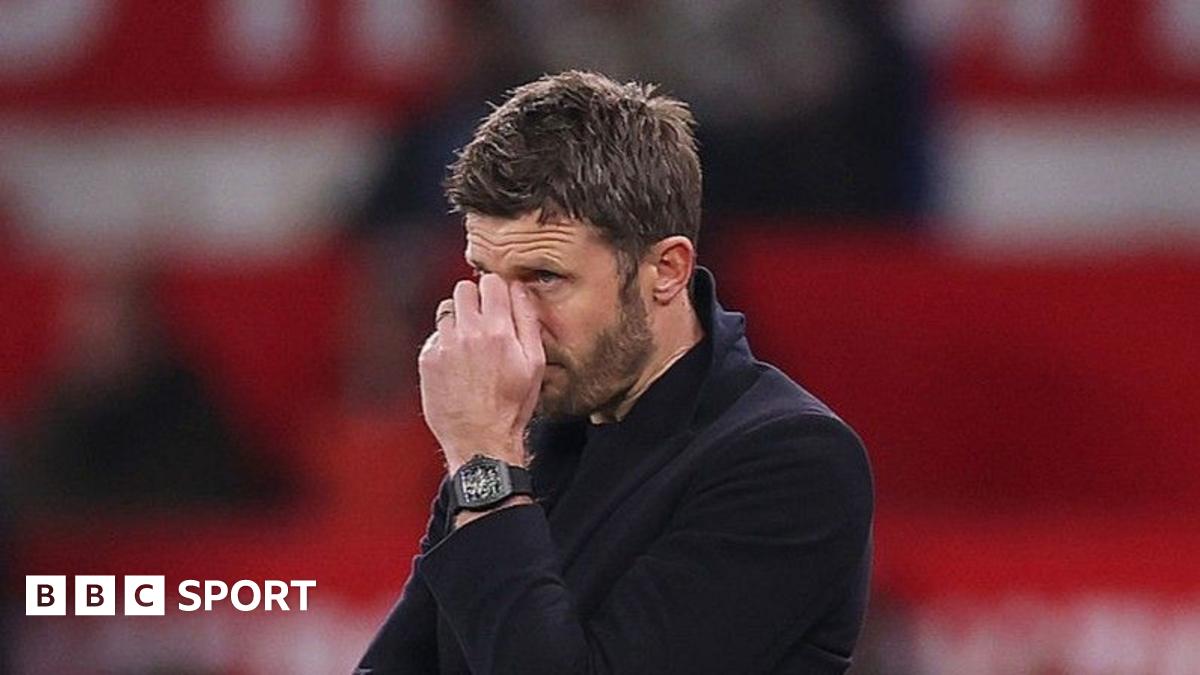
Michael Carrick’s honeymoon period at Old Trafford hit a concrete wall this week as the reality of a thin squad finally caught up with him. As the BBC reported this morning, United is entering a period of forced experimentation due to a catastrophic injury list. Losing both Lisandro Martínez and Harry Maguire in the same week is the kind of bad luck that suggests a lack of proper rotation earlier in the winter.
Carrick now has to decide whether to throw a teenage Willy Kambwala into the fire at Stamford Bridge or play a fading Casemiro as a makeshift center-half. It ranks tenth because it is a moment of stark vulnerability for a club that still hasn't figured out its long-term recruitment strategy. The failure to secure a fourth-choice defender in January looks like an unforgivable oversight now that the season is on the line.
9. The Carabao Cup Final Chaos
The February final between Liverpool and Newcastle at Wembley was less of a tactical chess match and more of a bar-room brawl with a trophy at the end. Liverpool eventually triumphed 3-2, but the match will be remembered for the chaotic seven-minute stretch where three goals were scored by the hour mark. Darwin Núñez finally looked like the **85-million-pound** player the fans wanted, bullying Sven Botman for his second goal of the afternoon.
However, the refereeing was atrocious, with a clear Newcastle penalty ignored in the dying seconds of stoppage time. This match takes the ninth spot because it encapsulated the frantic, often messy nature of English cup football in the post-Klopp era. It was entertaining for the neutrals, but it exposed the massive gap in quality between elite finishers and the struggling defensive units of the chasing pack.
8. Lamine Yamal’s Masterclass in the Bernabéu
At just 18, Yamal didn't just play in the October Clásico; he dictated the terms of the engagement. His solo goal in the second half, where he turned Antonio Rüdiger twice before slotting it into the bottom corner, felt like a literal passing of the torch in Spanish football. Barcelona's 2-0 win in Madrid silenced a crowd that expected the Mbappe-Bellingham-Vinícius trio to walk the league without a challenge.
This was the moment the new era of La Liga actually felt competitive again after years of Real Madrid dominance. We rank it eighth because while it was a world-class individual performance, Barcelona still lacks the consistency to hold onto their lead in the table. Their subsequent draw against Alavés showed that one wonderkid cannot fix a midfield that still leaks goals under pressure.
7. Chaos Theory at Stamford Bridge
November gave us a match that felt like a fever dream, as Chelsea and Manchester City shared eight goals in a display of total defensive negligence. Enzo Maresca’s side played with a suicidal high line that invited Erling Haaland to run riot, yet they somehow kept finding ways back into the contest. The **95th-minute** equalizer from Cole Palmer, coolly slotted past Ederson, sparked scenes of delirium that the Bridge hasn't seen in years.
It was a tactical mess for both managers, particularly Pep Guardiola, who looked visibly frustrated with Rodri's inability to control the transitions. It sits at seven because it was a spectacle of flaws rather than a display of perfection. High-scoring draws are great for television ratings, but they often mask deep-seated issues in organizational discipline that City usually prides itself on.
6. The Leverkusen Ghost Goal
Bayer Leverkusen’s European campaign took a bizarre turn in December when a clear winning goal against Inter Milan was missed by both the officials and the technology. The ball struck the underside of the bar and bounced a full foot over the line before spinning back out, yet the sensor failed to trigger the referee’s watch. Xabi Alonso was uncharacteristically vocal after the match, calling the failure a disgrace to the professional game.
This moment ranks sixth because of the butterfly effect it had on the tournament seeding. Had that goal stood, Leverkusen would have avoided the harder side of the knockout bracket and would likely be favorites for the final. Instead, they are fighting for their lives in a bracket that feels designed to punish them for a technological glitch they couldn't control.
5. The Erling Haaland Glitch
In September, Erling Haaland reminded the world that he is essentially a cheat code in a football shirt. His six-goal haul against a newly promoted Ipswich Town wasn't just about his physical size; it was about his predatory movement in a box packed with eleven defenders. He scored a thunderous volley in the **82nd minute** that nearly tore the netting off the frame, a strike of pure violence and precision.
It was a performance that felt like bullying, as the Ipswich defenders looked genuinely traumatized by the time the final whistle blew. It earns the fifth spot because it set a statistical standard that makes every other striker in the league look like a part-timer. The negative here is that it makes the Premier League feel increasingly like a one-man show, which is draining the drama out of the Golden Boot race.
4. The Sacking of Mikel Arteta
The most shocking managerial casualty of the season occurred in January when the Arsenal board decided that pretty football wasn't enough to justify a lack of silverware. After a run of four losses in five games, including a humiliating exit from the FA Cup to a Championship side, the trigger was finally pulled. The decision sent shockwaves through North London, as Arteta had become the face of the club’s identity for over half a decade.
Fans were split between those who saw him as a visionary and those who saw a manager who couldn't win the big games when the pressure peaked. It ranks fourth because of the sheer magnitude of the cultural shift at the Emirates. The subsequent scramble for an interim manager was a masterclass in poor planning, showing a club that was more interested in social media optics than actual sporting results.
3. The Mbappé Overhead Masterpiece
In the March Madrid Derby, Kylian Mbappé produced a moment of individual brilliance that will be replayed for decades. Connecting with a Valverde cross at an impossible angle, he sent an overhead kick into the top-right bin to secure a 1-0 win. It was his **32nd goal** of the campaign, and it effectively killed off any hope of an Atletico comeback in the title race.
It wasn't just the technique; it was the timing and the magnitude of the rivalry that made it special. This goal essentially put one hand on the La Liga trophy for Real Madrid. It's third on the list because it was the definitive Galactico moment we've been waiting for since his arrival. However, his tendency to disappear in the first hour of games remains a valid criticism for a player of his stature.
2. The Munich Demolition
Last week’s **4-1** victory for Arsenal over Bayern Munich in the Champions League quarter-final first leg was a tactical masterclass that nobody saw coming. Under interim leadership, the Gunners played with a level of freedom and aggression that had been missing in the final months of the Arteta era. Bukayo Saka was unplayable, scoring twice and leaving Alphonso Davies chasing shadows for ninety minutes.
The result has flipped the narrative of Arsenal’s season from one of failure to one of potential European glory. It ranks second because of the sheer surprise factor and the quality of the opposition. It was a statement win that proved the squad is much better than their league position suggests, even if the defensive lapses in the first half were still a concern for the coaching staff.
1. The 2026 World Cup Countdown
The December draw for the 2026 FIFA World Cup was the moment the global football community shifted its focus toward the summer. With 48 teams competing across the USA, Canada, and Mexico, the logistics are staggering, but the draw provided the first real look at the potential paths to the final. The anticipation for the opening game at the Azteca Stadium has already reached a fever pitch across the Atlantic.
It takes the top spot because the World Cup is the sun around which all other football orbits. Every league performance and every injury is now analyzed through the lens of national team selection for the expanded tournament. The negative side is the blatant commercialization of the draw process, which felt more like a corporate trade show than a legitimate sporting event.
Honorable Mentions
Harry Kane breaking the Bundesliga single-season record for the second time was a feat of incredible longevity, even if Bayern's collective form has dipped. Jude Bellingham’s red card in the Champions League first leg also deserves a mention for its potential impact on the return fixture. Finally, Aston Villa’s unbeaten home run ending after 18 months was a reminder that even the most formidable fortresses eventually fall.
Read Next
- Top 10: Top Moments
- Mainoo and Maguire absence highlights United's recurring defensive fragility
- Mason Mount's latest setback is the last thing Michael Carrick needs right now
- Leeds finally ending the 45-year Old Trafford curse is absolute cinema
- ⚽ La Liga 2025-26 — Title Race Hub
- ⭐ UCL 2026 — Champions League Quarter-Finals Hub