The Big Picture
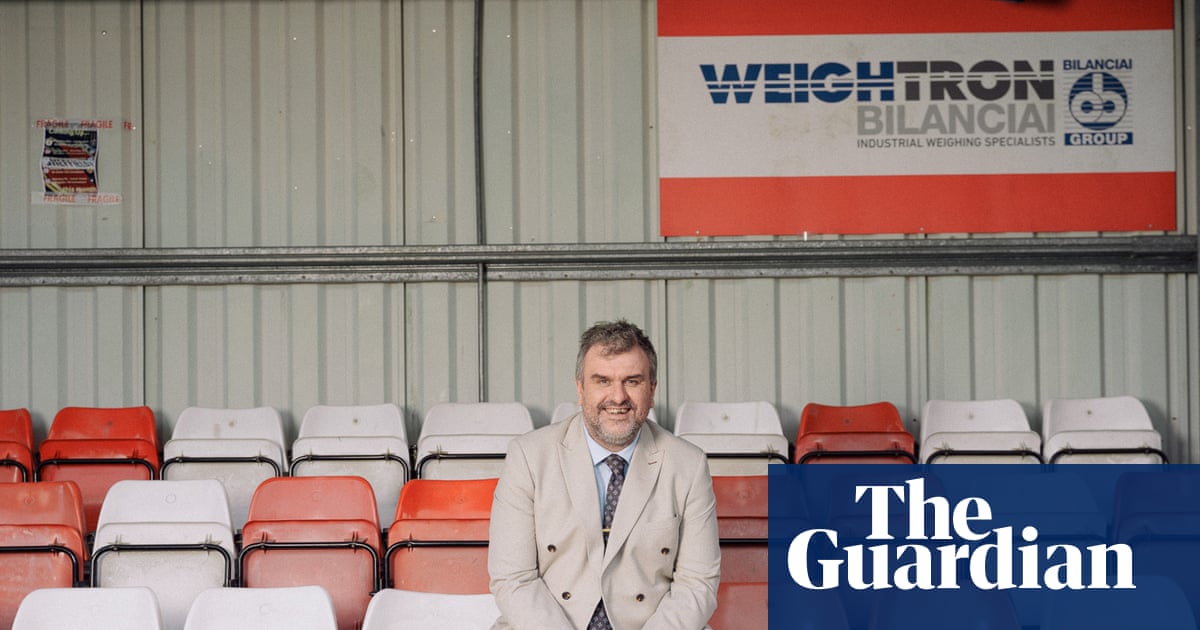
Sheffield FC is the heartbeat of the modern game. While the Premier League cashes billion-dollar checks, the world’s oldest club has been fighting for its soul in the ninth tier. Now, with Reverend and the Makers frontman Jon McClure taking the chair, the pioneer of football is looking to finally come home.
This isn't just a nostalgia trip. It is a calculated move to reclaim the identity of the club that gave us headers, corners, and the very concept of a goal kick. Here are the ten moments that defined the 168-year journey of the club that started it all.
10. The Jon McClure Takeover (2026)
The news broke today that Jon McClure, the voice of Sheffield’s indie scene, is the new chair of the world’s oldest club. It is a massive PR win for a side currently languishing in the Northern Counties East League. McClure isn't just here for the title; he’s promising a drum and a pie to every young fan who shows up to support.
As The Guardian reported, the mission is to bring the club back from Dronfield to the city of Sheffield. This is a gamble. Running a football club requires more than rockstar charisma, but the club needs a jolt of energy to survive the modern era.
9. The 1904 FA Amateur Cup Victory
This remains the high-water mark for the club’s trophy cabinet. Sheffield FC took down Ealing with a convincing 3-1 victory at Darlington to claim the FA Amateur Cup. It was a statement of intent during an era when the professional game was beginning to explode. They proved they weren't just the oldest; they were still among the best.
The win solidified their status as a powerhouse in the amateur scene. Many feared the club would fade as money poured into the sport, but this cup run silenced the doubters. It remains a point of pride for a fanbase that values history over balance sheets.
8. The Identity Crisis Move to Dronfield (2001)
This is the black mark on the club's history. In 2001, Sheffield FC left the city limits to play at the Coach and Horses ground in Dronfield, Derbyshire. It was a survival move, but it felt like a betrayal of the name. You cannot claim to be the soul of Sheffield while playing your home games in a different county.
The move stripped the club of its local connection. Attendance dipped, and the club felt more like a travelling museum than a local institution. McClure’s primary goal is reversing this mistake, and it cannot happen fast enough. A club without a home is just a collection of memories.
7. The 150th Anniversary vs Inter Milan (2007)
This was pure football royalty. To celebrate 150 years, Sheffield FC hosted Inter Milan at Bramall Lane. Pele was the guest of honor, and the legendary Marco Materazzi actually took the pitch for the Italian giants. The scoreboard read 5-2 to Inter, but the result was irrelevant to the 18,000 fans in attendance.
It was a rare moment where the global elite bowed to the grassroots. Seeing the FIFA World Player of the Year honors being discussed in the same breath as a non-league side was surreal. It reminded the world that every Champions League night starts with the foundation laid in 1857.
6. The First Floodlit Match (1878)
While Bramall Lane hosted the event, the DNA of Sheffield FC was all over the world’s first floodlit football match. Nearly 20,000 people squeezed into the stadium to see the experiment. Two teams composed of local players, many from Sheffield FC, played under the glow of four experimental lights. The game ended the era of 2:00 PM kickoffs forever.
Without this moment, the concept of "Tuesday night in the UCL" doesn't exist. It was a technical marvel that proved football could be a spectacle under the stars. Sheffield didn't just invent the rules; they invented the way we consume the sport as entertainment.
5. Joining the Football Association (1863)
When the FA formed in London, they didn't have a monopoly on how the game should look. Sheffield FC joined and immediately became the most influential voice outside of the capital. They fought to keep the physical, dynamic elements of the game that the London clubs wanted to sanitize. This was the birth of the unified "global game" we recognize today.
If Sheffield hadn't joined, we might have ended up with two competing versions of football. Their willingness to compromise on rules while maintaining their core identity saved the sport from a messy schism. It was the first step toward the FIFA era.
4. The FIFA Order of Merit (2004)
There are only two clubs in the history of the world to receive the FIFA Order of Merit. One is Real Madrid. The other is Sheffield FC. In 2004, Sepp Blatter handed over the award during the FIFA Centennial, placing a semi-pro English side on the same level as the Galacticos. It is the ultimate historical flex.
This award changed the trajectory of the club. It gave them a level of international protection and recognition that keeps them afloat today. Even when the results on the pitch are dire, that FIFA gold badge reminds everyone that this club is untouchable in the history books.
3. The First Rules Derby vs Hallam FC (1860)
Boxing Day, 1860. The first inter-club match in history. Sheffield FC took on Hallam FC at Sandygate Road. It was the birth of the local derby, the lifeblood of football culture. Sheffield won 2-0, but the score was the least important part of the afternoon.
This match proved that football worked as a competitive sport between two different organizations. It wasn't just a kickabout in the park anymore. It was a rivalry. Every United-Liverpool or Real-Barca match can trace its lineage back to this cold December day in Sheffield.
2. Drafting the Sheffield Rules (1858)
A year after founding, the club realized they needed a code. They didn't just write rules; they invented the mechanics of the sport. They introduced the corner kick, the crossbar, and the free kick for fouls. Before this, the game was a disorganized brawl that looked more like rugby with less running.
The Sheffield Rules were more popular than the early FA rules for nearly two decades. They understood that the game needed structure to be fair. Every time a winger whips a corner into the box, they are paying homage to a group of men in a Sheffield pub in 1858.
1. The Foundation at Parkfield House (1857)
October 24, 1857. Nathaniel Creswick and William Prest met at Parkfield House to form the world's first football club. There was no league, no stadium, and no opponents. There was just a desire to keep fit during the winter months. It is the Big Bang of the sporting world.
Without this specific meeting, the entire multi-billion dollar industry doesn't exist. It is the single most important moment in the history of the sport. Every professional player today owes their career to two men who just wanted to play a game with their mates in a field.
Honorable Mentions
The 1977 FA Trophy final at Wembley deserves a shout; they drew 1-1 with Billericay in front of a massive crowd. Also, the 1872 match where Sheffield players represented the first-ever England national team. The club has always been a factory for firsts, even if they don't always get the credit.