The Big Picture
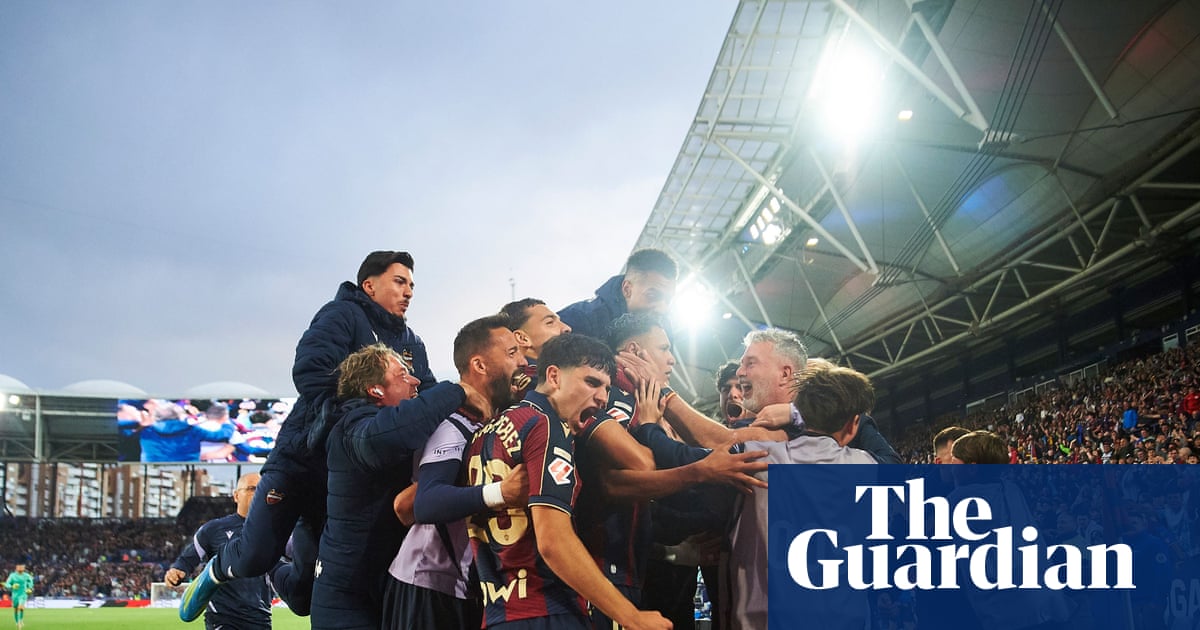
Football is defined by its extremes. As unheralded coach Luís Castro drags Levante through an epic La Liga relegation battle—overcoming a childhood purpura diagnosis where, as The Guardian reported, doctors explicitly told his parents he had no chance of living—we are reminded that the sport thrives on the improbable. The fight for survival at the bottom of the table carries the same raw desperation as the clash for the ultimate prize in a cup final. Whether it involves a dramatic stoppage-time winner to snatch a title or a miraculous comeback against all odds, these events permanently alter the sport's history. Here are the ten moments that stand above the rest.
10. Alisson Becker's Header vs West Brom (2021)
Goalkeeper goals are exceptionally rare in professional football. A goalkeeper scoring a header away from home to save a Champions League qualification campaign in the 95th minute is completely absurd.
Liverpool's season was dead in the water against Sam Allardyce's West Bromwich Albion before the Brazilian keeper sprinted forward for a final Trent Alexander-Arnold corner. He rose like a traditional number nine to glance the ball perfectly into the far corner. It earns a spot on this list for the sheer shock value and the emotional weight following the tragic loss of his father. Still, it ranks lower because the empty stadium during the pandemic era robbed the goal of the explosive crowd reaction it truly deserved.
9. Leicester City Completing the Fairytale (2016)
This entry ranks ninth because it represents a season-long sustained effort rather than a single lightning-strike flashpoint, but the moment Wes Morgan lifted the trophy remains entirely surreal. At 5000-to-1 odds, Claudio Ranieri’s side humiliated the financial giants dominating the Premier League.
The image of classical tenor Andrea Bocelli singing at the King Power Stadium while Jamie Vardy stood next to him in disbelief captured a feeling we will probably never see again. It was a victory for the underdog that completely exposed the tactical rigidity, poor recruitment, and sheer complacency of the traditional elite clubs that year.
8. Sergio Ramos and La Decima (2014)
Real Madrid's obsession with securing their tenth European Cup became a psychological weight that crushed multiple elite managers. Atletico Madrid had them completely beat in Lisbon, with Diego Simeone's men standing just seconds away from ultimate glory after Diego Godin's early goal.
Then came the late Luka Modric corner. Sergio Ramos attacked the delivery with a violent desperation that broke Atletico's stubborn defensive resistance. It fundamentally changed the modern history of the Champions League, launching an unprecedented era of Real Madrid dominance. If he misses that header, Carlo Ancelotti is likely sacked immediately, and the subsequent three-peat under Zinedine Zidane probably never happens.
7. Mario Götze's World Cup Winner (2014)
Joachim Löw's instruction to the young German attacker before subbing him on in the Maracanã was incredibly simple: show the world you are better than Lionel Messi. The chest control and left-footed volley past Sergio Romero in extra time was technically flawless.
It ranks seventh because it perfectly capped off a dominant German tournament, but let's be honest about the match itself. The final was a miserable, cagey affair full of terrible missed chances by Gonzalo Higuain and Rodrigo Palacio. Götze provided the lone spark of attacking quality in 120 minutes of nervous, grinding football from both sides.
6. Zinedine Zidane's Glasgow Volley (2002)
Some goals defy the basic mechanics of the human body. Roberto Carlos fired a looping, hopeful, and entirely inaccurate cross out of the Scottish sky, and Zinedine Zidane simply watched it drop over his left shoulder. The connection with his weaker foot was a thunderclap that gave Hans-Jörg Butt zero chance to react.
Bayer Leverkusen had played brilliant, progressive football that entire season, reaching three separate finals. They were ultimately undone by an act of individual genius that no tactical system could stop. It sits at number six purely for the aesthetic perfection, remaining the absolute gold standard for technique on a major stage.
5. Ole Gunnar Solskjaer at the Camp Nou (1999)
Manchester United were battered by Bayern Munich for 89 exhausting minutes in Barcelona. The German side hit the woodwork repeatedly through Mehmet Scholl and Carsten Jancker, completely dominating the midfield battle and exposing United's makeshift central pairing.
Yet, Sir Alex Ferguson's absolute insistence on frantic late pressure yielded two critical corners in stoppage time. Solskjaer's instinctive stab into the roof of the net, just moments after Teddy Sheringham's equalizer, completed an impossible turnaround to secure the Treble. It ranks above Zidane because the contextual weight of winning three major trophies in that specific, chaotic fashion is still unmatched in English football.
4. Diego Maradona's Goal of the Century (1986)
Taking the ball deep in his own half, Diego Maradona dismantled the entire English midfield and defense over 11 blistering seconds at the sun-baked Azteca Stadium. Yes, goalkeeper Peter Shilton was ultimately left grasping at thin air.
However, the English defending was shockingly passive. Terry Fenwick arguably should have taken a deliberate red card to hack the attacker down before he ever reached the penalty area. Even so, scoring that solo goal in a World Cup quarter-final—just four minutes after the deeply cynical handball—makes it the most bipolar, brilliant individual performance ever recorded in the sport.
3. The Miracle of Istanbul (2005)
AC Milan's first-half performance was a masterclass in swift attacking football, tearing Rafa Benitez's Liverpool apart to establish a commanding 3-0 lead. The Italian side got visibly arrogant, assuming the match was completely dead.
What followed in six chaotic second-half minutes defied all sporting logic. Steven Gerrard's header, Vladimir Smicer's long-range strike, and Xabi Alonso's penalty rebound triggered a total psychological collapse from a team boasting Paolo Maldini and Andrea Pirlo. Jerzy Dudek's point-blank double save on Andriy Shevchenko in extra time proved just as vital as the goals themselves. It proves how quickly a mental edge can disintegrate.
2. Lionel Messi's Crowning Glory (2022)
The 2022 World Cup Final in Qatar was a chaotic, beautiful mess that tested the nerves of millions. Argentina had the game comfortably won, threw the two-goal lead away, won it again in extra time, and threw it away once more thanks exclusively to Kylian Mbappe's ruthless brilliance.
When Gonzalo Montiel's final penalty hit the net past Hugo Lloris, Messi sinking to his knees felt like the physical release of a 15-year burden. It served as the definitive end to endless historical debates about his status. However, the bizarre decision by organizers to drape him in a black bisht before lifting the trophy slightly muddied the visual iconography of his defining career moment.
1. Sergio Aguero's Title Winner (2012)
There will never be a more dramatic conclusion to a grueling 38-game league season. Manchester City simply needed to beat a ten-man Queens Park Rangers side at home to secure their first league title in 44 years. Instead, they completely choked under the pressure, falling behind in a display of pathetic defensive frailty.
Edin Dzeko's header leveled the match, but stoppage time was practically gone. Then came Mario Balotelli's only assist in his entire Premier League career. Sergio Aguero's composed fake shot and violent near-post finish ignited absolute bedlam inside the Etihad. It edges out the World Cup because the sheer speed of the emotional swing—from absolute despair to utter euphoria in exactly 120 seconds—is completely unrivaled.
Honorable Mentions
Dennis Bergkamp's flawless pivot against Newcastle in 2002 remains a marvel of spatial awareness. Meanwhile, Gareth Bale's stunning bicycle kick against Liverpool in the 2018 Champions League Final deserves recognition, even if it was heavily aided by a concussion-impacted Loris Karius. Both highlight the fine margin between genius and disaster.