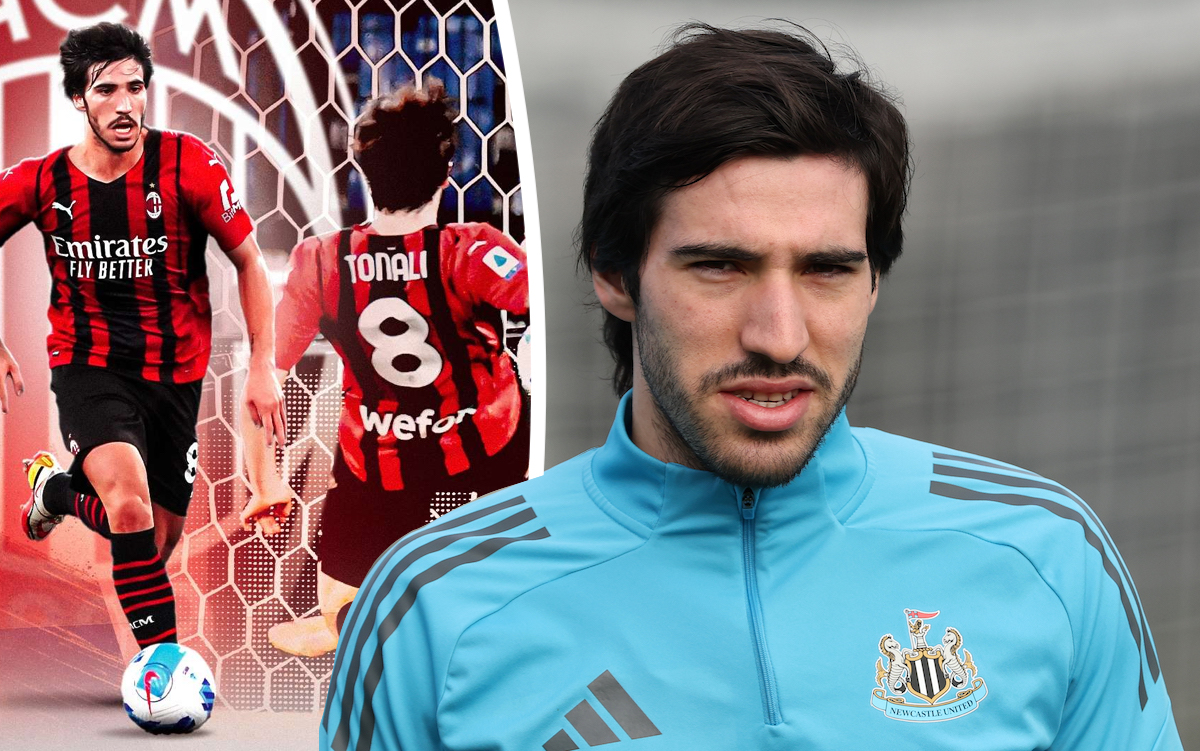
Measuring Tonali’s impact in a congested Premier League midfield
Tottenham Hotspur are pursuing Sandro Tonali to rectify a structural imbalance that defined their 2025/26 campaign. With a reported pursuit of the Newcastle midfielder following the arrival of Jan Paul van Hecke, the tactical objective is clear. Managerial staff seek a pivot capable of sustaining high-intensity pressure without the recurring defensive lapses that plagued their transition phases.
Tonali offers a profile distinct from current options in North London. During his 2025/26 campaign, he recorded an interception rate of 1.4 per 90 minutes, demonstrating high positional awareness in the defensive third. For a squad that frequently surrendered control during late-game scenarios, these defensive metrics provide necessary stability. He acts as a primary fulcrum, recycling play with an 88% passing accuracy, yet it is his ability to drive the ball forward under press that marks his primary utility.
The Van Hecke link and defensive efficiency
The simultaneous attempt to secure Jan Paul van Hecke signals a renewed focus on defensive solidity. As Sky Sports reported this morning, the club is prioritizing established Premier League talent. Integrating a center-back of Van Hecke’s physicality allows the midfield to play a higher line, pushing Tonali into advanced positions where his long-range shooting becomes a threat.
Yet, the statistics reveal a potential friction point. While Tonali is effective in defensive recovery, his progressive carries dipped by 12% compared to his peak Serie A output. Adjusting to a faster tempo has clearly impacted his offensive output, specifically his contribution to direct shot creation. If the club expects a creative spark from deep, the data suggests a potential mismatch between expectation and recent production.
Analyzing the tactical trade-offs
Critics point to the £60 million valuation often circulated for such midfielders as a potential anchor on the club's financial flexibility. Given Tottenham’s recent net spend, every transaction must correlate with an immediate increase in points-per-game metrics. Without an uptick in goal-creating actions, which currently sit at 0.15 per 90 for Tonali, the transfer risks being an overvaluation of defensive utility.
The club lacks the ball-progression efficiency seen in top-four finishers. Last season, the team averaged 52% possession but generated a sub-optimal 1.45 xG per match. Introducing a player like Tonali addresses the turnover frequency, but it does not solve the lack of cutting-edge clinical finishing. The tactical pivot hinges on whether the coaching staff can extract more verticality from a player who spent the majority of the season playing in a flatter, more horizontal structure at Newcastle.
Ultimately, the move is a bet on technical consistency over high-variance creativity. The numbers prove that Tonali maintains discipline in high-traffic zones, a requirement for any mid-table team aspiring to challenge for Champions League qualification. Whether that translates into a top-four finish depends on if his passing range can unlock stubborn low blocks more effectively than the current cohort of defensive midfielders in the squad.
Read Next