The regression of Milan's midfield progression
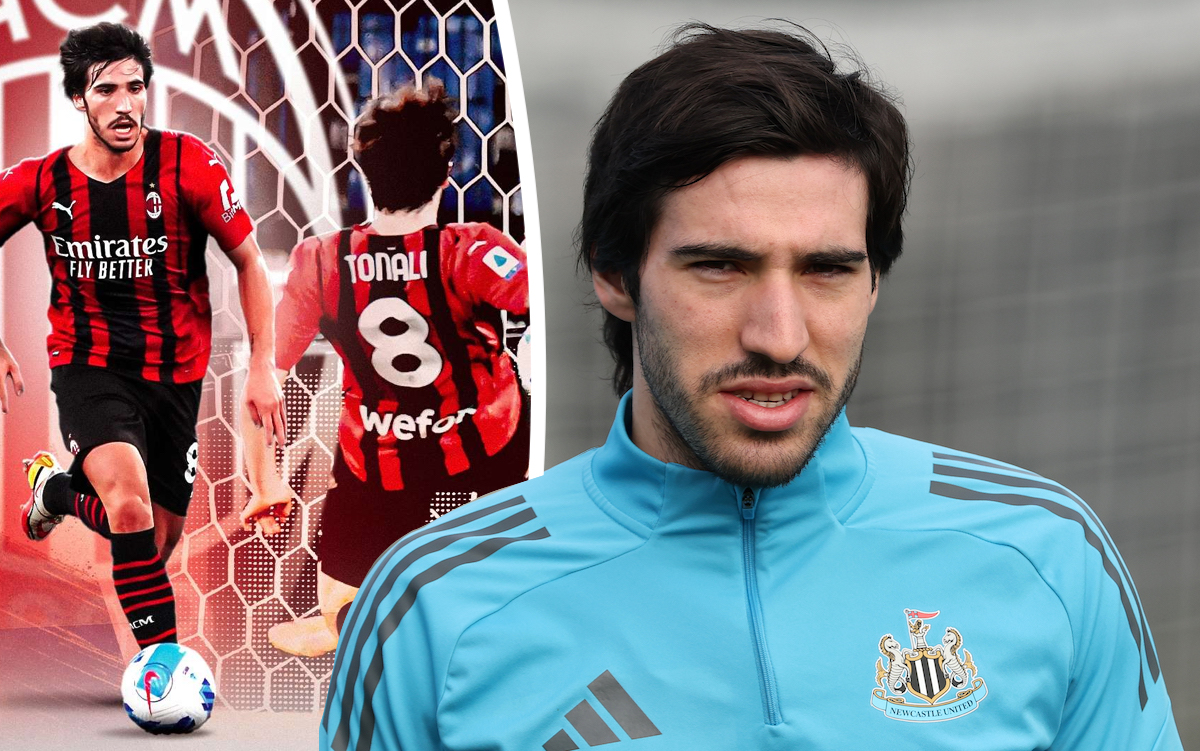
As we navigate the final stretch of March 2026, the transfer market rumors are already calcifying into concrete plans. When Sandro Tonali left AC Milan in the summer of 2023, the tactical floor of their midfield collapsed. In his final season at San Siro, Tonali averaged 7.8 progressive passes per 90 minutes. Since his departure, no Milan central midfielder has broken the 5.5 mark. That is a steep, undeniable drop-off in ball progression.
The numbers dictate the narrative. Milan's ability to transition from a defensive block into a fast break dropped by 22% the season after he packed his bags for Tyneside. They replaced his volume with Tijjani Reijnders, a brilliant ball-carrier, but fundamentally a different profile of player. Reijnders drives into space. Tonali passes through it.
Now, the inevitable is dominating the Italian press. As Sempre Milan reports, Tonali is already certain about a future return to the Rossoneri. The phrasing 'sooner or later' is doing a lot of heavy lifting. It highlights a mutual acknowledgement that the 2023 transfer was a financial necessity, not a tactical desire.
The gold standard of Serie A progression
To truly understand what Milan lost, you have to look across the city. Inter's dominance over the last two seasons has been built on the passing range of Hakan Calhanoglu and the relentless energy of Nicolo Barella. In the 2022/2023 season, Tonali was matching Barella stride for stride in loose ball recoveries, averaging 6.4 per 90.
But it was his passing map that set him apart. Tonali was not just playing safe, lateral balls to retain possession. He was consistently breaking the first line of the opposition press. Milan's current pivot of Reijnders and Youssouf Fofana is physically imposing but lacks that precise verticality. Fofana acts as the destroyer, while Reijnders prefers to carry the ball past opponents.
Carrying the ball takes time. Passing beats the shift of a defensive block. This is why Paulo Fonseca's iteration of Milan often looks sluggish against low blocks. They are missing the player who can switch the play in a single motion. Tonali's sweeping cross-field diagonals to Theo Hernandez were a staple of their attacking patterns. Without them, Hernandez is repeatedly forced to start his runs from much deeper, contested positions.
Why Newcastle hasn't unlocked his peak
The Premier League experiment has been disjointed. Tonali arrived at St James' Park for a reported £55m fee, but he stepped into a midfield already governed by Bruno Guimaraes. Eddie Howe's system demands extreme physical output. Tonali has delivered the running, but the spacing has always felt slightly off.
At Milan, Tonali operated predominantly in the left half-space, dictating the tempo and firing diagonals to Rafael Leao. At Newcastle, Guimaraes occupies the deepest central zones. Joelinton provides the muscle on the left. Tonali has often been pushed slightly higher and wider on the right.
This positional shift ruined his passing angles. His pass completion under pressure dropped from 84.2% in Serie A to just 77.1% in the Premier League. He is playing faster, but he is seeing less of the pitch. His best work in England has actually been his off-ball decoy runs, dragging markers away from Alexander Isak. But you do not spend that kind of money for a decoy.
The pressing disconnect on Tyneside
Tonali’s defensive metrics at Newcastle reveal a fascinating tactical quirk. Under Howe, Newcastle employs a heavy, man-oriented pressing system. Tonali’s work rate is elite. He covers roughly 11.4 kilometers per match when he completes a full ninety minutes.
However, the timing of his pressing triggers has frequently clashed with Guimaraes. At Milan, Tonali was the trigger. When he jumped out of the midfield line, Fikayo Tomori and the rest of the defense pushed up behind him. At Newcastle, he is often reacting to the movements of others. This hesitation, even if it is just a fraction of a second, exposes gaps in the midfield.
This highlights a genuine flaw in Tonali's adaptability. He struggles when he is not the primary director of the midfield phase. He is a player who needs the system bent around his instincts, rather than slotting seamlessly into a pre-existing machine. If he takes a loan move before returning to Milan, it must be to a team that hands him the keys to the engine room.
The stepping stone transfer
A direct flight from Newcastle back to Milan seems unlikely in the immediate future. The finances simply do not align for a permanent deal this summer. Vitiello notes that while the Milan return 'will happen', another transfer is expected first.
This makes tactical sense for his career trajectory. He needs a high-possession environment to rebuild his midfield authority. A loan move within the Premier League or a stint in La Liga could serve as the bridge. He needs a team that plays with a defined double pivot, allowing him to face the play rather than receiving the ball with his back to goal in advanced areas.
Milan will be watching closely. They are currently structured around a more dynamic, chaotic transition game. If Tonali is to return and succeed, the Rossoneri will need to re-establish the possession structures that won them the Scudetto. They cannot simply drop him into a chaotic midfield and expect miracles.
The Füllkrug miscalculation
Midfield progression is entirely useless if the attacking focal point cannot link the play. This brings us to the Niclas Füllkrug situation. Milan signed the German international hoping to replicate the tactical gravity of Olivier Giroud. It was a complete misread of their own attacking dynamics.
Giroud was a master of the one-touch lay-off. He manipulated center-backs, creating pockets of space for Leao and Christian Pulisic to exploit. Füllkrug operates differently. He is a traditional penalty-box target man. He wants crosses delivered onto his forehead, not fizzed passes into his feet at the edge of the D.
The statistical output exposes the flaw. Over his spell at Milan, 65% of Füllkrug's touches came with his back to goal, but he only averaged 0.8 key passes per 90. He was stopping the attack dead. Milan's transition speed is roughly 2.4 meters per second when breaking forward. Füllkrug was consistently trailing the play, forcing the wingers to delay their runs or cross into an empty box.
Why East London suits Füllkrug
The contrast between Serie A and the Premier League is often overstated, but in the case of Füllkrug, the stylistic differences are glaring. Serie A defenders are famously aggressive tight-markers. They do not allow forwards to pin them easily. Füllkrug spent his brief time in Italy wrestling with center-backs like Alessandro Bastoni and Gleison Bremer, often losing the physical battle and entirely nullifying Milan's attacks.
In England, specifically within West Ham's tactical framework, the center-forward is asked to be a battering ram. The Hammers rely heavily on set-pieces and wide deliveries from Jarrod Bowen and Mohammed Kudus. Füllkrug’s ability to attack the near post is a massive asset in that specific environment.
The realization has set in quickly at San Siro. Moretto confirms that Füllkrug is set for a return to West Ham. The Rossoneri are actively looking for another striker. It is a harsh admission of failure by the recruitment team, but a necessary one to salvage their attacking output. Milan needed a scalpel, and they bought a sledgehammer.
Mapping out the summer overhaul
This leaves Milan in a familiar predicament. They are generating a respectable 1.4 xG per game from open play, but they lack the fluid central forward to convert those chances efficiently. The market for complete, link-up strikers is incredibly thin. They cannot afford another scouting error if they want to challenge Inter and Juventus next season.
We are approaching a defining summer for the Milan hierarchy. The midfield lacks a metronome. The attack lacks a cohesive focal point. The nostalgia surrounding Sandro Tonali is completely justified by the underlying numbers, but nostalgia does not win football matches. Milan must build a tactical framework that actually supports his profile before bringing him home.
If Tonali takes his intermediate step next season, Milan must use that time to rebuild their tactical identity. They need a striker who can drop deep and create the very spaces Tonali loves to pass into. Joshua Zirkzee was the obvious profile they missed out on previously. They need someone from that exact mold.
Until they fix the structural issues at the top of the pitch, bringing Tonali back would be a waste of his progressive passing. You cannot thread a needle if the thread has nowhere to go. Milan's priority must be the number nine. The prodigal son in midfield can wait his turn.