The Turf Moor curse strikes again
Brighton’s nightmare at Burnley continues to haunt their European ambitions. After only 11 minutes of today’s high-stakes clash, Adam Webster went down clutching his right knee, forcing an immediate tactical reshuffle for the Seagulls. The center-back was unable to continue after a clumsy tangle with Lyle Foster, eventually limping toward the tunnel with assistance from the medical staff.
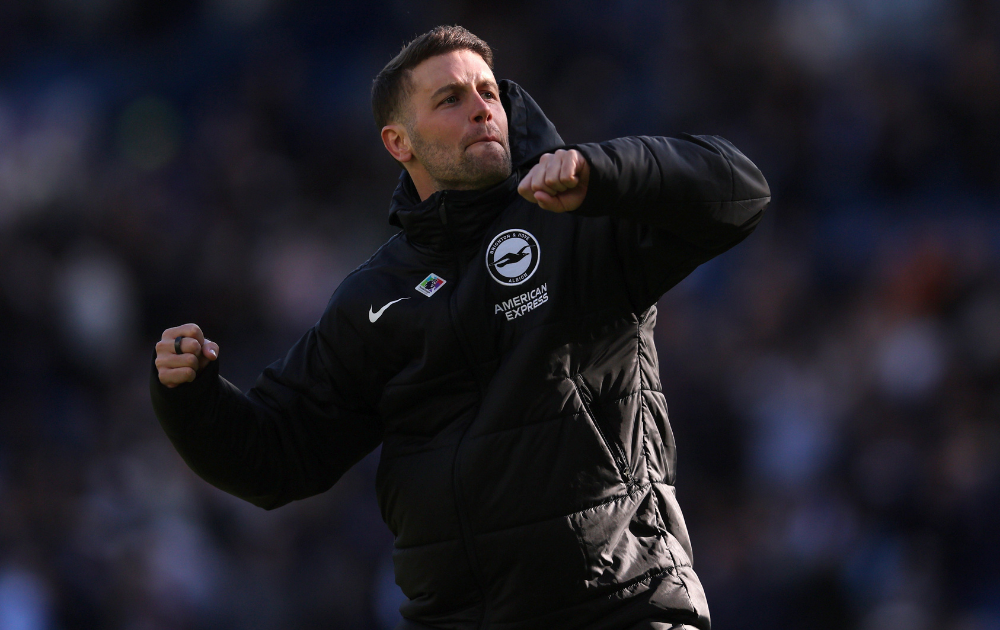
The timing is catastrophic for Fabian Hürzeler, who is currently watching from the stands while serving a touchline ban. With Lewis Dunk already sidelined by suspension, Webster’s exit leaves Brighton without their two most senior defensive leaders. The medical team’s preliminary assessment suggests a significant knee ligament sprain, which would likely end Webster’s involvement in the final sprint of the campaign.
This incident occurred just moments before Burnley had a potential opener ruled out for a marginal offside. The disallowed goal saved Brighton’s blushes on the scoreboard, but the loss of Webster represents a much deeper structural failure for a side chasing a historic Champions League spot. Igor Julio has been thrust into the heart of the defense, but the lack of cohesion was immediate and obvious.
Historical echoes of an April collapse
There is a grim sense of déjà vu for the traveling Brighton fans at Turf Moor today. Almost exactly two years ago, on April 13, 2024, Pervis Estupiñán suffered a season-ending ankle injury in this exact fixture. That match was also defined by bizarre defensive lapses and injury-forced substitutions that derailed Roberto De Zerbi’s late-season momentum.
The "Turf Moor Curse" has become a recurring theme for the Seagulls during the business end of the season. In the 2024 encounter, Estupiñán’s injury required surgery that kept him out for over 140 days, a blow from which he struggled to fully recover before his eventual move to AC Milan. Seeing Webster depart in similar fashion raises serious questions about Brighton’s medical preparation and player load management in April.
Webster himself has a documented history of knee and calf issues that have limited his availability since the 2023/24 season. His failure to complete 90 minutes today marks his third significant muscular or joint setback in the last eighteen months. For a player who was once a fringe candidate for Gareth Southgate’s England squads, the recurring nature of these injuries has stunted his career and left his club in a persistent state of vulnerability.
The medical outlook and rehab timeline
Initial reports from the medical room at Turf Moor suggest a Grade 2 MCL sprain for Webster. If the diagnosis is confirmed by an MRI on Sunday, the standard recovery window is between six and eight weeks. This effectively rules him out for the remainder of the 2025/26 Premier League season, including the crucial upcoming fixtures against Manchester City and Arsenal.
The club is also providing updates on Stefanos Tzimas, the young Greek forward who remains in rehabilitation for a ruptured ACL suffered in December. While Tzimas is reportedly back on the grass in individual sessions, he will not feature before pre-season 2026. The accumulation of these long-term absences is stretching the squad to its absolute limit at the worst possible time.
Webster is devastated. We have to wait for the scans, but it doesn't look good for the rest of the month.
The above sentiment, echoed by staff in the tunnel, reflects a growing frustration within the Brighton camp. They have now lost three key starters to significant injuries since February, a rate of attrition that no team outside of the big six can realistically sustain. The reliance on young prospects like Valentín Barco and Jan Paul van Hecke is no longer a choice; it is a desperate necessity.
Strategic implications for the European push
Hürzeler’s tactical philosophy relies heavily on high-line defenders who can transition the ball quickly through the lines. Without Webster’s passing range or Dunk’s aerial dominance, Brighton’s defensive structure looks brittle. The Burnley press, led by Wilson Odobert and Luca Koleosho, has already exploited the gaps left by the lack of pace in the makeshift center-back pairing.
Brighton currently sit just two points ahead of Aston Villa in the race for European qualification, but their defensive statistics without Webster and Dunk are alarming. They have conceded an average of 1.8 goals per game when both senior defenders are absent, compared to just 0.9 when they start together. This drop-off in efficiency could be the difference between a Champions League debut and another season of Thursday-night football.
The lack of investment in a senior third-choice center-back during the January transfer window now looks like a major oversight by the recruitment department. While the club has been praised for its "buy low, sell high" model, the failure to provide Hürzeler with adequate defensive cover has left the manager exposed. The decision to loan out several defensive prospects to the Championship has backfired spectacularly given the current injury crisis.
The critical verdict on squad depth
Realistically, Brighton’s medical staff must be scrutinized for clearing Webster to start today. He had only recently returned from a minor calf strain, and the intensity of a Burnley side fighting for survival was always going to test his physical limits. Rushing him back has resulted in a much more severe injury that could have long-term implications for his mobility.
The club’s injury-prone reputation is starting to impact their standing in the market. Top-tier targets will look at the recurring ACL and MCL issues plaguing the squad and wonder if the high-intensity Hürzeler system is sustainable for a 50-game season. For a club that prides itself on being ahead of the curve, the current medical crisis feels like a throwback to the amateurish days of the previous decade.
If Brighton fail to secure European football this season, the blame will lie squarely on the management of these fitness issues. You cannot expect to compete at the highest level while playing your fourth-choice defenders in the most critical month of the year. The Turf Moor nightmare is just the latest symptom of a deeper problem that the Seagulls must solve before the 2026/27 campaign begins.