The Big Picture
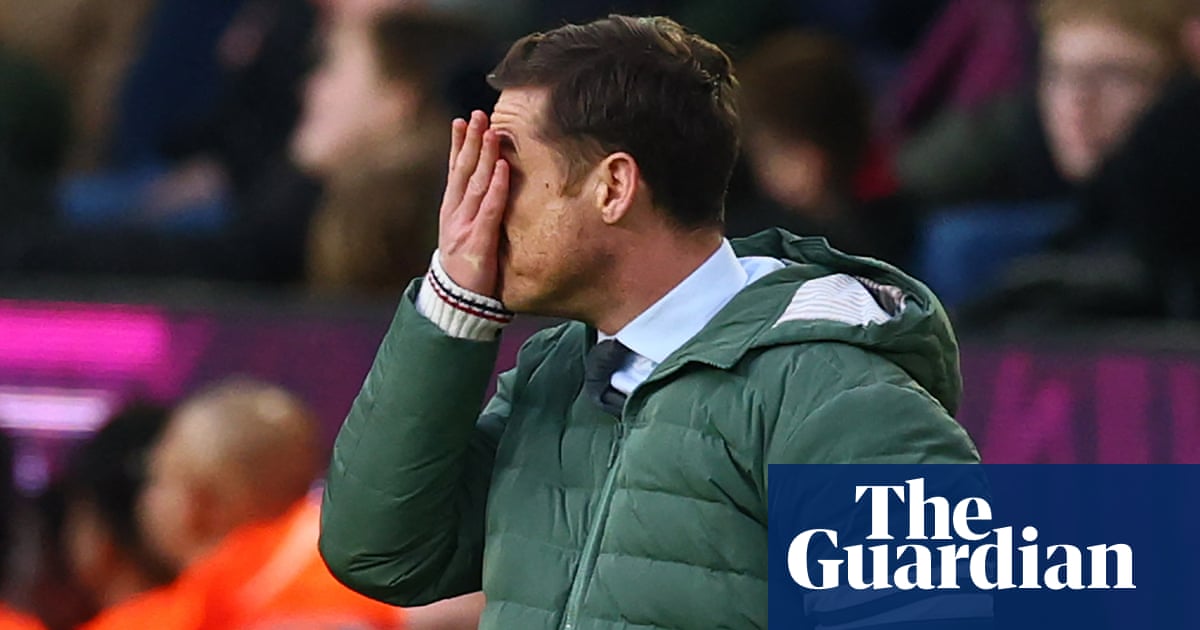
Scott Parker is still talking about spirit, but the medical charts at Turf Moor are telling a far bleaker story. While the Burnley boss insists his squad remains focused on the impossible, the reality is that the Clarets are heading toward the Championship with a skeleton crew. Sitting 19th in the table with a miserable 20 points from 31 matches, Burnley are currently 10 points adrift of safety with only seven games left to play. It isn't just a lack of quality or tactical cohesion that has killed this campaign—it is a full-blown medical crisis that has stripped the spine out of the team.
The situation has reached a breaking point. Parker has openly admitted that the lack of consistency caused by these absences is "killing" any chance of a late-season miracle. The numbers are staggering: Burnley have managed just one win in their last 22 Premier League outings. For a team that needs to find nearly double their current points tally in the next month, losing your best midfielder, your primary creative spark, and your most reliable defender feels like a terminal diagnosis. The atmosphere at Turf Moor has turned toxic, with the 3-2 defeat to Fulham serving as the latest spark for a fanbase that has seen enough of the 'process.'
The Engine Room Failure
The most devastating blow remains the loss of Josh Cullen. The Irish midfielder was the heartbeat of Parker's system, the one player capable of managing the transition from defense to attack while shielding a vulnerable backline. Cullen has been out since late 2025 with a significant cruciate ligament (ACL) injury, and his absence has left a hole that no amount of tactical shuffling can fill. Without his 88% pass completion and constant defensive screening, Burnley’s midfield has become a highway for opposition counter-attacks. This isn't just a localized problem; it has fundamentally altered how Parker has to set up his team.
Losing a player to an ACL tear is a 9-month sentence at minimum, and for a club with Burnley's thin resources, it is a catastrophe. Cullen’s injury wasn't just a physical loss; it was a psychological one. When your captain and most consistent performer goes down in a non-contact incident during training, the air leaves the room. Since that moment, the Clarets have looked like a team playing in slow motion, unable to match the intensity of Premier League rivals who simply have more bodies to rotate. Parker’s insistence on a high-pressing, high-energy style was always going to be a gamble with this squad, and it is a gamble that has backfired spectacularly in the treatment room.
The Long-Term Ward
Cullen isn't a solitary figure in the medical wing. Zeki Amdouni is also navigating the long road back from a cruciate ligament injury, depriving the team of their most natural finisher. Then there is Mike Trésor, whose ankle issues have kept him sidelined during the most critical stretch of the spring. When you add Jordan Beyer’s chronic knee problems to the list, you have nearly £50 million worth of talent watching from the stands while the team collapses on the pitch. Beyer, in particular, was supposed to be the foundational block of this defense, yet his inability to string together three consecutive games has forced Parker into using makeshift partnerships that lack any semblance of communication.
The recent addition of Hannibal Mejbri to the injury list with a hamstring strain is almost cruel. Brought in to provide some bite and energy in Cullen's absence, the Tunisian international lasted only a handful of starts before his body gave out. It points to a broader concern about the training intensity at the Gawthorpe Training Ground. While Sky Sports reported that Parker is maintaining a positive front, there are serious questions to be asked about whether this young squad was physically prepared for the rigors of a Parker-led Premier League campaign. Every time a player returns, another two seem to pull up with soft-tissue issues.
Tactical Decay and Strategic Blunders
Parker’s refusal to deviate from his tactical principles despite the personnel shortage is a classic case of manager stubbornness. He continues to ask his remaining defenders to play out from the back, even though they lack the composure or the passing range of the injured Beyer or the departed leaders from previous seasons. This has led to a series of high-profile errors, most notably in the recent loss to Fulham, where a misplaced pass in the defensive third directly led to the winning goal. It is one thing to have a philosophy; it is another to apply it to a group of players who are clearly struggling to stay afloat.
The strategic implication of this injury crisis goes beyond just this season. If Burnley are relegated—which now seems a certainty—they will enter the Championship with several high-earners on long-term recovery programs. An ACL injury isn't something you just 'fix' over the summer; players often take an additional six months post-return to find their previous rhythm. Burnley are facing the prospect of starting next season without their core leaders at 100% fitness. This is the 'relegation hangover' that can turn a one-year dip into a multi-year slide, much like we saw with Leeds United in 2022 when their refusal to bolster a thin, injury-prone squad led to a total systemic collapse.
The Brighton Must-Win
Saturday’s clash against Brighton at Turf Moor is the final stand. There are no more 'next weeks' left for Scott Parker. With Connor Roberts still a doubt due to a recurring strain and Marcus Edwards battling back spasms that have rendered him a 'day-to-day' decision, the lineup will once again be a patchwork quilt of youth prospects and out-of-position veterans. Edwards, when fit, provides the only real spark of unpredictability in the final third, but back spasms are notoriously difficult to manage. One wrong turn in the warm-up and he’s out for another week. This level of uncertainty makes it impossible for Parker to drill a consistent starting eleven.
There is a critical observation to be made about Parker’s management during this crisis: he has leaned too heavily on the 'young squad' excuse. While it is true that Burnley have one of the youngest rosters in the league, the failure to adapt to the physical realities of his players is on the coaching staff. You cannot play a high line with slow, backup center-halves, and you cannot expect a 19-year-old debutant to manage the transition play that Josh Cullen mastered over years of professional football. The 'fighter' mentality Parker keeps mentioning is a nice sentiment for the cameras, but it doesn't win headers or stop 87th-minute goals from set-pieces.
The Road Ahead
Historically, teams in Burnley's position rarely escape. The 10-point gap is a chasm, and their goal difference is a secondary anchor dragging them down. When you look at previous Great Escapes—the likes of Leicester City or Sunderland—they always had a core group of fit, experienced players who could grind out 1-0 wins. Burnley have neither. They have a manager who is married to a style that requires elite fitness, and a squad that is currently breaking under that very pressure. The fans know it, and the boos that followed the Fulham defeat were the sound of a support base that has stopped believing in the rhetoric.
If Burnley are to have even a 1% chance of survival, they need a medical miracle as much as a tactical one. They need Marcus Edwards to stay on his feet, they need Connor Roberts to return early in May, and they need to find a way to stop the bleeding in a midfield that has been gutted. But as the clock ticks toward the Brighton kickoff, the most likely scenario is another afternoon of brave words from Parker and another three points disappearing toward the south coast. The spirit might be high, but the pulse of this Premier League campaign is fading fast.