Did I just step into a time machine set to 1980?
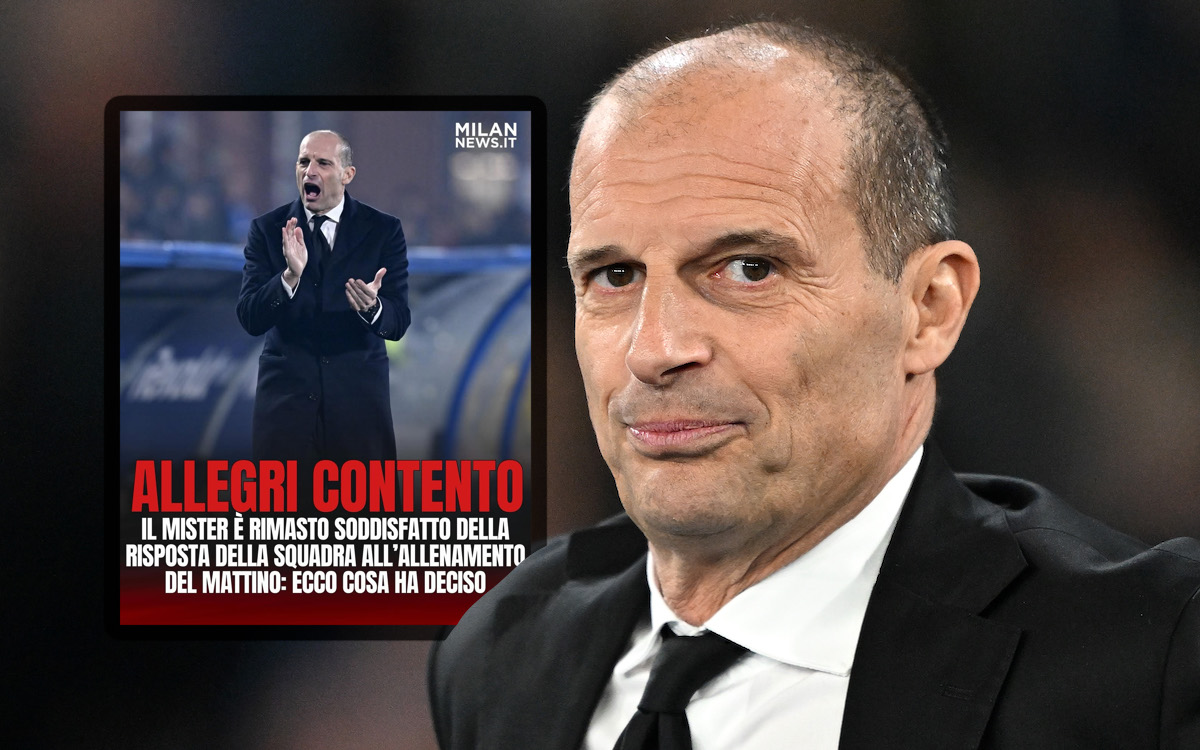
Massimiliano Allegri, bless his pragmatic heart, recently dropped a quote so baffling, so utterly out of touch with modern football, it made me question if he’d been living under a rock the past two decades. We’re talking about his brilliant insight that Rafael Leao “needed a bit of booing” from the San Siro faithful. You heard that right. The man who’s supposed to be protecting and motivating one of his most gifted, albeit sometimes mercurial, talents actually suggested that a symphony of jeers would be a character-building exercise. It’s like a Victorian headmaster suggesting a cold shower and a beating will improve a student's grades. Except the cold shower is a 75,000-seat stadium, and the student is a multi-million-euro asset.
This isn't some groundbreaking motivational technique; it’s a desperate echo from an era where managers ruled with an iron fist and emotional intelligence was as foreign a concept as VAR. Allegri seems to genuinely believe that a hostile home crowd is the secret sauce to unlocking Leao's full potential. He sees the boos not as a symptom of frustration, but as a misguided form of tough love, a harsh medicine for a perceived lack of effort or consistency. It's a truly baffling perspective from a manager whose primary job is to extract peak performance, not put his players through some twisted psychological gauntlet. Imagine Pep Guardiola or Jürgen Klopp openly advocating for their fans to boo their most creative talents. It simply wouldn't happen because they understand the delicate balance of nurturing genius.
Leao: A Ferrari with a Fickle Throttle, Not a Broken Engine
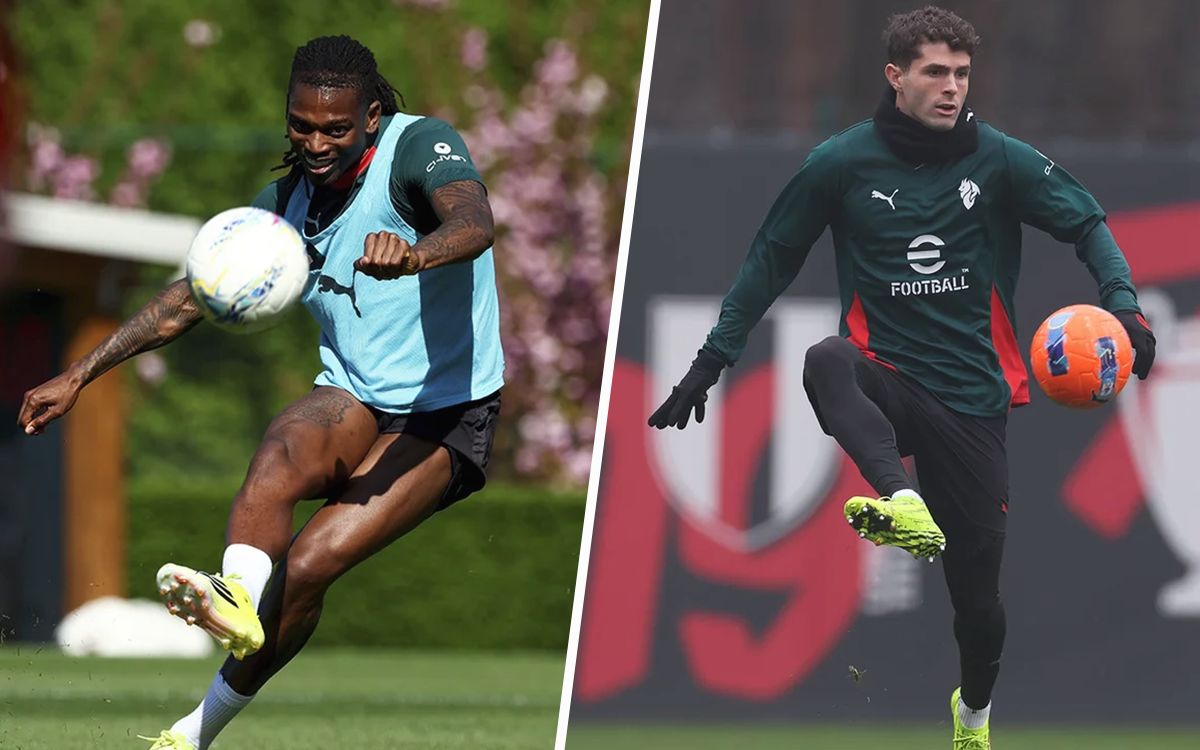
Let's talk about Rafael Leao for a second. The man is pure, unadulterated talent, a genuine highlight reel waiting to happen. On his day, he's a blur of Portuguese lightning, leaving defenders eating grass like it’s their last meal, cutting inside with venom or burning down the wing. He has that rare, effortless swagger that makes football look ridiculously easy, the kind of explosive pace, audacious trickery, and a powerful shot that can turn a match on its head with one flick of the boot. We’ve seen him tear apart defenses in the Champions League, score crucial goals in tight Serie A battles, and generally be the catalyst for Milan's most vibrant attacks. This isn't a player who lacks ability; he sometimes lacks the unwavering, week-in, week-out consistency, or perhaps, the deep-seated belief that coaches should meticulously instill.
Leao is, for all his brilliance, a confidence player. He thrives on feeling valued, on having the freedom to express himself, to attempt the unexpected. You can practically see the shoulders slump when a risky pass goes astray, or when a dribble is snuffed out early, drawing audible groans from the stands. There are games where he drifts, where his focus seems to wane, where the magic appears only in fleeting glimpses, leaving fans rightly frustrated. But to suggest that piling on more negativity from his own supporters will suddenly transform him into a relentless warrior is to fundamentally misunderstand the psyche of a modern-day attacking genius. You don't motivate a finely tuned sports car by dousing it in cold water and kicking the tires; you give it the right fuel, meticulous maintenance, and then you let it fly. Allegri's diagnosis feels less like a mechanic's report and more like a witch doctor's curse.
The San Siro Crucible: Passion vs. Poison, A Thin Red Line
San Siro. The very name conjures images of gladiatorial battles, iconic tifos, and a roar that can shake the very foundations of Milan. Milanisti are famously passionate, intensely demanding, and they hold their heroes to the highest standards. Their love for the club is unconditional, but their patience with perceived underperformance can be razor-thin. There's a fine, almost invisible line between expressing legitimate disappointment and actively undermining your own team's efforts. When the crowd boos, it's rarely a calculated psychological ploy; it's a raw, visceral outpouring of frustration, borne from years of devotion and, more often than not, a deep well of dashed hopes. It’s a message that says “we expect more,” but delivered with the subtle grace of a freight train.
Historically, some players have, indeed, claimed to be motivated by negativity. Think Zlatan Ibrahimović, who seemed to thrive on proving doubters wrong, absorbing criticism and spitting it back out as goals. Or even Roy Keane, who seemingly needed a constant stream of external slights to fuel his monumental performances. But Zlatan and Keane are anomalies, footballing titans powered by pure defiance and an almost superhuman mental fortitude. Leao is not Zlatan, nor is he Keane. Very few players are built that way. For every player who uses boos as rocket fuel, there are a dozen promising talents whose careers were derailed, or whose confidence was irrevocably shattered, by relentless scrutiny and hostility from their own supporters.
Remember Dele Alli? A player with immense, almost generational potential at Tottenham, whose spark seemed to dim, then extinguish, under the relentless glare and eventual derision from sections of the crowd. Or even the early days of Cristiano Ronaldo at Manchester United, who, despite his immense talent, often cut a frustrated figure under the Old Trafford microscope before Sir Alex Ferguson's masterful management molded him into the phenomenon he became. Booing from your own fans, especially for a player who is already giving his all (even if it's not always perfect), often creates a profoundly toxic environment. It transforms the stadium into an arena of harsh judgment rather than a cauldron of unified support. It makes players second-guess themselves, take fewer risks, and ultimately, play with fear. That’s not a recipe for brilliance; it’s a recipe for mediocrity and desperate self-preservation. When the collective energy of your home stadium turns against you, it becomes an immense psychological burden, not a helping hand. The stadium atmosphere can turn from a 2-0 lead to a self-inflicted 2-1 defeat very quickly.
Coaching 101: Inspire, Don't Induce Fear, Especially in the Age of Analytics
Here’s a radical thought for Allegri: maybe, just maybe, it's the coach's job to inspire, to teach, and to instill confidence, not to outsource his motivational duties to the most volatile elements of the crowd. If Leao is having a dip in form, or if his application isn't always at its peak performance, then that’s a conversation for the training ground, for the manager's office, for detailed video analysis sessions – not for the terraces. It's about tactical adjustments tailored to his strengths, specific feedback on positioning or decision-making in critical moments, and constantly reaffirming belief in his immense abilities. A good manager identifies the root cause of inconsistency, whether it’s tactical, physical, or mental, and addresses it head-on with tailored solutions.
A coach should be a shield for his players, not a catapult launching them into a storm of public disapproval. If Allegri truly believes booing is what Leao needs, it suggests a startling lack of imagination and options in his own managerial toolkit. Are we really to believe that the solution to a star player's inconsistency is to have 70,000 people shout abuse at him, effectively telling him he's not good enough? What kind of leadership is that in a sport increasingly driven by data and individual player management? It smacks of an outdated mentality where players are seen as interchangeable cogs to be bullied into submission, rather than incredibly valuable, highly sensitive individuals whose complex psychology demands careful, nuanced management.
The modern game demands more. It demands managers who understand sports science, nutrition, advanced psychology, and, yes, human nature. It demands managers who can adapt their approach to different personalities, recognizing that what motivates one player might cripple another. To simply shrug and say a player needs booing is not tough love; it's a frankly lazy abdication of responsibility. It tells Leao, and indeed the entire squad, that the manager expects the fans to do his job for him when the going gets tough. That’s a dangerous precedent to set, fostering an environment of fear and resentment rather than unity and collective ambition. Coaches like Carlo Ancelotti are masters at managing dressing rooms full of superstars precisely because they prioritize empathy and understanding over public shaming, leading to successes like Real Madrid's 15th Champions League in 2026.
The Echo of Empty Stands and a Manager's Responsibility
Ultimately, Allegri's comment reveals a deeper, more troubling problem: either he genuinely believes this antiquated nonsense, or he’s desperately attempting to deflect pressure from his own management and the team's performances. Either way, it’s not a good look for a manager at the helm of a club like AC Milan. What Leao needs isn't a chorus of jeers and whistles; he needs clear tactical instructions, consistent public and private support, and the unwavering knowledge that his coach has his back, even when he makes mistakes or has an off day. He needs to feel safe enough to try the audacious dribble, to attempt the killer pass, to express his unique talent, without the paralyzing fear of immediate condemnation from those who are supposed to be his greatest cheerleaders, and crucially, from his own manager.
The next time Leao drifts out of a game, or misplaces a crucial pass, and the boos inevitably rain down from a frustrated San Siro, remember Allegri’s ill-advised words. Because those boos won't be building character; they'll just be another echo in the increasingly empty space between a manager and his star player. It's a sad, almost farcical state of affairs when a coach sees the home crowd as a disciplinary tool rather than a source of immense power and inspiration. Modern football has moved on, evolving into a sophisticated ecosystem where player welfare and psychological support are paramount. It’s time Allegri did too. Hopefully, Leao won't take his manager's advice too literally, because the San Siro treatment, sanctioned by his own coach, might just break what Allegri claims it will build, leaving Milan with a player whose spirit has been systematically chipped away and a season ending in a disappointing fifth place finish.