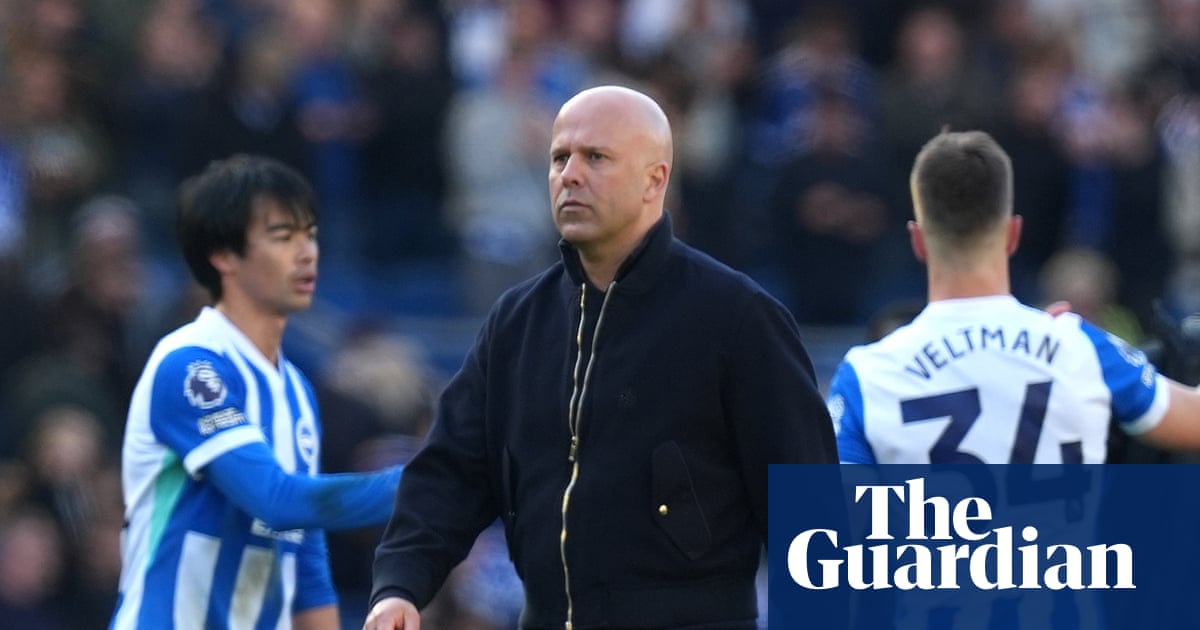
Arne Slot's failing system makes Liverpool's price hike even harder to swallow

The cold calculus of a failing regime
Liverpool Football Club has a peculiar way of testing the loyalty of its most dedicated supporters. On a Tuesday afternoon, while most of the city was still processing the latest tactical capitulation under Arne Slot, the club’s hierarchy decided to drop a financial bombshell. A confirmed ticket price increase for the next three seasons is not just a rounding error on a balance sheet. It is a fundamental shift in the social contract between Fenway Sports Group and the people who fill the seats.
The timing is almost impressively tone-deaf. We are currently witnessing a title defense that has transitioned from underwhelming to outright disastrous. The data suggests this isn't a temporary dip in form but a structural collapse of the system that won the league in 2025. Charging more for a product that is objectively declining in quality is a bold strategy in any industry, but in football, it feels like a provocation.
Supporters are already pushing back, and they have every right to be furious. According to The Mirror, the backlash has been immediate and sustained. This isn't just about an extra few pounds per game. It is about the realization that the "sustainable model" FSG champions is increasingly sustained by the very people the club claims to protect.
Tactical stagnation and the myth of control
To understand why this price hike hurts so much, we have to look at what is happening on the pitch. Arne Slot’s arrival was supposed to bring a refined, Dutch-influenced control to the chaos of the late Klopp era. Instead, we have seen a sterile version of possession football that lacks the verticality required to break down low blocks. The metrics are damning.
Last season, Liverpool averaged 3.1 big chances created per 90 minutes. This season, that figure has plummeted to 1.8. The transition from high-intensity pressing to a more passive 4-2-3-1 hybrid has left the midfield exposed. Opponents no longer fear the counter-press; they invite it. They know that once they bypass the first line of Slot’s static block, they have a straight run at an aging backline.
Look at the 82nd minute of the recent loss at the Emirates. Liverpool had 68% possession but had not registered a shot on target in the second half. The players were shuffling the ball horizontally, terrified of a risky pass. This is the "control" Slot promised. It is control without purpose, and now fans are being asked to pay a premium for the privilege of watching it for three more years.
The broken press and the aging core
The failure of the title defense can be traced back to the drop in successful pressures in the final third. In 2024/25, Liverpool led the league in turnovers within 40 yards of the opponent's goal. This year, they have dropped to tenth. The legs are gone, and the replacements have not been integrated with enough tactical clarity. Slot’s insistence on a double pivot has nullified the creative freedom of the number eight role, leaving the front three isolated and frustrated.
There is a glaring lack of adaptability in the dugout. When things go wrong, the response is often to increase the volume of possession rather than the speed of it. This creates a monotonous viewing experience. Fans who have traveled to every away game this season have seen the same movie repeatedly: dominated possession, a single defensive lapse, and a frantic, disorganized pursuit of an equalizer that never comes.
The FSG financial trap
FSG has always operated on the principle that the club must live within its means. While that prevented the financial ruin seen at other historic clubs, it has also created a ceiling that is now becoming a floor. The Anfield Road Stand expansion was touted as the solution to matchday revenue stagnation. It was supposed to provide the financial cushion that would prevent these exact types of price hikes.
Instead, the club is locking in increases for the next 36 months. This suggests that the internal projections for TV revenue or commercial growth are not meeting the targets. By hitting the matchday fan, the club is choosing the path of least resistance. It is easier to squeeze a local supporter in the Kop than it is to negotiate a 20% increase on a sleeve sponsorship in a cooling global market.
The argument from the boardroom is often that these increases are necessary to compete with the state-backed wealth of Manchester City or Newcastle. But that argument falls flat when the money isn't being used to solve obvious squad deficiencies. If the price of a season ticket is going up, the quality of the recruitment should be following suit. Right now, both the accounts and the starting XI look stagnant.
A disconnect in the cost-of-living era
We are living through a period where every household budget is under scrutiny. For a club located in one of the most economically challenged cities in the UK to announce a three-year hike is remarkably insensitive. Football is not a luxury good for these people; it is a cultural necessity. FSG is treating it like a subscription service that can be up-sold annually without consequence.
The "legacy fan" is being priced out in favor of the "day-tripper" who will spend £100 in the club shop after the match. This might look good on a spreadsheet in Boston, but it kills the atmosphere that made Anfield a commercial asset in the first place. Once you lose the local voice, you lose the brand power that attracts the global sponsors. It is a short-sighted trade-off.
The critical failure of leadership
The most worrying aspect of this announcement is the lack of transparency. There has been no detailed explanation of why these specific figures were chosen or where the additional revenue will be directed. Will it fund the much-needed overhaul of the defensive midfield? Or is it simply going toward servicing the debt of stadium improvements that were supposed to pay for themselves?
Arne Slot’s position is also becoming increasingly untenable if he cannot reverse the tactical rot. If the club enters the 2026/27 season with higher ticket prices and no Champions League football, the backlash seen today will seem mild. The manager’s refusal to deviate from his rigid system is mirrored by the board’s refusal to deviate from their rigid financial projections. Both are failing to account for the human element of the game.
We see it in the way the club handles contract negotiations for its star players. Everything is a calculation. Everything is a risk-mitigated decision. But football is a game of risk and reward. By playing it safe in the transfer market and aggressive in the ticket office, the hierarchy has managed to alienate the fanbase while simultaneously weakening the squad.
Where does the club go from here?
The next few months are pivotal. If the board thinks this anger will dissipate during the summer break, they are mistaken. Liverpool supporters have a long memory and a proven track record of organized protest. We saw it in 2016 with the walk-out over £77 tickets, and we are seeing the same sentiment brewing again. The club's leadership needs to understand that they cannot commodify the soul of the club without resistance.
On the pitch, Slot must find a way to re-inject some of the verticality that made this team champions. Possession is a means to an end, not the end itself. If he continues to prioritize safety over creativity, he will find that the fans' patience is as thin as their wallets. The 2025/26 season will be remembered as the moment the facade of the post-Klopp transition finally cracked.
The irony is that a successful team can often mask a greedy board. If Liverpool were currently five points clear at the top of the table, the price hike would still be criticized, but it wouldn't feel like an insult. Instead, the club is demanding more from fans while giving them less on the pitch. It is a cynical maneuver from an ownership group that seems to have forgotten what the "L" in LFC actually stands for.
There is no easy fix for a team that has lost its tactical identity, but there is a simple fix for the ticket price controversy: listen. Engage with the supporters' trusts in a meaningful way, not just through perfunctory meetings that result in pre-written press releases. Until the club shows it values its fans as more than just revenue streams, the atmosphere at Anfield will continue to sour, and the results will likely follow suit.
Amazon Fire TV Stick 4K streaming device
Watch every Premier League and World Cup match in stunning 4K.
More Coverage

Anthony Gordon to Barcelona marks a high-stakes gamble
25 minutes ago
Arsenal's 104 million gamble on Julian Alvarez is pure chaos
25 minutes ago
Top 10: The Definitive Arsenal Moments of the 2025/26 Season
an hour ago
Newcastle are burning the furniture to keep the house warm
2 hours ago
Manchester City's business model is frankly terrifying
2 hours ago
Brentford midfield hit by late-season injury setback
2 hours agoMore Analysis

Liverpool are sleepwalking into a post-Salah nightmare
2 months ago
Arne Slot is running out of road at Anfield
1 month, 2 weeks ago
Arne Slot's Liverpool collapse is mirroring a classic FSG mistake
2 weeks ago
Liverpool’s Anfield soap opera is turning into a total car crash
4 days, 12 hours ago
Arne Slot's tactical arrogance is destroying Liverpool from the inside
2 months ago