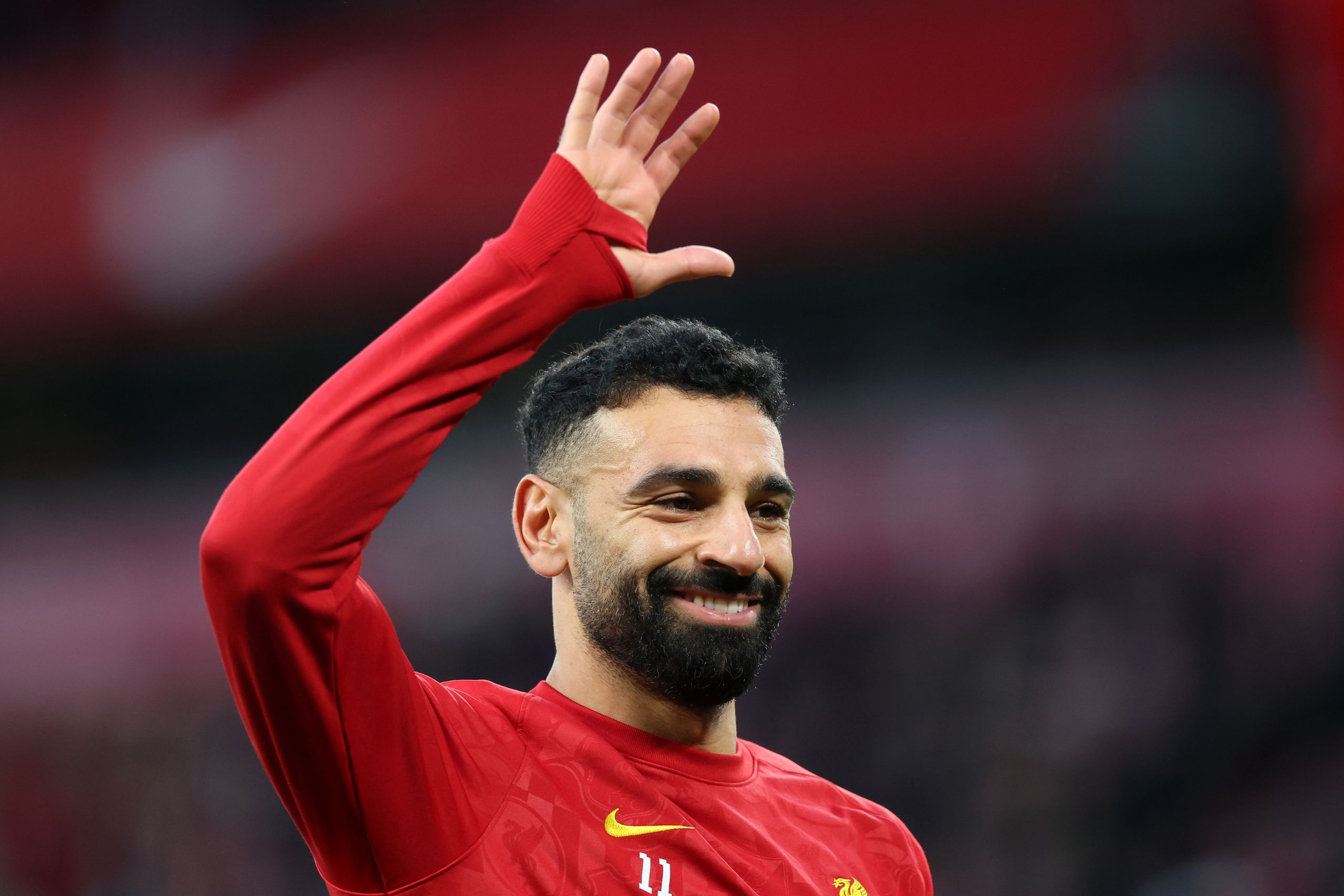
Arne Slot is taking a massive risk tonight at Villa Park.
When the team sheets dropped an hour before kickoff, the immediate reaction was confusion, followed by a frantic checking of injury reports. Mohamed Salah and Florian Wirtz, Liverpool's two most devastating attacking forces this season, are starting on the bench.
You can read the official confirmation here on Sky Sports. It is a decision that reshapes the entire tactical geometry of this match.
The Wirtz shaped hole in midfield
Let's start with Wirtz. Florian Wirtz did not just join Liverpool to be another cog in the machine; he was brought in to be the offensive engine. His transition from the Bundesliga to the Premier League has been remarkably smooth, largely because his spatial awareness operates at a different frame rate to most defenders. He breaks deep blocks.
Aston Villa do not play a deep block initially, but they compress the pitch so effectively that it feels like one. Wirtz is the lockpick. Sitting the lockpick on the bench when facing one of the most complex defensive structures in the league is baffling. Since arriving at Anfield, the German has been the central nervous system of Slot's possession game. He operates in those tight half-spaces, taking the ball on the half-turn and slipping runners through lines.
Aston Villa's defensive structure is famously reliant on vertical compactness. They squeeze the space between their defensive line and midfield pivot to an absolute minimum. Without Wirtz to receive in those pockets, Liverpool are going to have a serious problem connecting the middle third to the final third.
Then there is Salah. Even in the twilight of his career, his gravity changes how fullbacks behave. Without him pinning the left-back, Villa can push higher and commit more bodies to the midfield battle.
Arrogance in the schedule
Why do this? The obvious answer is load management. We are in mid-May. The schedule has been punishing. But rotating heavily against a team as organized as Aston Villa is a deeply arrogant move. Slot has a habit of over-tinkering when the schedule gets congested, and it has cost them points before. You do not disrespect a side managed by Unai Emery at Villa Park.
Let's break down Villa's mid-block. Emery defends with a 4-4-2 that operates almost like a single organism. The line of engagement is usually right around the center circle. They do not press intensely in the opposition third, preferring to drop back, stay narrow, and force the ball wide.
When the ball goes wide, they trap. The fullback steps out, the winger drops, and the near-side central midfielder shuttles over to cut off the inside pass.
To beat this, you need quick, horizontal ball circulation to shift the block, followed by a sudden vertical penetration. Wirtz is the master of that sudden verticality. He plays the pass before the defender realizes the angle is open.
Without him, who takes that role? Harvey Elliott? Dominik Szoboszlai? Neither has the same scanning speed. Szoboszlai tends to carry the ball too long, which plays perfectly into Villa's pressing triggers in wide areas. If Liverpool hold onto the ball for an extra half-second in midfield, Boubacar Kamara or John McGinn will swallow them up.
The offside trap and Darwin Nunez
And what about the runs in behind? Aston Villa's offside trap remains the most aggressive in Europe. They will hold a high line, often 40 yards from their own goal, and step up in unison the moment the opponent lowers their head to play a long ball.
Salah's timing against this trap is world-class. He knows exactly when to hold his run and when to curve it inside the center-back. Darwin Nunez, assuming he starts centrally or off the left, does not have that same restraint. Nunez runs early. Against this trap, he could easily rack up six or seven offsides in the first half alone.
Slot is essentially betting that his wide players—presumably Luis Diaz and Cody Gakpo—can isolate Villa's fullbacks and win one-on-one duels. But Emery knows this. He will instruct his wide midfielders to double down on the flanks, creating numerical superiority defensively.
The midfield battleground
Liverpool will likely line up with Alexis Mac Allister at the base, with Ryan Gravenberch and perhaps Szoboszlai ahead of him. Mac Allister is going to be under immense pressure. Villa's front two, likely Ollie Watkins and Morgan Rogers, will split and drop to screen passes into the Argentine.
If Mac Allister cannot turn and face play, Liverpool will be forced into sterile U-shaped possession. Center-back to full-back, full-back back to center-back. That is exactly what Villa want. The crowd at Villa Park will feed off that frustration. The longer the game stays scoreless, the more aggressive Villa's transition game will become.
When Watkins makes those darting runs into the channels, he is looking to drag a center-back out of position. Virgil van Dijk is usually too smart to fall for it, preferring to pass the runner off. But if Ibrahima Konate gets pulled wide, it opens a massive central corridor for Jacob Ramsey to exploit. Liverpool's midfield structure needs to be perfect to cover those gaps. Gravenberch has improved defensively, but his instinct is still to carry the ball forward, not to drop in and form a back three when a center-back steps out.
The fatal flaw of rotation
This is where my main criticism of Slot lies today. He is prioritizing theoretical freshness over established rhythm. Yes, the data might say Salah and Wirtz are in the red zone for muscle fatigue. But football is not played on a spreadsheet. It is played on grass, against opponents who smell blood. Leaving £100m worth of playmaking on the bench sends a message to Villa: we think we can beat you with our secondary gameplan.
Arne Slot has done a commendable job stepping into the massive void left by Jurgen Klopp, but his late-season rotation strategy is becoming a glaring weakness. Last month, a similar reshuffle saw them drop points in a game they completely dominated on paper but lacked the final killer pass. There is a stubbornness to his approach, a rigid adherence to sports science over the simple truth that your best players need to be on the pitch in hostile environments. You do not treat an away fixture against a Champions League-chasing Aston Villa as a rest day. It is naive.
Look at how Villa transition. The moment they win the ball in that middle third, the first pass is almost always forward, looking for Watkins in the left channel. Liverpool's right side, without Salah to force the Villa left-back into a more conservative starting position, will be exposed. Trent Alexander-Arnold is going to find himself isolated in a two-versus-one if the right-sided midfielder does not track back perfectly.
Fullback vulnerability
We also have to consider the role of the fullbacks in this specific tactical matchup. Andy Robertson has looked leggy in recent weeks, and matching up against Leon Bailey or Moussa Diaby is going to test his recovery pace. Villa love to overload one side of the pitch before switching the play rapidly to the isolated winger on the far side. It is a classic Emery mechanism. They will build up patiently on the left, drawing Liverpool’s narrow midfield trio over, before a sudden, sweeping diagonal ball finds Bailey in acres of space on the right.
Robertson cannot afford to switch off for a single second. If he tucks in too narrow to support his center-backs, the switch of play kills Liverpool. If he stays wide, he leaves a channel for Rogers to underlap. It is a brutal defensive assignment that requires constant communication with the left-sided central midfielder. If that midfielder is Gravenberch, there are question marks. He can sometimes be slow to recognize danger developing behind him.
Liverpool are going to have to rely heavily on set-pieces and counter-pressing. Their best chance of scoring might actually come from losing the ball. If they can lose it high up the pitch and instantly swarm Kamara before he can launch the counter, they might catch Villa's defense disorganized. But that requires a level of physical intensity that seems at odds with the decision to rest key players. Why sit your best players if the gameplan still requires maximum physical exertion from everyone else?
The inevitable panic
What happens if Liverpool go behind? We know the script. The camera will pan to the bench. Salah will be looking stoic. Wirtz will be chewing gum, looking annoyed. At the 60th minute, Slot will blink. The substitutes will come on, but by then, the game state will have changed. Villa will drop into a low block, abandoning the high line, making it infinitely harder for Wirtz to find space between the lines or for Salah to run in behind.
Trying to chase a game against a set Emery defense is one of the hardest tasks in the Premier League. By the time Wirtz gets on the ball, he will have three men surrounding him instead of the pockets of space he would have found in the first half.
This entire match hinges on control. Wirtz gives you control. Without him, the game will become transitional, chaotic, and heavily reliant on second balls. Emery thrives in that exact environment. Aston Villa are built to absorb pressure and punish mistakes in transition. Liverpool are walking right into the trap.
It feels like Slot is trying to be too clever by half. You secure the points first, then you rest players. By doing it in reverse, he has given Villa a massive psychological boost before a ball has even been kicked.
If Liverpool pull this off, Slot looks like a genius who perfectly managed his squad's physical load. But the margins are too thin. Villa are too well-drilled, and the atmosphere at Villa Park under the lights is a tangible advantage for the home side.
I do not see Liverpool breaking down this Villa structure cleanly without Wirtz pulling the strings from minute one. Villa will frustrate them, win the ball in midfield, and strike on the transition.
Aston Villa 2, Liverpool 0.