The shadow of Carrington and the weight of Wembley
As former Manchester United star Nani admitted this week, recalling how a single comment on the Carrington training ground left him 'sobbing all the way home' during his time under Sir Alex Ferguson, the pressure of a trophy-laden era is never just about the silverware—it’s about the mental steel required to survive it. For Arsenal and Manchester City, today's FA Cup Final at Wembley represents the ultimate test of that psychological fortitude. While the Premier League title has already been claimed by a relentless Liverpool side, this afternoon is about something more than a consolation prize. It is about defining an era.
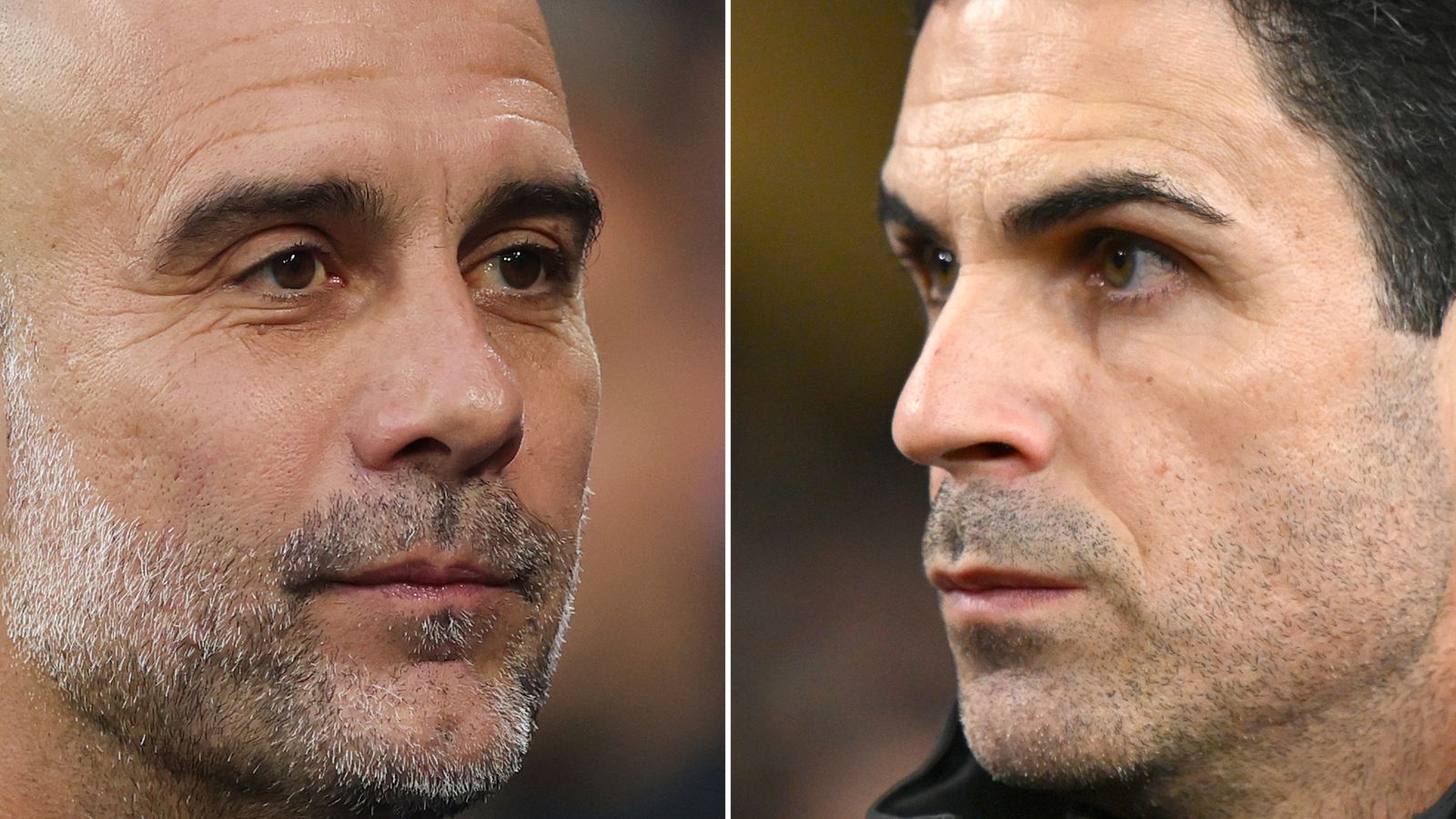
Mikel Arteta and Pep Guardiola have spent the last three seasons engaged in a tactical arms race that has shifted the very foundations of English football. We have moved beyond the simple debates of possession versus counter-press. Today, we are looking at two sides that have mastered the art of positional suffocation. As Mirror Football reported, the environment at elite clubs is often a pressure cooker that can break even the most talented players, and both managers have cultivated a culture where second place is viewed as an existential failure.
The tactical chessboard: 3-2-2-3 vs the Hybrid 4-3-3
Tactically, the battle lines are drawn with surgical precision. Guardiola has spent the 2025-26 campaign refining his 3-2-2-3 'box' midfield, with John Stones once again stepping into the double pivot alongside Rodri. This structure is designed to create a numerical overload in the central 18th minute transition phase, forcing opponents to decide between surrendering the half-spaces or leaving their flanks exposed to the dual threat of Phil Foden and Erling Haaland. City’s xG this season has remained at a staggering 2.45 per 90, yet their transition defense has occasionally looked brittle when Rodri is dragged out of his central station.
Arsenal, conversely, have leaned into a more flexible hybrid system. Gabriel Magalhaes and William Saliba provide the foundation for a side that often transitions into a 3-2-5 in possession, with Declan Rice operating as the 'destroyer' who allows Martin Ødegaard the freedom to roam. The key to Arsenal's success today lies in their 87 percent pass completion rate in the final third—a metric that has seen them dismantle deep blocks with almost robotic efficiency. However, there is a lingering criticism: for all their aesthetic brilliance, the Gunners still lack that 'shattering force' up front when Kai Havertz is forced into deeper link-up play.
The Battle for the Half-Spaces
The match will likely be decided in the zones between the lines. Bernardo Silva’s ability to manipulate space is well-documented, but he faces a formidable opponent in Rice, who has arguably been the most effective defensive midfielder in Europe this term. If Rice can isolate Silva and prevent the diagonal ball to Haaland, Arsenal can stem the tide. But if City find their rhythm, the 'Wembley hoodoo' that has occasionally haunted Arteta's big-game preparations could return. We saw it in the 22nd minute of their last meeting—a lapse in concentration from Ben White that allowed Jack Grealish to ghost in behind for a tap-in.
A critical observation: The fatigue factor
There is a negative observation to be made here that most mainstream previews will gloss over: both sides look exhausted. The expanded Champions League format has taken a visible toll. City’s high-press triggers, usually so synchronized, have looked increasingly sluggish in the final 20 minutes of matches. Arsenal, meanwhile, have become overly reliant on Bukayo Saka’s individual brilliance to bail them out of stagnated possession. If this game goes to extra time, we aren't seeing a tactical masterclass; we're seeing a war of attrition between two squads that are running on fumes.
"It's not just a game; it's a statement of where the power lies in English football after the Liverpool resurgence."
The stakes couldn't be higher. For Arsenal, an FA Cup win would validate the Arteta project and provide the momentum needed for their upcoming UCL semi-final against Inter Milan. For City, it is about maintaining their aura of invincibility. When you look at the shot maps from their respective semi-finals—Arsenal's dominance over Nottingham Forest and City's tactical dismantling of Chelsea—it is clear that we are watching the two best coached teams in the world. The margin for error is non-existent.
The prediction: A London celebration
Expect a cagey opening 30 minutes. City will dominate the ball, but Arsenal’s defensive structure is more disciplined than it was twelve months ago. The breakthrough will come from a set-piece—Gabriel Magalhaes at the back post in the 64th minute. City will throw everything forward, exposing themselves to the counter-attack where Gabriel Martinelli’s pace will prove decisive. It won't be pretty, and the 1-0 scoreline will reflect a game of small margins rather than an expansive spectacle.
Arsenal will lift the trophy, proving that they have finally developed the mental toughness that Nani’s old United possessed. They have the balance, they have the hunger, and today, they have the tactical edge over a City side that looks like it's finally reaching the end of its dominant cycle under Pep. The trophy is heading back to North London.
Read Next
- Arsenal are walking into a trap if they rush Jurrien Timber for the final
- Arsenal's Transfer Window Is Already A Familiar Disaster
- Bernardo Silva's FA Cup warning proves City are inside Arsenal's head
- Hearts' Title Dream Is Over, But Their War on the Old Firm Has Just Begun
- 🏆 FA Cup Final 2026 — May 16, Wembley
- ⭐ UCL 2026 — Champions League Quarter-Finals Hub