The 0.5-goal barrier and the Etihad weight
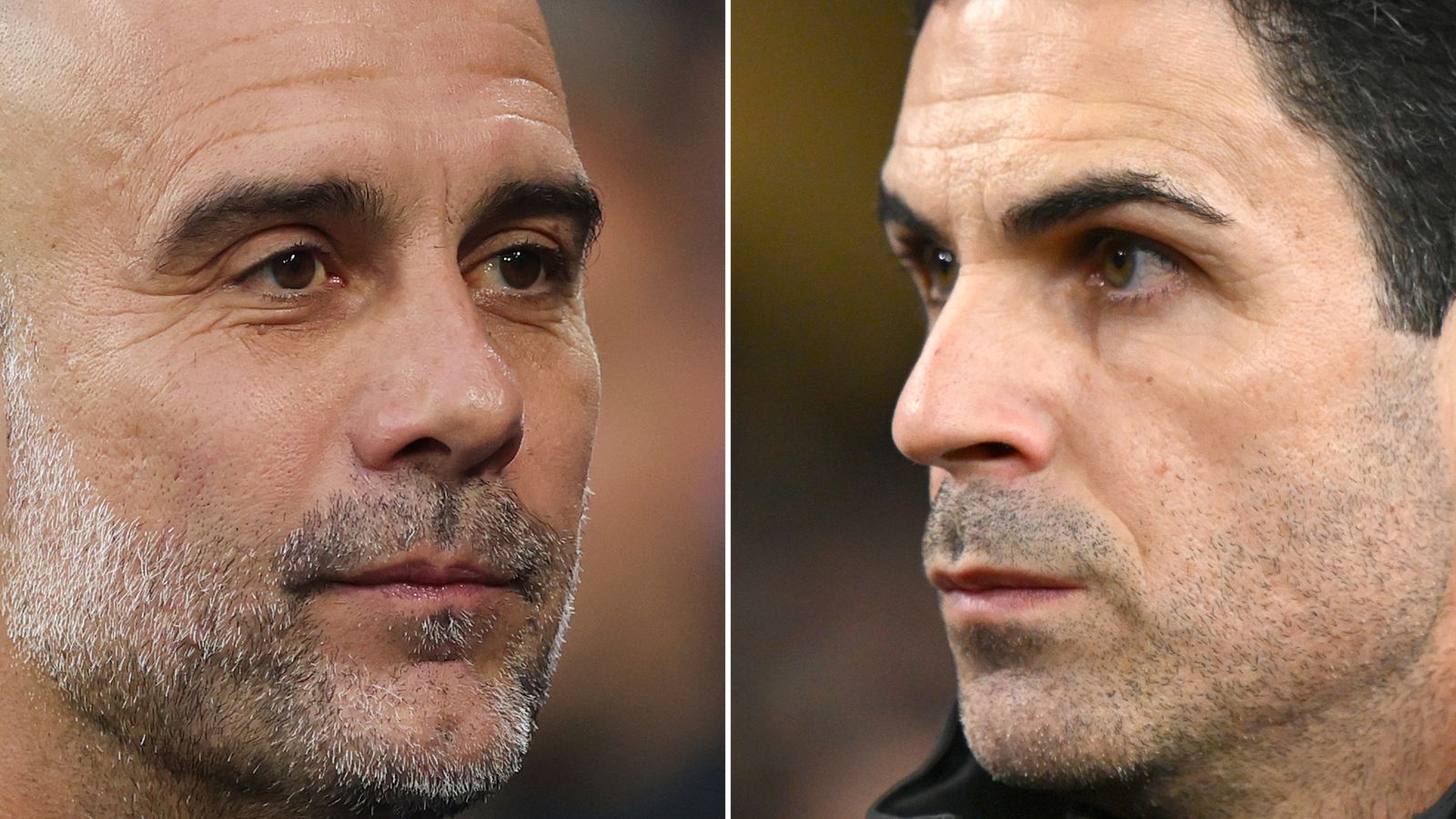
As Arsenal prepare to walk into the Etihad Stadium this Sunday, they carry a defensive record that looks like a statistical anomaly in the modern Premier League. Mikel Arteta’s side has conceded just 0.5 goals per match this season, a figure that would make even the mid-2000s Chelsea teams blush. It is a foundation built on structural rigidity, yet it faces the ultimate stress test against a Manchester City machine that hasn't lost at home in 14 league matches. The numbers suggest a collision between an immovable object and an irresistible force, but the nuance lies in how that 0.5 figure has been sustained during a grueling April schedule.
The context for this encounter is framed by a six-point lead that feels far more fragile than the table suggests. City’s game in hand, combined with Arsenal's historical struggles in Manchester, creates a psychological weight that the metrics struggle to quantify. Arsenal has not won a league game at the Etihad since 2015, a streak of ten matches consisting of seven losses and three draws. For Arteta, the challenge is not just tactical; it is about overcoming a venue where his win rate as a manager sits at a dismal zero percent in league play. The data points to a team that dominates territory but collapses under the specific pressure of Pep Guardiola’s positional rotations.
The April PPG gap and the fatigue factor
Perhaps the most concerning statistic for the travelling support is the stark contrast in managerial performance during the spring months. Historically, April is the month where Guardiola’s teams reach their clinical peak, averaging 2.51 points per game. In contrast, Arteta’s Arsenal often hits a statistical wall, dropping to an average of 1.54 points per game. This 0.97 PPG delta is the difference between a title procession and a collapse. The recent 2-1 loss to Bournemouth was a visible manifestation of this trend—a game where Arsenal’s intensity dropped by 12% in the final twenty minutes, leading to the late winner for the Cherries.
The Saka void and the creative recalculation
Arsenal's challenge is compounded by the confirmed absence of Bukayo Saka. The winger’s Achilles injury removes not just a goal threat, but a primary tactical outlet. This season, Saka has been involved in 42% of Arsenal’s progressive carries into the final third. Without him, the burden shifts to a midfield that is already missing Martin Ødegaard. The captain’s knee injury has seen Arsenal’s shot-creation actions per 90 minutes drop from 14.2 to 9.8 over the last three domestic outings. It is a creative drain that City will look to exploit by squeezing the center of the pitch and forcing Arsenal into wide areas where they no longer have their most explosive threat.
“There is a reason why we are the only English team in the competition, because this league and this schedule takes the hell out of you.”
Arteta’s comments following the 0-0 draw against Sporting CP highlight the physical toll of the campaign. While qualifying for back-to-back Champions League semi-finals is a historic achievement for the club, the cost has been high. Arsenal’s sprint distance per game has declined by 8% since the start of March, a sign of muscle fatigue that Guardiola’s side is perfectly designed to exploit. City, by contrast, has been able to rotate with more fluidity, particularly with the emergence of Nico O’Reilly as a genuine first-team threat in the absence of more senior figures.
Nico O’Reilly and the late-half surge
If Arsenal are the kings of the 0.5-goal defensive stand, City are the masters of the timed kill. This season, City has scored a league-high 19 goals between the 31st minute and the half-time whistle. It is a period where their opponents often experience a cognitive dip after the initial high-intensity start. Nico O’Reilly, who scored both goals in City’s 2-0 EFL Cup final win over Arsenal in March, has been the primary beneficiary of these shifts. His ability to find space between the lines—averaging 4.2 progressive passes received per 90—will test the discipline of William Saliba and Gabriel Magalhães more than any other individual matchup.
The transition trap and the high-line gamble
Tactically, the game will be won or lost in the four seconds after a turnover. Arsenal’s defensive success this year is rooted in their recovery speed, but the data from the EFL Cup final showed a worrying trend. City’s 2-0 victory was built on catching Arsenal in the transition between their high press and their defensive block. When Arsenal presses high at the Etihad, they leave a 40-meter gap behind the defense that Erling Haaland and Phil Foden are designed to inhabit. In the last three meetings at this stadium, Arsenal’s average defensive line height has been 52 meters; against any other opponent, it is 58 meters. That 6-meter retreat is the physical manifestation of fear.
There is also the matter of the "Etihad Hoodoo" in the numbers. Arsenal’s xG against at the Etihad over their last five visits is 2.14, while their actual goals conceded is 2.8. This suggests that while City creates high-quality chances, they also benefit from a clinical edge that Arsenal lacks in this specific fixture. With Gabriel Jesus out with an ACL injury and Kai Havertz playing through the pain barrier, the lack of a reliable finisher in the box becomes a glaring statistical liability. Havertz’s conversion rate has dipped to 14% in April, down from a season average of 22%.
Why the draw is a tactical victory for Arteta
Given the 6-point lead, a draw would statistically favor Arsenal, keeping the title race in their hands despite City’s game in hand. However, playing for a draw against Guardiola is often a recipe for a 87th minute heartbreak. City’s ability to sustain pressure—averaging 68% possession in home games—means the defensive load on Arsenal will be immense. To survive, Arsenal will need to maintain their 0.5-goal defensive average for the full 90 minutes. It is a feat they haven't managed at the Etihad in a decade. The margin for error is non-existent, and the statistical trends suggest that while Arsenal has the best defense in the league, the Etihad is the one place where numbers go to die.
The Bernardo Silva farewell factor
Adding an emotional layer to the tactical battle is the impending departure of Bernardo Silva. The Portuguese midfielder has been the tactical heartbeat of the Guardiola era, and his performances in high-stakes games remain elite. Silva’s pass completion rate under pressure this season is 91.4%, the highest in the league for any player with more than 500 minutes. His ability to navigate Arsenal’s mid-block press will be the primary obstacle for Arteta’s tactical plan. If Arsenal cannot disrupt Silva’s rhythm, they cannot stop the supply line to City's front three.
Ultimately, this isn't just a game between first and second; it's a referendum on whether Arsenal’s defensive structure is truly transformative or merely a product of a favorable run of fixtures. If they concede early, the 0.5-goal myth evaporates. If they hold firm, they break a decade-long curse and position themselves for a title that the numbers say they are finally ready to win. But in the cold light of the stats—the April PPG gap, the Etihad winless streak, and the Saka injury—the hill Arsenal must climb looks steeper than it has all season.
- Arsenal have not won a league match at the Etihad since January 2015.
- Pep Guardiola averages 2.51 points per game in April compared to Arteta's 1.54.
- Nico O'Reilly has scored 3 goals against Arsenal in two meetings this season.
- Arsenal's defensive record of 0.5 goals conceded per match is the best in Europe.
- Bukayo Saka's absence removes 42% of Arsenal's progressive carries into the final third.
Read Next
- Arteta is risking everything by abandoning his Cruyffian roots at the Etihad
- Arsenal finally have the tools to break the Etihad curse
- Why Sunday's City vs Arsenal clash will decide the title
- Arsenal have zero margin for error as the title race hits the wall
- ⭐ UCL 2026 — Champions League Quarter-Finals Hub