The anatomy of a frustrated team
The ball was in play for exactly 47 minutes and 12 seconds on Wednesday night at the Metropolitano. You do not need to look much further than that single metric to understand why Ben White and Diego Simeone were screaming at each other in the tunnel after the final whistle. Sky Sports reported the post-match altercation as a flashpoint, but it was really just the boiling over of a pressure cooker that had been simmering for 90 excruciating minutes.
Arsenal walked blindly into the quintessential Atletico Madrid trap. Mikel Arteta's side dominated the ball, leaving Spain with 73 percent possession and a pass completion rate north of 88 percent. On paper, those are the hallmarks of a team in total control of a Champions League semi-final away leg. Yet, the 1-1 scoreline tells a completely different story. Arsenal were allowed to have the ball exactly where Simeone wanted them to have it.
Let us break down the possession data. Arsenal completed 642 passes on the night. A staggering 410 of those passes were strictly between their two centre-backs and their holding midfielder. They were passing in a horseshoe shape around the perimeter of Atletico's defensive block. When you compare this to Arsenal's Premier League average this season—where they manage 184 progressive passes into the final third per game—the drop-off is glaring. Against Atletico, they managed just 42.
Targeting the right flank
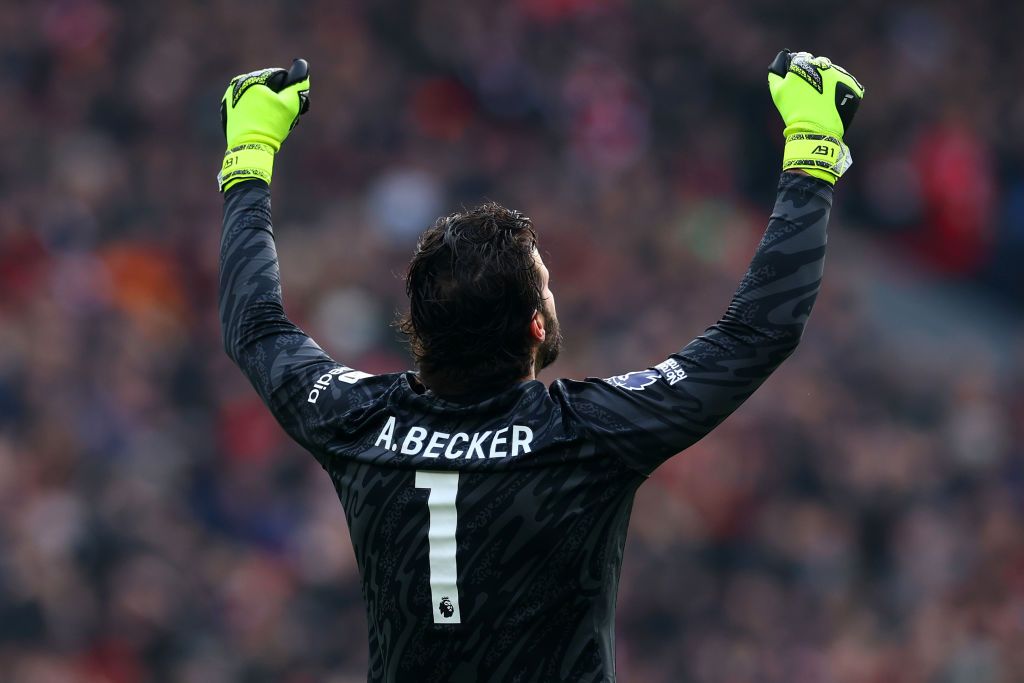
This brings us to Ben White. The Sky Sports live blog highlighted his tunnel clash with the Atletico manager, but White’s frustration was tactical long before it became emotional. White led all players on the pitch with 124 touches. Normally, this means Arsenal are humming down the right flank, overwhelming teams with overlapping runs. Last night, it meant Atletico had identified White as the trigger for their pressing traps.
Why did Simeone target White specifically? The data from this season provides a clear answer. White has been the primary progressor of the ball for Arsenal. He ranks in the 94th percentile among European full-backs for passes into the final third. By instructing his midfield to shadow White aggressively, Simeone cut off the head of the snake. White's pass completion rate dropped from his season average of 86 percent to just 71 percent in Madrid.
Every time the ball went out to White, Atletico shifted their rigid 5-3-2 block. They didn't press to win the ball; they pressed to cut off the passing lanes inside. White was forced backwards or sideways 78 times. He attempted 14 crosses, and only one found a teammate in the box. The frustration was entirely by design. Simeone knows that if you neutralise the right-sided dynamics of this Arsenal team, their entire attacking rhythm stalls.
The knock-on effect was that Martin Odegaard was starved of the ball in dangerous areas. Odegaard usually operates in the right half-space, receiving passes from White to orchestrate the attack. Against Atletico, Odegaard received the ball in the final third just 14 times. His season average is 32. Without their chief creator getting on the ball where it matters, Arsenal's attack was entirely defanged.
The dark arts quantified
Atletico's defensive numbers in this era of the Champions League are almost absurd. Over the last three seasons, when playing at home in the knockout stages, they concede an average of 0.6 goals per game. They do this by turning football matches into street fights. They committed 22 fouls against Arsenal. More importantly, they spaced those fouls perfectly. Arsenal never put together a sequence of more than four minutes of uninterrupted possession in the opposition half.
This is the dark arts quantified. They are not merely kicking opponents. They are executing a calculated strategy of rhythm disruption. By keeping the ball in play for under 48 minutes, Atletico mathematically reduced the amount of time Arsenal had to find a breakthrough. If you are a team that relies on wearing opponents down through sustained pressure, losing 12 to 15 minutes of effective playing time is catastrophic.
The nature of the fouls also tells a story. Of the 22 infractions, only four were in Atletico's own defensive third. The rest were cynical, tactical fouls committed near the halfway line. This is a deliberate strategy to prevent transitions. It forces Arsenal to restart play against a set defense every single time. It completely nullifies the threat of Gabriel Martinelli and Bukayo Saka on the break.
A counterintuitive attacking threat
Here is the most counterintuitive finding from the night. For all of Arsenal's possession, they actually conceded the better chances. Arsenal's expected goals (xG) for the match was a dismal 0.84, primarily bulked up by the scrambled corner that led to their equaliser. Atletico's xG was 1.12. They only had four shots all game.
How does a team with 27 percent possession generate a higher xG from four shots than a team with 73 percent possession from 14 shots? Shot quality. Arsenal were reduced to speculative efforts from 25 yards out. Six of their attempts were blocked by a wall of red and white shirts. Atletico, conversely, broke with terrifying precision. Their opening goal came from a counter-attack that lasted just 8.4 seconds from winning the ball on the edge of their own box to scoring.
A failure to adapt
This exposes a recurring flaw in Arteta's European strategy. Domestically, Arsenal suffocate teams. In Europe, against elite transitional sides, that suffocation often turns into a vulnerability. The high line becomes a liability when you cannot generate pressure on the ball carrier quickly enough after a turnover. Atletico bypassed the midfield entirely on three separate occasions with single, raking passes.
You have to question the in-game management from the Arsenal bench. The team lacked a Plan B. When it became clear after 30 minutes that the intricate passing triangles were not going to penetrate the Atletico low block, nothing changed. There was no increase in tempo. There was no direct running to win fouls on the edge of the penalty area. They just kept passing the ball side to side, falling deeper into the hypnotic rhythm Simeone had set for them.
We have to admire the sheer discipline of Atletico's defensive shape. The distance between their defensive line and their midfield line was consistently measured at under 12 metres. That is an incredibly compact block. It leaves absolutely no space between the lines for the likes of Kai Havertz or Leandro Trossard to drop into. Every time an Arsenal player tried to receive the ball on the half-turn, there was a defender breathing down his neck.
The math changes in London
Looking ahead to the second leg on May 5, the math changes entirely. Arsenal will be at home, and the Emirates pitch is significantly larger, which stretches the low block naturally. But the fundamental question remains. If Atletico decide to sit deep and accept 20 percent possession again, do Arsenal have the tools to break them down without leaving the back door open?
History suggests Simeone will double down on this exact game plan. In his last five knockout matches away against English opposition, Atletico have averaged just 24 percent possession. They have also progressed in three of those ties. They are perfectly comfortable playing without the ball, because they know possession does not equal control.
Arsenal have five days to figure out a solution. They need to find a way to increase the effective playing time. Interestingly, Arsenal's home games in the Champions League this season have seen an average effective playing time of 58 minutes. That 11-minute swing could be the difference between progression and elimination.
The clash in the tunnel was a sign that Atletico had successfully gotten under Arsenal's skin. Now, Arteta needs to make sure his team gets under Atletico's defensive block. The numbers from Madrid are a glaring warning. You do not beat Diego Simeone by passing the ball in front of him. You beat him by breaking the lines, and right now, Arsenal look completely devoid of the necessary tools to do so.
Read Next
- Arsenal fell right into Diego Simeone's trap but survived the chaos
- Arsenal need to stop whining and start shooting before the return leg
- Arsenal's meltdown over Diego Simeone is premium internet comedy
- Diego Simeone dragged Arsenal into the mud and Mikel Arteta blinked
- ⭐ UCL 2026 — Champions League Quarter-Finals Hub