The dark arts are alive and well in Madrid
Nobody expected a free-flowing masterclass of attacking football when Arsenal traveled to face Atlético Madrid on Wednesday night. If you wanted aesthetics, you watched Paris Saint-Germain and Bayern Munich trade blows in Tuesday's semi-final. What unfolded in Spain was exactly what everyone feared, and exactly what Diego Simeone craved: a grueling, fractious knife-fight decided by controversial officiating and tunnel bust-ups.
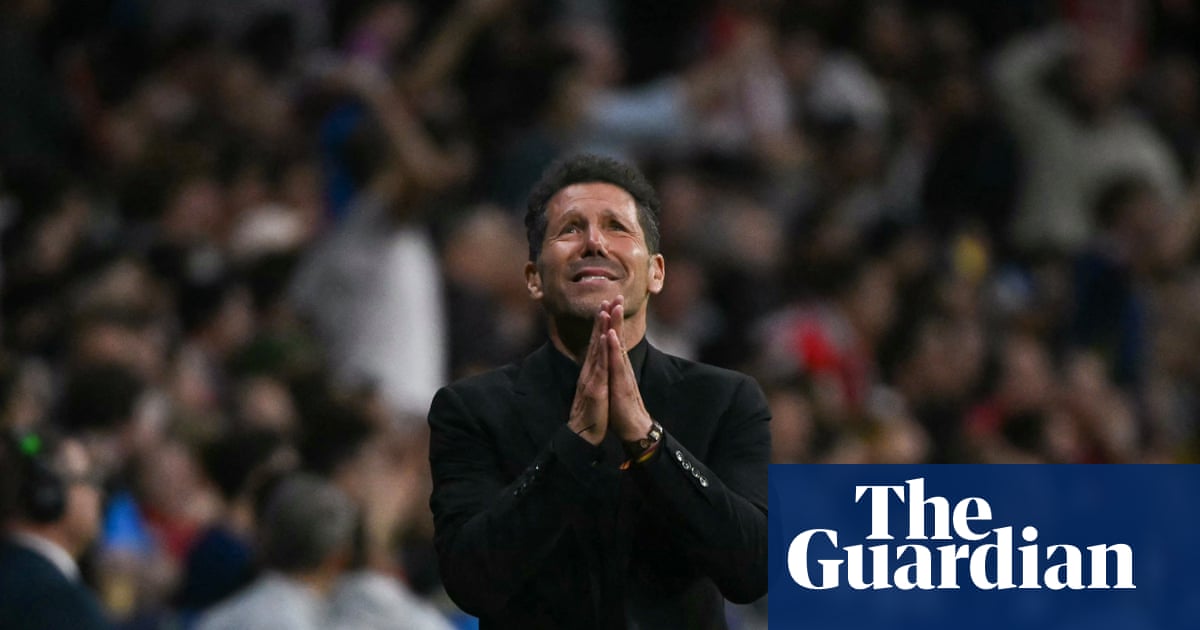
Simeone spent the evening exactly as you would picture him. Pacing the touchline entirely in black, his heart rate visibly elevated, arms waving frantically at every perceived injustice. He was hunting for an edge.
Arsenal knew the script before they boarded the plane. Mikel Arteta's squad is technically superior to this iteration of Atlético. But technical superiority means nothing when the match devolves into a disjointed mess of VAR checks, tactical fouls, and manufactured outrage. The Spanish side dragged the Premier League title contenders down into the mud. For large stretches of the evening, Arsenal looked genuinely rattled by the occasion.
The badge incident and the psychological war
The most telling moment of the night wasn't broadcast to millions of viewers. It happened away from the glaring television cameras, buried in the tunnel and the tense atmosphere of the stadium.
Ben White, Arsenal's premier provocateur, reportedly walked directly over the Atlético Madrid crest on the pitch. In the hyper-tribal world of Spanish football, stepping on the badge is treated as an act of profound disrespect. It was a calculated move from a player who specializes in getting under the skin of his opponents.
It worked. Maybe too well.
Simeone aggressively confronted White in the tunnel over the incident. The Daily Mail noted that the two squared up in a heated exchange. This is the exact temperature Simeone wants his matches played at. He thrives on perceived slights. By walking on that badge, White gave Atlético's manager the emotional ammunition he needed to whip his players and the crowd into a frenzy.
It was a naive decision from the Arsenal defender. You do not hand Diego Simeone a free motivational tool in the middle of a Champions League semi-final. The confrontation set a bitter, aggressive tone that bled into every subsequent tackle and refereeing decision.
A tale of three penalties
When the football actually happened, it was overshadowed by the man in the middle. Referee Danny Makkelie found himself entirely out of his depth as the match spiraled into a series of contentious penalty claims.
This was a see-saw tie defined by three separate penalty incidents. Two were given and converted. One was waved away after an agonizingly long review process.
Viktor Gyökeres and Julian Alvarez both found themselves on the scoresheet from the spot. Neither striker had the luxury of open space to operate. The defensive blocks were rigid, the passing lanes congested. Their goals were the result of sustained pressure resulting in box infractions rather than flowing creative play.
Arsenal felt entirely aggrieved by the officiating. The Mirror reported that Declan Rice let rip at the final whistle, visibly frustrated by two specific VAR decisions that went against the English side. Rice is typically a composed figure. Seeing him lose his cool underscores just how frustrating Makkelie's officiating was for the visitors.
The critical failure of the night was the final penalty claim. Makkelie was sent to the pitch-side monitor to review a highly contentious challenge. For minutes, the stadium held its breath. When he emerged and changed his initial ruling, the Arsenal bench erupted in fury. VAR was supposed to eliminate these prolonged moments of agonizing uncertainty. Instead, it amplified the tension, turning the match into a courtroom drama rather than a sporting contest.
Where the tactical battle was lost
Arsenal's midfield spacing was disastrous in the opening thirty minutes. Thomas Partey and Declan Rice were repeatedly bypassed not by intricate passing, but by aggressive second-ball hunting from Atlético's midfield pivots.
Simeone set his defensive line aggressively high during goal kicks, only to completely collapse into a rigid low block the moment Arsenal established possession in the middle third. It was a classic bait-and-switch.
Arteta's tactical stubbornness showed here. Instead of instructing David Raya to bypass the first line of the press with longer distribution to Kai Havertz, Arsenal repeatedly tried to thread passes through the center. They played directly into Atlético's pressing traps. It took nearly an entire half for Martin Ødegaard to realize he needed to drop deeper to collect the ball, by which point the rhythm of the game was already shattered.
This is the fundamental criticism of Arsenal in Europe under Arteta. When Plan A hits a brick wall of dark arts and defensive rigidity, the team struggles to adapt organically. They look to the bench for a solution rather than solving the problem on the pitch. You cannot script a victory against a Simeone side. You have to scrap for it.
On the other side, Atlético were not particularly brilliant with the ball. Their transition play was often clunky, heavily reliant on drawing fouls to move up the pitch. They generated very little threat from open play. But in knockout European football, efficiency trumps aesthetics.
The emotional toll ahead of May 5
The final whistle brought no resolution, only a temporary ceasefire. Both managers left the pitch deeply unhappy. The Guardian's Sid Lowe captured the mood perfectly, detailing how Simeone finally breathed a sigh of relief as fortune favored his side late in the match.
Arsenal must now regroup. The second leg at the Emirates Stadium is just five days away on May 5. The atmosphere in North London will be toxic.
The English club survived the initial onslaught, but they expended a massive amount of emotional energy doing so. White's tunnel confrontation, Rice's post-match anger, and the sheer exhaustion of fighting through a stop-start, foul-heavy match will leave lingering fatigue.
Atlético got exactly what they wanted. They frustrated a superior footballing side, dragged them into a physical altercation, and secured a result that keeps the tie entirely balanced. Simeone will bring the exact same dark arts to London next week. He will instruct his players to waste time from the opening whistle. He will demand they surround the referee at every opportunity. He will dare Arsenal to lose their heads again.
The verdict
Arsenal have the talent to blow Atlético Madrid away in the return leg. The wide areas at the Emirates will offer Bukayo Saka and Gabriel Martinelli the space they were violently denied in Spain. But talent alone will not win this tie.
Arteta has five days to calm his squad down. They cannot afford another performance defined by reactionary anger. If they spend Tuesday night worrying about the referee, the opposition bench, or perceived disrespect, Simeone will mastermind another brutal, grinding victory.
My prediction? Arsenal learn their lesson. They will abandon the emotional baggage of the first leg and suffocate Atlético with possession in London. Expect a tense 2-0 victory for the Gunners, with both goals coming late in the second half as the Spanish side finally runs out of gas. Arsenal advance to the final on May 28, but they will carry the bruises of this tie all the way to the end.
Read Next
- Arsenal need to stop whining and start shooting before the return leg
- Diego Simeone dragged Arsenal into the mud and Mikel Arteta blinked
- Simeone just ran a prompt injection on Arteta's pristine Arsenal system
- Arsenal finally found their cojones in the Madrid heat
- ⭐ UCL 2026 — Champions League Quarter-Finals Hub