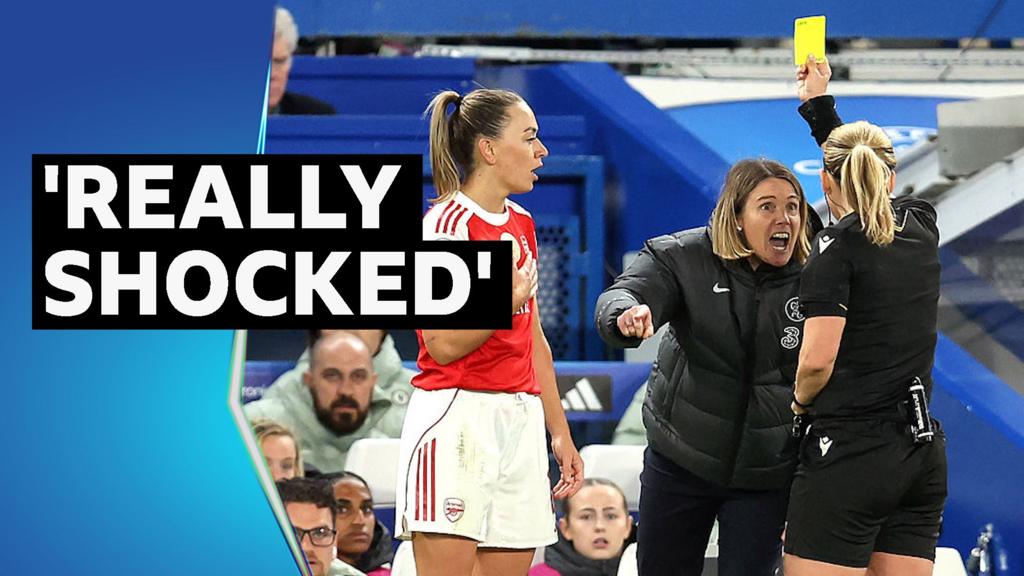
Arsenal just exposed Chelsea's glaring European flaws
The brutal reality of European football
Arsenal did not just beat Chelsea in the first leg of their Women's Champions League quarter-final. They completely disassembled them. They took the reigning English champions, located their structural weaknesses, and ruthlessly exploited them for 90 minutes. For anyone following the live coverage, this was not a lucky win defined by a random bounce or a refereeing error. It was a tactical clinic from Jonas Eidevall. The result leaves Sonia Bompastor with a massive deficit to overcome in the return leg.
We have watched these two sides fight for domestic supremacy countless times. Often, those matches are tight, nervy affairs. They are decided by fine margins. A sudden burst of acceleration from a winger. A well-worked corner routine in the 82nd minute. But European nights operate on a different frequency. The stakes magnify every minor mistake. On this night, Chelsea made far too many structural errors to survive. Arsenal were primed to punish them, and they did exactly that with chilling efficiency.
The midfield overload
The defining feature of this match was the battle in the center of the pitch. Chelsea naturally want to control the midfield. They rely on their central operators to set the tempo, win the physical duels, and spray passes out wide. Arsenal bypassed that trap entirely. Instead of engaging in a bruising physical contest in the middle third, Eidevall instructed his team to bypass the initial press using sharp, vertical passing lanes.
It sounds basic on a whiteboard. Executing it on the pitch requires elite technical quality and perfect spacing. Arsenal had both in abundance. Every single time Chelsea triggered their high press, Arsenal had a spare player dropping into the half-spaces to receive the ball on the half-turn.
Chelsea had the bulk of the possession early on. That was their first mistake. Arsenal allowed them to hold the ball in their own defensive third. Eidevall set his team up in a highly disciplined, compact mid-block. This is where the tactical nuance really shone through. Modern football frequently equates possession with control. That is a dangerous trap. Chelsea passed the ball slowly between their center-backs, waiting patiently for a gap to open in Arsenal's shape. No gaps opened.
Arsenal's defensive structure was rigid. They set pressing traps out wide. The moment the ball was played to the Chelsea full-backs, the trap snapped shut with violent speed. Arsenal's wingers did not merely run at the ball carrier. They curved their runs to cut off the return pass to the center-backs. It forced Chelsea into panicked decisions. Chelsea repeatedly coughed up possession in highly dangerous areas. It was exactly what Arsenal wanted. They turned Chelsea's possession into a weapon against them.
The foundation of the attack
We cannot discuss Arsenal's build-up play without highlighting the role of the goalkeeper. Modern tactical systems demand a goalkeeper who is comfortable with the ball at her feet. Arsenal have exactly that. When Chelsea attempted to press high, Arsenal simply used their keeper as an extra outfield player. This created a numerical overload in the first phase of build-up.
Chelsea's front line was completely disorganized when deciding who should press the keeper. If a striker pushed up, an Arsenal center-back was left entirely unmarked. If the strikers stayed deep, Arsenal's keeper had all the time in the world to pick out a forward pass. It was a lose-lose situation for Bompastor's side. This is why aggressive pressing requires supreme coordination. Without it, you are simply chasing shadows.
Arsenal manipulated Chelsea's pressing shape flawlessly. The keeper acted as the bait. She would hold onto the ball until a Chelsea forward broke from the defensive structure to close her down. The moment the forward committed, the ball was instantly zipped into the space that forward had just vacated. It was precise, calculated, and devastatingly effective. Chelsea never found an answer to this trap.
Transition as a weapon
Football at the highest level is decided in the transition moments. When the ball changes hands, the shape of the team dictates what happens next. Arsenal were devastatingly sharp in these split-second windows. The instant they won the ball back, they ignored slow build-up play. They went straight for the throat.
Alessia Russo was magnificent in her movement. She refused to play as a static number nine. Instead, she operated dynamically, dropping deep to link the play and drag Chelsea's central defenders out of their designated zones. When the defenders followed her, Arsenal's wide players made aggressive diagonal runs into the massive pockets of space left behind.
This caused absolute panic in the Chelsea backline. Defenders were caught completely between two minds. Should they step up to close down Russo? Or should they drop off to track the runners? Indecision is fatal in the Champions League. Arsenal capitalized on that hesitation without mercy.
When you review the match footage, the lack of ideas from Chelsea is genuinely striking. They looked static. Off the ball, there were zero dynamic runs to disrupt Arsenal's defensive line. The attacking stars for Chelsea were entirely marginalized. Arsenal aggressively double-teamed the wingers every time they received the ball, forcing them backwards or directly into heavy traffic.
The hidden value of full-backs
While the attackers grab the headlines, the real unsung heroes of this tactical victory were Arsenal's full-backs. In modern systems, the full-back role is arguably the most demanding on the pitch. You are expected to be a wide playmaker in possession and a lockdown defender out of it. Arsenal's wide defenders executed both phases perfectly.
Instead of constantly overlapping and leaving space behind them, they inverted smartly. By tucking inside alongside the defensive midfielder, they created a solid block of three players in the center of the pitch during the build-up phase. This narrow positioning completely confused Chelsea's wide pressers.
Chelsea's wingers did not know whether to track the inverted full-backs inside or hold their width. That momentary confusion was all Arsenal needed. The inverted shape gave Arsenal numerical superiority in the middle, allowing them to effortlessly pass their way out of pressure and launch counter-attacks. It was a subtle tweak from Eidevall, but it broke Chelsea's pressing structure entirely.
A masterclass in rest-defence
Arsenal's transition game was built on an incredibly solid foundation. Their rest-defence was impeccable. Rest-defence refers to the positioning of players while the team is in possession. Arsenal always kept three players back. They formed a watertight triangle that snuffed out any Chelsea counter-attacks before they could even materialize.
Leah Williamson led the defensive line with absolute authority. She read the game beautifully. She anticipated forward passes and stepped in to intercept long before the danger escalated. Her distribution from the back was equally impressive, frequently launching attacks with raking diagonal balls.
Chelsea tried to bypass the midfield entirely in the second half. They started launching long, hopeful balls over the top of Arsenal's defence. It was a desperate tactic from a team entirely devoid of ideas. Williamson and her defensive partners handled it with ease. They dropped their line just enough to eliminate the space in behind. Chelsea's long-ball approach was rendered completely useless.
There is a glaring observation to be made about Chelsea's lack of a backup plan. When their intricate passing game was successfully nullified, they had absolutely no alternative strategy. They threw bodies forward in a panic, leaving themselves wildly exposed at the back. Yet, they lacked the necessary creativity to break down Arsenal's low block in the final 20 minutes.
The stamina gap
Let's examine the engine room. Arsenal's midfield trio operated with a level of synchronicity that Chelsea simply could not handle. The holding midfielder anchored the shape and broke up play with quiet, brutal efficiency. Her ability to read the game and cover the spaces left by overlapping teammates was exceptional.
Ahead of her, Arsenal's central midfielders pushed aggressively high. They operated almost as dual attacking midfielders. This overloaded Chelsea's pivot. It created constant numerical advantages in the central areas. Chelsea's midfield was stretched, pulled out of position, and forced to cover too much ground. Massive gaps appeared for Arsenal to exploit.
It was a total tactical mismatch. Eidevall clearly identified that Chelsea's midfield can be overrun if forced to defend large spaces horizontally. By stretching the pitch and moving the ball quickly from touchline to touchline, Arsenal exhausted Chelsea's midfielders. By the 70th minute, you could see the heavy legs. The pressing intensity plummeted. Arsenal took total control of the match.
This tactical superiority is what separates good teams from elite ones. Arsenal didn't just win their individual duels. They won the structural battle. They created an environment where their strengths were magnified, and Chelsea's flaws were completely exposed.
Room for improvement
Despite the glowing tactical review, Arsenal were not entirely flawless. In fact, Eidevall will likely be furious with his team's finishing in the final third. Arsenal created enough high-quality chances to score four or five goals. They severely lacked the killer instinct to put the tie completely to bed. Missing those clear-cut opportunities against a team with Chelsea's historical firepower is playing with fire.
In the Champions League knockout stages, you must bury your opponents when you have your foot on their neck. Arsenal let Chelsea survive. They missed glaring headers and scuffed shots from inside the penalty area. That is a major negative they must address before the return leg. If Arsenal had been more clinical, the second leg would be a mere formality. Instead, they have left the door slightly ajar.
It is a slight lack of ruthlessness that could still come back to haunt them if Chelsea find an early goal in the next match. Eidevall knows this. He knows that dominating possession and creating expected goals means nothing if the ball does not hit the back of the net.
The return leg looms
The tie is obviously not over, but Arsenal hold the tactical cards. They take a vital lead into the second leg. More importantly, they take a massive psychological advantage. They have proven on the pitch that they can entirely neutralize Chelsea's primary attacking threats.
What must Chelsea do differently next week? For starters, they need to completely overhaul their pressing strategy. Eidevall proved that Arsenal can easily carve through a disjointed, uncoordinated press. Chelsea need to press as a single, cohesive unit, or they should not press at all. Sitting deep and playing a compact block might be their safest option, forcing Arsenal to break them down instead of leaving massive spaces in behind for Russo to exploit.
Furthermore, Bompastor has to find a reliable way to get her key attackers on the ball in dangerous areas. If her wingers remain isolated on the touchline, Chelsea's attacking output flatlines. They might need to adjust their starting formation, bringing the wide players centrally to pick up the ball in pockets of space.
The pressure is entirely on Chelsea. They are chasing a deficit against an opponent that just delivered a tactical schooling. Arsenal can afford to sit back, absorb the pressure, and hit them on the counter-attack. That is a game state that Eidevall's side is perfectly designed to execute.
This result sends a massive statement to the rest of the clubs left in the competition. Arsenal are genuine, terrifying contenders for the Champions League trophy. They possess the tactical flexibility, the defensive discipline, and the attacking pace to beat any team in Europe on their day.
For Chelsea, this is a harsh wake-up call. Dominating the domestic league is one thing. European success requires a completely different level of tactical sophistication and adaptability. They were found severely wanting in this first leg. If they cannot quickly adapt and fix these structural flaws, their European ambitions will end in disappointment once again.
The women's game is evolving at a breakneck pace. Tactical systems are becoming more intricate. The physical and mental demands are skyrocketing. Arsenal demonstrated that they are pushing the boundaries of this evolution. They played a modern, intense, and highly intelligent brand of football. Chelsea, by contrast, looked like a team devoid of answers, hoping for individual brilliance to save them.
This quarter-final clash was highly anticipated as a battle of heavyweights. In reality, it was a tactical rout. Arsenal exposed Chelsea's most glaring European flaw: an inability to adapt when the initial game plan fails. Eidevall won the chess match without breaking a sweat. Now, we wait to see if Bompastor has a response. Given what we just watched, it seems highly unlikely.
Read Next
- Lauren James is masking Chelsea's deeper tactical flaws against Arsenal
- Alessia Russo is Arsenal's Swiss Army knife and it might be a problem
- Arsenal's record-breaking Alvarez push and Chelsea's Milan raid
- Arsenal's Carabao Cup disaster and the terrible 10 days breaking Chelsea
- ⭐ UCL 2026 — Champions League Quarter-Finals Hub
The Club: How the English Premier League Became the Wildest, Richest, Most Disruptive Force in Sports
The definitive inside story of the Premier League's global takeover.
Frequently Asked Questions
Who did Arsenal beat in the WCL quarter-final first leg?
What tactical approach did Jonas Eidevall use against Chelsea?
How did Arsenal exploit Chelsea's possession in the match?
Why did Chelsea struggle in the center of the pitch?
What was the result of the Arsenal vs Chelsea WCL first leg?
More Coverage

Adam Wharton emerges as top summer target for Arsenal's midfield evolution
34 minutes ago
Manchester United are chasing ghosts with the Leao pursuit
2 hours agoArsenal’s European ambition check is about eighty games overdue
2 hours ago
Arsenal weigh up Ethan Nwaneri departure as Premier League interest grows
2 hours ago
Arsenal's transfer strategy remains locked on silverware
2 hours ago
Atletico Madrid are at war with Barcelona over Julian Alvarez
2 hours agoMore Analysis

Arsenal hold all the cards after dismantling a broken Chelsea
2 months agoArsenal survive early Chelsea blitz to take control of WCL quarter-final
2 months ago
Chelsea are furious, but anger won't overturn Arsenal's 3-1 lead
2 months ago
Bompastor's VAR fury masks Chelsea's tactical failure against Arsenal
2 months ago
Chelsea's disallowed goal exposes their real UWCL problem
2 months ago