The shift from domestic survival to continental prestige
The transition from a muddy Sunday afternoon on the Trent to the pristine, floodlit turf of North London on a Tuesday night is the sharpest gear change in modern football. While The Guardian reported on Aston Villa’s toothless frustration in their 1-1 draw at Nottingham Forest today, the rest of the elite world is already looking 48 hours down the line. We are moving from the desperate, lung-bursting survivalism of Neco Williams and Oxford United to the cold, mathematical precision of the Champions League quarter-finals.
Arsenal enter Tuesday’s second leg against Real Madrid with the tie balanced on a knife-edge after that chaotic 2-2 draw at the Bernabéu. It is a match that will be won in the half-spaces, governed by how effectively Mikel Arteta can mask his team's structural vulnerabilities against the most ruthless transition side in history. The stakes are higher than a simple semi-final berth; this is about whether the current tactical iteration of this Arsenal side has reached its ceiling or if they can finally break the glass roof of European mediocrity.
The box midfield and the Madrid mid-block
Arteta’s tactical blueprint relies on the 3-2-2-3 build-up shape that has become the league's standard. By inverting his left-back into the pivot alongside Declan Rice, he creates a numerical overload in the center. This forces the opposition into a choice: commit the central midfielders to press the ball and leave the ten-channel open, or sit deep and allow Arsenal to dictate the tempo. In the first leg, Carlo Ancelotti chose a third option, a disciplined 4-4-2 mid-block that refused to bite on the bait of the inverted full-back.
Real Madrid were content to let Arsenal have 64% of the ball in harmless areas. The danger for the Gunners on Tuesday is a repeat of that pattern. If they cannot penetrate the lines within the first three passes of a transition, they risk being caught in the same sideways-passing purgatory that saw Villa struggle against Forest’s low block today. Madrid don't need the ball to control the game; they just need one loose pass from a distracted inverted defender to release Vinícius Júnior into forty yards of grass.
Lessons from the McLeish era and the cost of stagnation
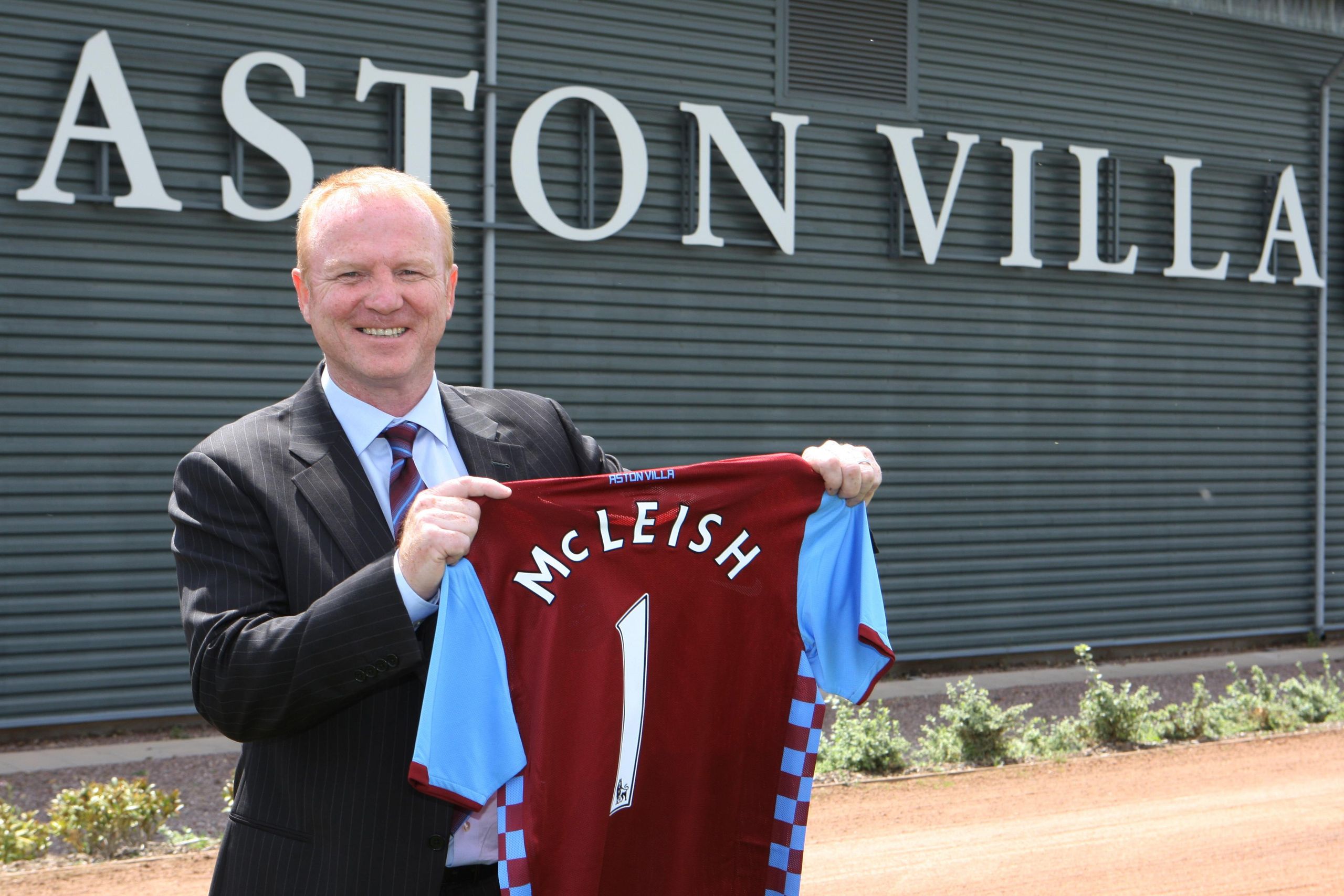
There is a certain irony in reading Alex McLeish’s reflections on his time at Villa Park, where he was tasked with achieving top-half finishes without spending a penny. In 2026, the financial and tactical expectations have ballooned into an entirely different stratosphere. Stagnation is now viewed as failure, and the 'high as possible' mandate has been replaced by 'perfection or nothing'. Arsenal cannot afford the luxury of a transitional season or a 'creditable' exit.
The pressure is compounded by the domestic context. With Manchester City casually dismantling Chelsea and fans mocking Arsenal’s bottle in the stands, the psychological weight on this squad is immense. They are fighting a war on two fronts, and history suggests that Arteta’s squad rotation—or lack thereof—tends to catch up with them in mid-April. We saw it in the leggy performance of several key starters during the final twenty minutes in Madrid last week, where pass completion rates dropped from 91% to 78% as fatigue set in.
The Bukayo Saka dependency and the Ferland Mendy wall
The individual battle that will define the night is Bukayo Saka versus Ferland Mendy. In the first leg, Mendy produced a masterclass in defensive positioning, rarely allowing Saka to cut inside onto his favored left foot. When Saka did manage to turn, he was greeted by a secondary cover from Eduardo Camavinga. This doubling-up strategy effectively neutralized Arsenal's primary creative outlet, forcing them to rely on Gabriel Martinelli’s directness on the opposite flank.
"I was given one simple goal: finish as high as possible without spending," McLeish recalled of a different era. Today, Arsenal have spent, they have built, and the 'goal' is now the trophy itself.
Martin Odegaard must find a way to drag Kroos out of the central lane. If Odegaard remains static in the right half-space, Kroos will simply screen the pass into Saka all night. The Norwegian needs to drop deeper, almost into a third-pivot role, to lure the Madrid press forward and create the verticality that was missing for long stretches of the first leg. It is a high-risk strategy that leaves the back three exposed, but against Madrid, playing it safe is the quickest route to a 1-0 defeat.
Survival at the bottom and the reality check
While the Emirates prepares for a tactical chess match, the rest of the pyramid offers a grounding reality check. Oxford United’s win over Watford today was a reminder that football is often won in the dirt, not the data. There was no 'box midfield' at the Kassam Stadium; there was just a 1-0 win carved out of pure desperation. Arsenal often look like they are trying to solve a Rubik’s Cube while their opponents are trying to win a street fight.
The critical observation here is that Arsenal still lack the 'ugly' gear. When the tactical plan is neutralized, they struggle to revert to a more primal form of attacking. If they are trailing in the 80th minute on Tuesday, will they have the physical presence to disrupt a Madrid defense that thrives on predictable crossing? The absence of a genuine Plan B—a physical focal point to change the point of attack—remains the biggest flaw in the Edu-Arteta project.
The defensive transition nightmare
Madrid’s first goal in the Bernabéu was a textbook example of exploiting Arsenal’s high line. William Saliba was caught six inches too high, and Jude Bellingham’s curved run exploited the gap between center-back and full-back. In London, the temptation will be to push even higher to capitalize on the home crowd's energy. This is exactly what Ancelotti wants. He knows that his midfield can survive under pressure for ninety minutes, waiting for that one moment where Rice is caught ahead of the ball.
The return of Gabriel Magalhães to full fitness is vital. His ability to cover the large expanses of grass behind the adventurous full-backs will be tested from the first whistle. If Arsenal cannot control the defensive transition, the game will be over before the tactical adjustments even matter. Madrid don't need a tactical revolution to beat you; they just need you to make two mistakes in your own half.
The Verdict: A night of calculated risks
This will not be a game for the faint-hearted or the tactically rigid. Arsenal will dominate the ball, they will create the higher volume of 'half-chances', and they will look like the better-coached team for 70% of the match. But European football is not about who is better coached; it is about who has the higher concentration of individual match-winners. Madrid have Bellingham, Vinícius, and Rodrygo. Arsenal have a system.
I expect Arteta to start with a more aggressive high press than we saw in Spain, attempting to rattle Thibaut Courtois into long, inaccurate balls. It might work for thirty minutes, and I wouldn't be surprised to see Arsenal take an early lead. However, the sheer weight of Madrid's experience in these scenarios usually tells in the final quarter of the match. When the legs get heavy and the 'tactical purity' begins to fray, the individual brilliance of the visitors will likely find the decisive blow.
The Gunners have improved, they are closer than they have been in twenty years, but they are still one world-class striker away from being the finished article. Without that focal point, they are playing a perfect game of chess without a Queen. They will push Madrid to the limit, but the Spanish giants will find a way, as they always do, in a night that will leave the Emirates stadium in a stunned, silent appreciation of the gap that still remains between the elite and the nearly-elite.
Prediction: Arsenal 1-2 Real Madrid (3-4 on aggregate). The Gunners dominate the xG but fall to a 88th minute sucker-punch on the counter-attack. The tactical plan will be sound, but the execution under extreme pressure will falter against the masters of the dark arts.
Read Next
- Arsenal's locker room has grown up, but the European jitters remain
- Arsenal's title collapse is inevitable after the Bournemouth disaster
- Arsenal are once again caught in their own heads during the run-in
- Nico O'Reilly just handed Pep Guardiola the keys to the Champions League
- ⚽ La Liga 2025-26 — Title Race Hub
- ⭐ UCL 2026 — Champions League Quarter-Finals Hub