Arteta and the cost of Arsenal's defensive rigidity
The instability behind the structural mask
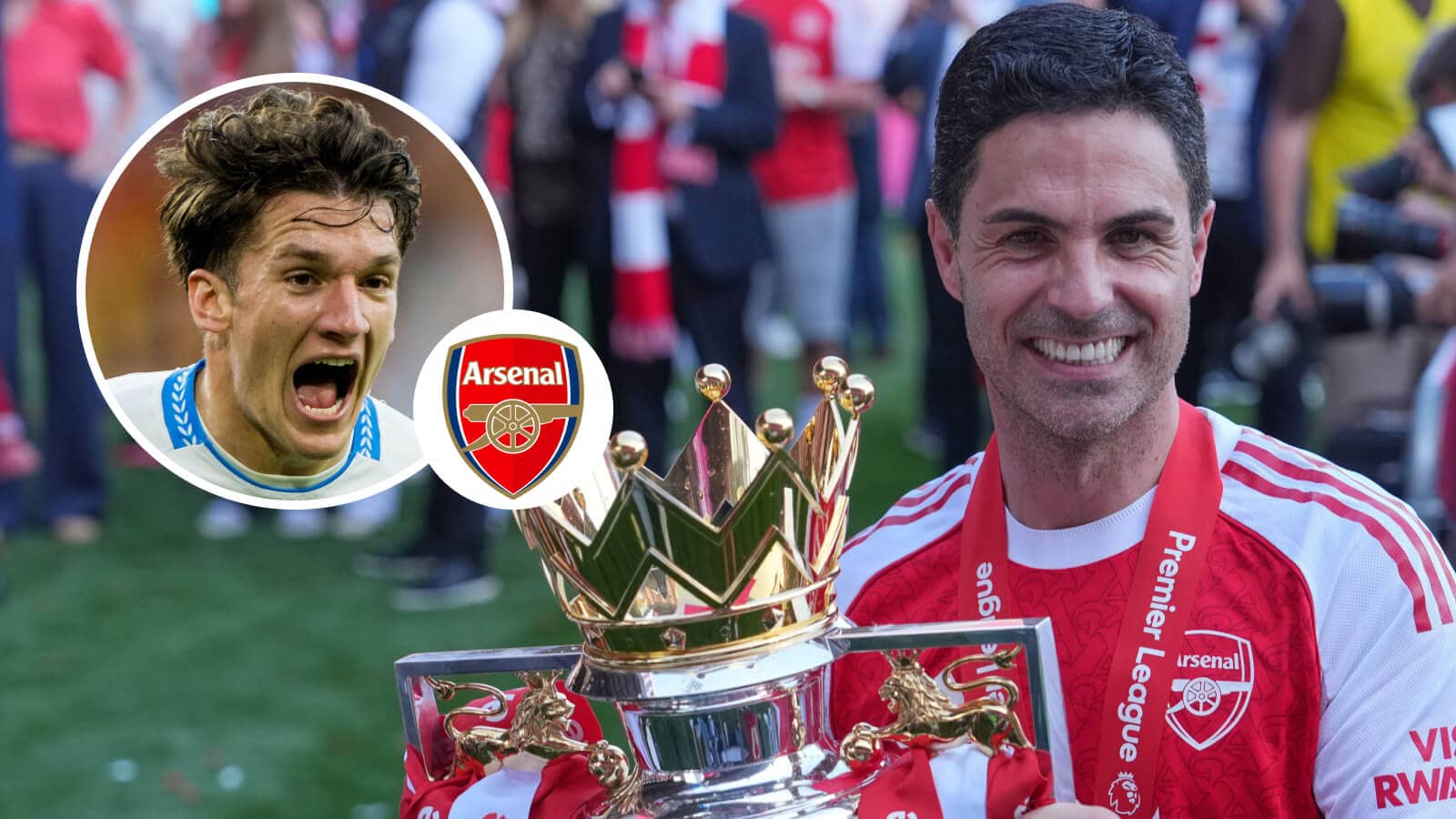
Mikel Arteta has spent the better part of three years refining a defensive structure that prioritizes control above all else. His Arsenal side often resembles a chess match played in real-time, yet behind the scenes, the foundation appears to be shifting. While fans fixate on attacking marquee signings, the actual tactical reality is that the squad is bleeding potential from its backline. As reported recently, both Piero Hincapie and Riccardo Calafiori are allegedly in contact with agents regarding a move to Real Madrid. Losing either would be a self-inflicted wound to a project built on deep tactical stability.
The paradox of the record-breaking winger
The pursuit of Christos Tzolis to bolster the attacking flank reveals a curious disconnect in Arsenal's current planning. Management is currently pushing a massive, record-breaking fee to secure the Greece international winger from Club Brugge, a move Arteta has reportedly greenlit. It is a classic move to prioritize the final third while the defensive core remains in flux. In modern football, the metrics suggest that scoring 85 goals is irrelevant if you cannot prevent the high-xG transitions that teams like Real Madrid exploit with pinpoint precision.
Tactical drift from the old guard
Former England captain David Platt, who recently turned 60, offered a retrospective view on the nature of being an invincible side in his interview with the Daily Mail. He notes that the sensation of being 100 percent protected on the pitch is often a fleeting psychological state. Arteta seems to be chasing that feeling through individual personnel upgrades, yet recruitment is rarely the solution to a drop in structural intensity. When the press triggers go stale, buying a new winger does nothing to solve the issue of a disjointed defensive unit.
The danger of the gamble
Spending heavily on a winger while your starting center-backs are allegedly contemplating their exit clauses is a recipe for a 5th or 6th place finish in a hyper-competitive league. If the club allows the departure of foundational pieces to finance vanity projects, the defensive stability that served them since 2023 will evaporate rapidly. We have seen this cycle before at other top-six sides, where the pursuit of star power outweighs the logistical necessity of a fixed defensive unit. Arteta needs to reassess his priorities before the transfer market closes and he is left with a shiny attack and a leaking back four. The math does not lie; a defense that loses its integrity in the 80th minute is a defense that loses matches.
Read Next
Amazon Fire TV Stick 4K, support for Dolby Vision, Wi-Fi 6, includes Alexa Voice Remote
Turn your TV into a Premier League headquarters.
Frequently Asked Questions
Which defenders are reportedly linked to Real Madrid moves?
Who is the primary attacking target for Arsenal's recruitment?
Why is the author concerned about Arsenal's focus on attackers?
What is the primary critique of Arteta’s current transfer strategy?
How does David Platt view the current state of Arsenal's defense?
More Coverage
Fulham hiring Alvaro Arbeloa is a massive gamble that could blow up
an hour ago
Arsenal and Liverpool in high-stakes scramble for Bradley Barcola
5 hours ago
Vinicius Jr delivers a reality check for Brazil against Morocco
6 hours ago
Arsenal are playing a dangerous game with Jeremy Monga
10 hours ago
Manchester United’s recruitment frenzy lacks a clear tactical compass
13 hours ago
Thomas Tuchel's England revolution is already splitting the fanbase
15 hours agoMore Analysis
Fulham hiring Alvaro Arbeloa is a massive gamble that could blow up
an hour ago
Australia vs Turkey is absolute chaos and the fans are losing their minds
an hour ago
Kansas City is officially the center of the football universe
an hour ago
Neymar sidelined: Brazil star misses World Cup opener against Morocco
an hour ago
Manchester United’s erratic summer window faces reality check
an hour ago