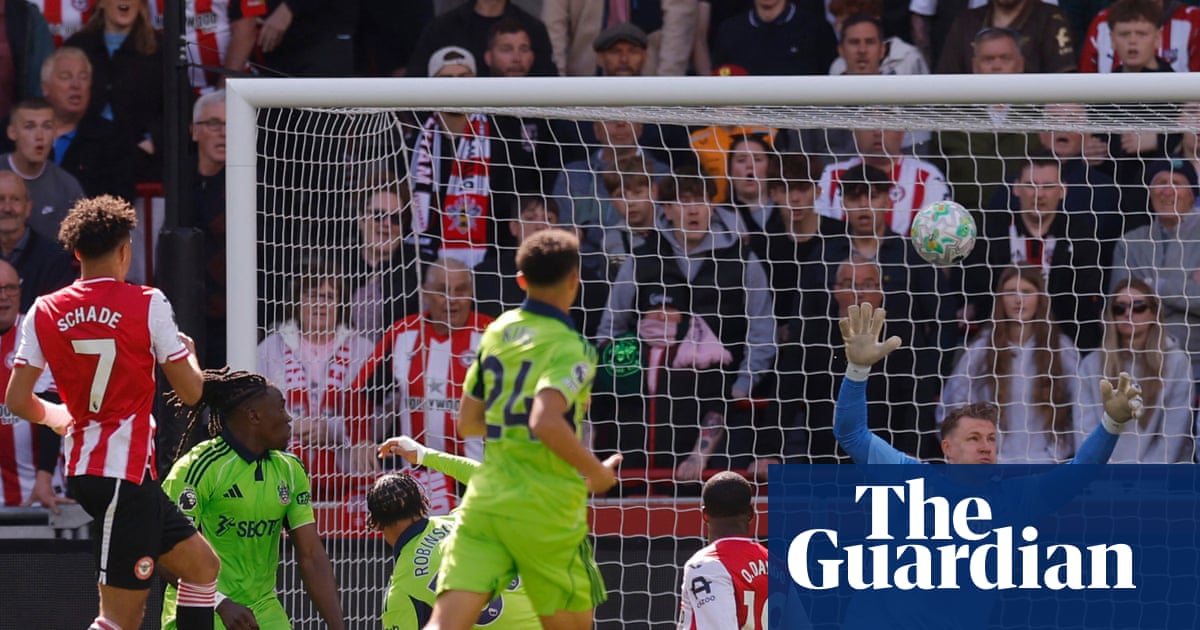
Brentford’s defensive gamble at Elland Road backfires

The tactical gamble at Elland Road
Thomas Frank walked into the cauldron of Elland Road with a clear objective: stifle the Leeds United transition game. Ethan Pinnock made a rare start in the heart of the Brentford backline, a move clearly designed to combat the direct aerial threat Leeds often utilizes. It was a selection that signaled caution from the visitors, prioritizing defensive stability over their usual expansive play.
The atmosphere in West Yorkshire was predictably hostile from the whistle. Leeds pressed with a high-intensity man-marking system that forced Brentford into sloppy turnovers in the middle of the park. Pinnock looked rusty in the opening exchanges, struggling to find his rhythm while tracking the lateral movement of the Leeds forwards.
The defensive breakdown
Brentford’s failure to settle allowed the home side to dictate the tempo of the first half. Every time the ball broke loose, Leeds players swarmed the space, leaving the visitors scrambling to recover. The midfield gap widened, and the live coverage of the match highlighted how easily the Brentford pivot was bypassed by simple vertical passes.
Pinnock’s inclusion backfired when he was caught out of position during a routine Leeds counter-attack. A lapse in concentration left the left channel exposed, forcing the wing-back into a recovery sprint that he simply could not win. It was a moment that underscored the lack of sharpness common with players returning from long-term layoffs.
Mid-match adjustments and flaws
Frank attempted to rectify the imbalance at halftime by pushing his wing-backs higher up the pitch. This created more width, but it left the center-backs isolated against the pace of the Leeds attack. The tactical shift was desperate, lacking the cohesion required to break down a well-drilled defensive block.
The lack of a clinical edge remains the primary concern for this Brentford squad. They dominated possession for large stretches of the second half, yet they failed to register a shot on target that truly troubled the goalkeeper. The final ball was consistently poor, often drifting over the touchline or straight into the hands of the Leeds defenders.
A reality check for the visitors
The final scoreline of 2-0 serves as a blunt reminder of the gap between the top half and the rest of the league. Brentford looked disjointed, failing to capitalize on the few moments where Leeds seemed to lose their shape. It was a disjointed performance that exposed the limitations of their current squad depth.
Defensively, the team looked vulnerable whenever they were forced to track runners in the transition. The marking was loose, and the communication between the goalkeeper and the back four appeared fragmented throughout the ninety minutes. If Frank continues to experiment with his starting XI in such high-pressure environments, the points will continue to slip away.
There is little time for reflection, as the schedule provides no respite for a team struggling to find its identity on the road. The lack of intensity in the final third turned a winnable game into a tactical disaster. Brentford managed only 0.42 in expected goals, a damning statistic for a side that prides itself on tactical efficiency.
Looking forward
The reliance on individual moments of brilliance is an unsustainable strategy. Without a cohesive plan to move the ball through the thirds, Brentford remains predictable and easy to defend against. The coaching staff must address the lack of urgency in the transition phase before the next round of fixtures.
Pinnock’s return, while necessary for rotation, cannot be the solution to deeper structural problems within the team. The defensive line needs more consistency, and the midfield needs to provide better protection for the back four. Until those issues are solved, the team will continue to struggle against high-pressing opponents.
The frustration among the traveling supporters was evident as the final whistle blew. This was a missed opportunity to climb the table, squandered by poor decision-making and a lack of clinical finishing. The path forward requires a return to the basics that made this team competitive in the first place.
Fisher-Price Little People Collector U.S. Soccer Special Edition Set For Sports Fans, 2 Figures
The cutest way to show your U.S. Soccer pride before the big kickoff.
Frequently Asked Questions
Why did Thomas Frank start Ethan Pinnock in the Brentford backline?
How did the Leeds United tactical system impact Brentford's performance?
What tactical changes did Brentford make during the second half?
What was the final score of the match between Leeds and Brentford?
Why did the inclusion of Ethan Pinnock prove unsuccessful for Brentford?
More Coverage

Manchester United are chasing ghosts with the Leao pursuit
an hour agoArsenal’s European ambition check is about eighty games overdue
an hour ago
Tottenham are shaking up the squad with a record-breaking push
an hour ago
Arsenal weigh up Ethan Nwaneri departure as Premier League interest grows
an hour ago
Arsenal's transfer strategy remains locked on silverware
an hour ago
Anthony Gordon to Barcelona is a high-stakes gamble for all involved
an hour agoMore Match Reports

Leeds and Brentford serve up a tactical stalemate at Elland Road
2 months, 1 week ago
Leeds and Brentford serve up a tactical stalemate at Elland Road
2 months, 1 week ago
Leeds United and Brentford leave the door wide open at Elland Road
2 months, 1 week ago
Brentford’s reliance on Igor Thiago is becoming a structural problem
1 month, 2 weeks ago