
Danny Welbeck doesn't need England to prove he's the league's smartest striker
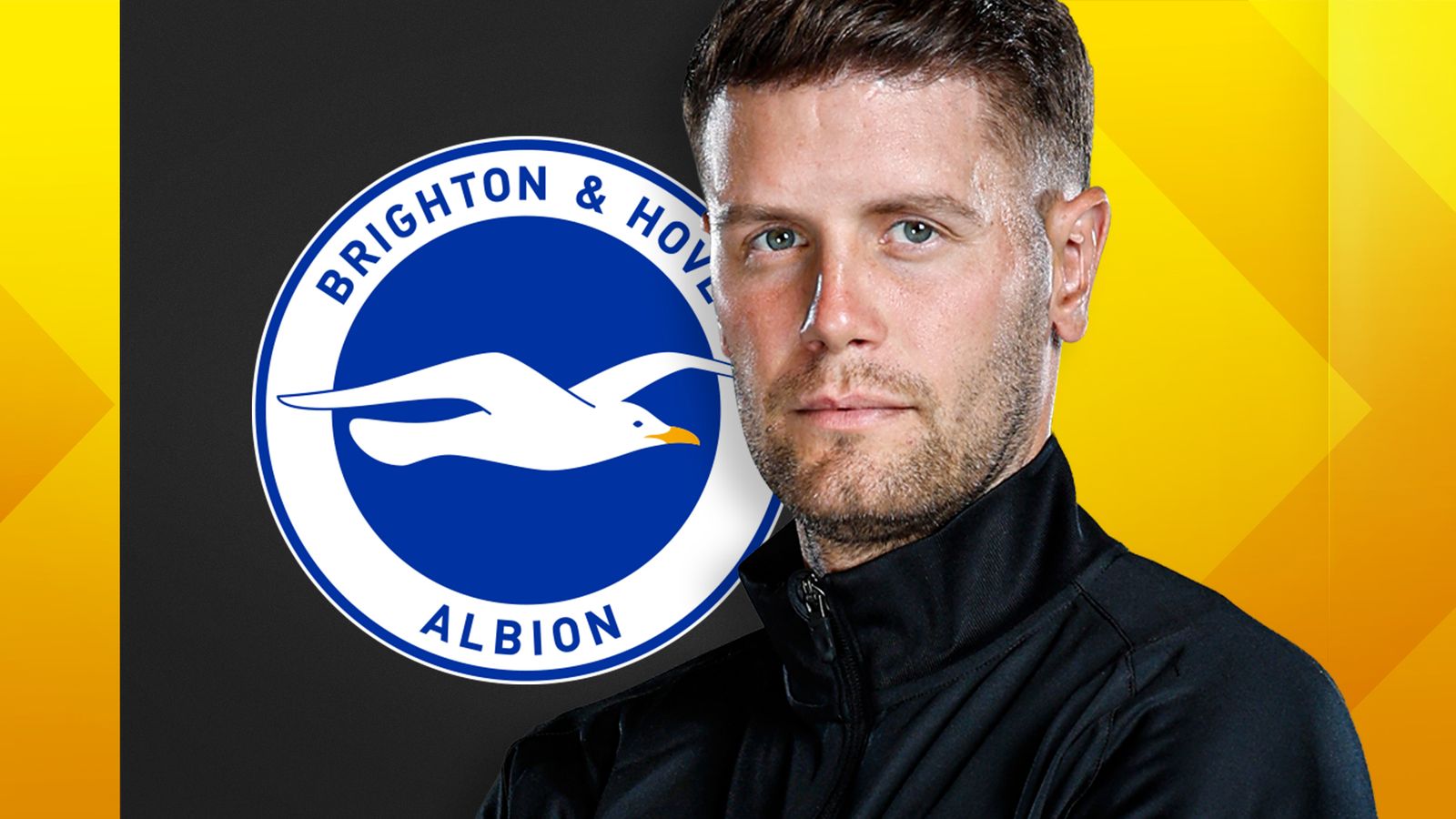
The Lancing Vote: How Hurzeler Rallied the Room
The announcement of an England squad usually carries a predictable rhythm of debate, but the silence surrounding Danny Welbeck’s exclusion this week felt particularly loud in Sussex. For a striker currently enjoying the most prolific Indian summer in recent Premier League history, the lack of a call-up seemed less like a tactical decision and more like an institutional oversight. At thirty-three, Welbeck is arguably playing the most intelligent football of his career, yet he remains the forgotten man of the national setup, a victim of a system that often prizes potential over proven performance. The frustration within the Brighton camp is unmistakable, but it has been channeled into a renewed sense of purpose on the training pitch.
Fabian Hurzeler didn’t just disagree with the decision; he turned it into a moment of collective defiance at Brighton’s Lancing training ground. In a move that could have backfired under a less authoritative manager, the 31-year-old German reportedly put the question directly to his squad during a team meeting. He asked them, quite simply, if they believed Welbeck belonged in the national setup. The response was a unanimous, vocal show of support that tells you everything about the striker’s standing in the dressing room. It wasn't just about solidarity; it was about recognizing that their captain-in-all-but-name was being overlooked despite outperforming almost every other English forward in the division. This internal vote of confidence has become a touchstone for the squad’s identity this season.
"I am very convinced from my players,"Hurzeler noted in the aftermath, his frustration barely masked by his usual clinical demeanor.
"I have the big belief that Danny Welbeck is able to play for England."It is a belief shared by anyone who has watched the veteran dismantle top-flight defenses with the clinical efficiency of a player ten years his junior. Hurzeler has spent the last few months shielding Welbeck from the media spotlight, but the England snub forced his hand. He knows that his striker’s value isn't just in the goals he scores, but in the tactical gravity he exerts on every opponent he faces. The manager’s public backing is a calculated risk, designed to boost the morale of a player who has spent a lifetime being undervalued by those outside his immediate circle.
More Than a Target Man: Decoding the Welbeck Renaissance
To understand why Welbeck is suddenly the most dangerous forward in the division, you have to look past the goals and into the spaces he creates. He isn't just a traditional number nine anymore; he has evolved into a tactical pivot that allows Brighton’s lightning-fast wingers to thrive. Under Hurzeler, Welbeck has been given a license to drop into the half-spaces, dragging center-backs into territories where they feel fundamentally uncomfortable. It’s a role that requires immense discipline and a deep understanding of defensive triggers, two things Welbeck has in abundance. His movement is a masterclass in economy, every step calculated to maximize the pressure on the opposing backline.
Take the recent performance against Newcastle at St James' Park as a blueprint. For seventy minutes, Welbeck was a ghost in the machine, drifting between the lines and forcing Dan Burn to commit to challenges he couldn't win. The winning goal wasn't just a poacher’s finish; it was the result of a perfectly timed double-movement that left the Magpies' backline static. He showed a veteran’s instinct to "smell where the ball might come down," a phrase Hurzeler frequently uses to describe his striker's uncanny spatial awareness. It’s a quality that can't be coached, a sixth sense developed over hundreds of appearances at the highest level of the game. Every touch was purposeful, every run served a greater tactical objective, illustrating why he is the linchpin of this attacking unit.
This isn't the same player who struggled for consistency at Arsenal or Manchester United. This version of Welbeck is leaner, smarter, and arguably more vital to his team’s structure than any other forward in the league. He has become a cultural "connector," bridging the gap between the teenage prodigies like Yankuba Minteh and the established core of the squad. When he speaks, the room goes quiet, not because of his age, but because of the sheer weight of his experience. He is the personification of the Hurzeler project: a blend of old-school professionalism and modern tactical flexibility. His presence on the pitch provides a stabilizing influence that allows the younger, more mercurial talents to express themselves without fear of failure.
The High Line Paradox: Why Brighton’s Biggest Strength is Their Fatal Flaw
However, no amount of individual brilliance from Welbeck can mask the structural cracks that Hurzeler is still trying to paper over. If the striker represents Brighton’s maturity, the team’s defensive strategy represents a dangerous kind of adolescent bravado. The insistence on maintaining a suicidal high line, even when protecting a lead, is quickly becoming a trademark of Hurzeler’s tenure—for better and for worse. It’s a philosophy that demands perfection from the back four, and when that perfection wavers, the results are often catastrophic. The tension between their offensive fluidity and defensive fragility is the defining characteristic of this Brighton side.
The 2-2 draw against Wolverhampton Wanderers in late October was a prime example of tactical naivety that should have set off alarm bells throughout the South Coast. Brighton were cruising, leading 2-0 as the clock ticked into the 88th minute. Instead of dropping ten yards and inviting Wolves to break them down, Hurzeler’s side continued to commit bodies forward, leaving acres of space behind Jan Paul van Hecke and Lewis Dunk. The result was a chaotic collapse that felt entirely avoidable, a self-inflicted wound born from an ideological refusal to adapt to the game state. It was a failure of game management that overshadowed what should have been a routine victory, highlighting the risks inherent in Hurzeler’s uncompromising approach.
It was a moment that exposed the German’s refusal to "park the bus" as a significant red flag in his managerial DNA. While the commitment to attractive, progressive football is commendable, there is a fine line between bravery and arrogance. In the 93rd minute, as Matheus Cunha’s deflected strike hit the back of the net, the Amex was a picture of stunned disbelief. Welbeck had done his job, netting his sixth goal of the campaign earlier in the match, but the tactical stubbornness from the touchline rendered his efforts moot. It was a harsh lesson in Premier League pragmatism that Hurzeler seemed reluctant to learn, a reminder that even the most sophisticated systems can be undone by a lack of basic defensive awareness.
The Authority of the "Young" Boss
The relationship between a 31-year-old manager and a 33-year-old striker shouldn't work this well on paper, but the age gap—or lack thereof—hasn't been an issue at Brighton. Welbeck has been vocal about why the dynamic is so effective. Speaking after the dramatic 3-2 comeback win over Tottenham, the striker dismissed any talk of Hurzeler’s youth being a barrier to respect.
"You never even think about his age until it gets mentioned,"Welbeck said.
"He’s so authoritative, the way he delivers his message and his ideas to the team is brilliant."This mutual respect is the foundation upon which Brighton’s success is built, allowing for a seamless integration of tactical innovation and veteran savvy.
This authority was on full display during that Spurs match. At half-time, Brighton were staring at a 2-0 deficit and looked utterly demoralized. Hurzeler didn't panic. He didn't scream. He simply tweaked the positioning of the double-pivot, allowing Welbeck more freedom to exploit the space behind Pedro Porro. The subsequent three-goal blitz was a masterclass in tactical adjustment, with Welbeck nodding home the winner to complete one of the most memorable turnarounds in the club's history. It showed a manager who trusts his eyes more than his spreadsheets, a rare trait in the modern game where data often trumps intuition. This ability to read the game in real-time and make decisive changes is what sets Hurzeler apart from his peers.
But the question remains: how long can this over-reliance on a veteran striker last? Welbeck is playing more minutes than at any point in the last five years, and the intensity of Hurzeler’s pressing system is taxing. There is a sense that Brighton are one hamstring injury away from a crisis. Without Welbeck to act as the focal point, the entire system risks becoming a series of disconnected sprints from talented but raw youngsters. The burden on his shoulders is immense, yet he continues to carry it with a grace that defies his years. The training staff are reportedly working overtime to ensure his longevity, but the risk remains a constant shadow over their campaign.
Tactical Evolution: From De Zerbi to Hurzeler
The transition from Roberto De Zerbi to Fabian Hurzeler has been smoother than many predicted, but the differences are starting to become clear. Where De Zerbi was obsessed with baiting the press and creating artificial transitions through intricate lateral movements, Hurzeler is more direct in his verticality. He wants the ball in the final third as quickly as possible, and Welbeck is the primary beneficiary of this shift. He no longer has to wait for a series of lateral passes to find his opening; the ball is delivered early, allowing him to use his movement to dictate the terms of the engagement. This more aggressive approach has revitalized Brighton’s attacking play, making them a much more unpredictable threat.
This shift has also benefited the wider players. Kaoru Mitoma and Yankuba Minteh are finding more one-on-one situations because defenders are too occupied with Welbeck’s central presence. It is a symbiotic relationship that has turned Brighton into one of the league's most efficient attacking units. However, this efficiency comes at a cost. The high-risk, high-reward nature of Hurzeler’s system means that when it fails, it fails spectacularly. The gaps between the lines can become chasms, and against elite opposition, those chasms are exploited with ruthless precision. The balance between risk and reward is a constant tightrope walk for this squad, one that requires absolute concentration for ninety minutes.
The role of Bart Verbruggen cannot be understated in this new system either. The goalkeeper’s ability to act as an eleventh outfielder allows Brighton to maintain their aggressive stance even when the opposition manages to bypass the first line of the press. It’s a risky strategy, one that requires a level of composure that most veteran keepers lack, let alone a young prospect. But like Welbeck, Verbruggen has bought into the Hurzeler vision, providing the foundation upon which the team’s attacking flair is built. His distribution is the starting point for many of Brighton’s most dangerous attacks, turning defensive situations into offensive opportunities in a matter of seconds.
The Shadow of the National Team
The England snub might actually be a blessing in disguise for Brighton. While the national team hierarchy focuses on younger models or established names who are currently out of form, Welbeck gets two weeks of rest to prepare for the winter schedule. For a player with his injury history, every minute not spent on an international pitch is a win for his club manager. Hurzeler knows this, even if he feels compelled to champion his player’s cause in public. The physical toll of international travel and additional fixtures could have been the breaking point for a player who is already defying medical logic. This enforced rest period allows him to recharge and refocus for the relentless demands of the Premier League.
As Sky Sports reported recently, the manager's ability to inspire his senior players has been the catalyst for Brighton's surge into the European spots. The "Dat Guy" renaissance is more than just a meme; it’s a legitimate tactical weapon that the Premier League is struggling to contain. Whether it’s a clever near-post run to drag a defender out of position or a 20-yard dipping strike that tests a goalkeeper’s nerves, Welbeck is playing with a freedom that only comes when a manager truly believes in you. He is no longer fighting for his place; he is the standard by which others are measured, a veteran leader who leads by example every time he steps onto the pitch.
The next few months will define Hurzeler’s first season. If he can add a layer of pragmatism to his philosophy—perhaps learning when to sacrifice the high line for the sake of three points—then Brighton are a legitimate threat to the top four. If he remains wedded to his tactical ideals at the expense of defensive security, they will remain the league’s great entertainers: brilliant to watch, but ultimately flawed. The balance between ambition and realism is the hardest one for any young manager to strike, but in Welbeck, Hurzeler has the perfect lieutenant to help him find it. Their partnership is the most fascinating subplot of the season, a collision of youthful innovation and veteran wisdom.
Culture and Identity at the Amex
Beyond the tactics and the results, there is a deeper story unfolding at Brighton. It’s a story about club culture and the power of a shared vision. Hurzeler hasn't just brought a new formation; he’s brought a new energy, one that resonates through every level of the club. The atmosphere at the Amex is different now; there’s a sense of expectation that wasn't always there. The fans believe that they can go toe-to-toe with anyone, and that belief is mirrored in the way the players conduct themselves. Welbeck is at the heart of this cultural shift, his professional approach and humble attitude serving as an inspiration to the younger players in the squad.
The training sessions at Lancing are reportedly some of the most intense in the league, with Hurzeler demanding total commitment from everyone. But it’s not just about hard work; it’s about working smart. Every drill has a purpose, every movement is scrutinized. Welbeck has embraced this level of detail, often staying behind after training to work with the younger forwards on their positioning and finishing. This willingness to mentor the next generation is what makes him such an invaluable asset to the club. He isn't just playing for himself; he’s playing for the future of Brighton, ensuring that the standards he’s helped set will endure long after he’s hung up his boots.
This sense of community extends to the fans as well. The relationship between the players and the supporters is at an all-time high, fueled by the team’s exciting brand of football and their underdog spirit. When Welbeck scores, it’s not just a goal for the team; it’s a moment of collective joy for the entire city. He has become a symbol of Brighton’s defiance, a player who has found his home and is repaying that trust with every ounce of his being. The England snub might sting for a moment, but the love and respect he receives in Sussex are far more meaningful than any international cap could ever be.
For now, Welbeck remains the heartbeat of this project. He is the one who sets the tempo, the one who demands standards, and the one who ultimately puts the ball in the net. England might have moved on, but in the coastal air of Brighton, Danny Welbeck has never looked more relevant. The kid from Longsight has become the king of the South Coast, and he isn't ready to give up his crown just yet. The noise from London will continue to ignore him, but as long as he has the backing of the room at Lancing, Welbeck will continue to prove that class isn't just permanent—it's evolving. The journey is far from over, and with Hurzeler at the helm and Welbeck leading the line, the best may be yet to come for the Seagulls.
Ultimately, the story of Brighton this season isn't just about a young manager or a shrewd recruitment strategy. It's about a veteran striker who refused to be written off. Welbeck’s journey from a rotation player to the focal point of a European-chasing side speaks volumes about his professionalism and Hurzeler’s vision. In a league that often feels obsessed with the next big thing, they are proving that the current big thing is sitting right under everyone's nose, wearing a number eighteen shirt and smiling as he peels off the shoulder of another helpless defender. The renaissance is real, and it’s being scripted in the most unlikely of places, by the most unlikely of duos.
Read Next
- Fulham find their rhythm as Burnley struggle to keep the lights on
- Bournemouth are making the Vitality Stadium a graveyard for big reputations
- Arne Slot’s Liverpool injury crisis just hit a breaking point at Brighton
- Liverpool’s fury at Yankuba Minteh proves the VAR era is still a mess
- 🏴 England World Cup 2026 — Three Lions Hub
The Club: How the English Premier League Became the Wildest, Richest, Most Disruptive Force in Sports
The definitive inside story of the Premier League's global takeover.
Frequently Asked Questions
Why was Danny Welbeck left out of the recent England squad?
How did Brighton’s squad react to Danny Welbeck’s England snub?
What role does Danny Welbeck play in Fabian Hurzeler’s Brighton tactics?
How has Danny Welbeck’s performance changed in his later career?
Why does Fabian Hurzeler publicly support Danny Welbeck’s England ambitions?
More Coverage

Why England must fear Panama's disciplined low block
17 minutes ago
Anthony Gordon to Barcelona marks a high-stakes gamble
an hour ago
Arsenal vs PSG: Why tactical rigidity will determine the European champion
an hour ago
Arsenal's 104 million gamble on Julian Alvarez is pure chaos
an hour ago
Top 10: The Definitive Arsenal Moments of the 2025/26 Season
2 hours agoLincoln City just entered the weirdest experiment in League One history
3 hours agoMore Match Reports
Danny Welbeck is aging like a fine scotch while Chelsea ruins everything
1 month, 1 week ago
Brighton's bet on Fabian Hurzeler is the right move for the long haul
3 weeks, 4 days ago
Brighton fans think Carlos Baleba is finally back to his best
1 month, 1 week ago
Brighton just locked down Fabian Hurzeler and honestly good for them
3 weeks, 4 days ago
Fabian Hurzeler is missing the point at Brighton
1 week, 4 days ago