The Highland anomaly
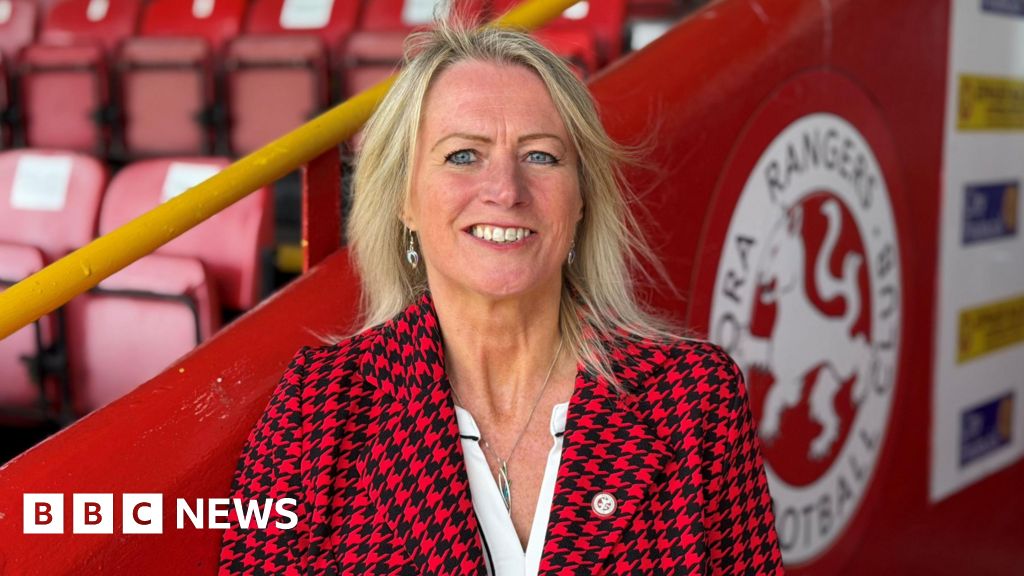
Brora is a village of just over a thousand people perched on the east coast of Sutherland. Football clubs from places like this are not supposed to knock on the door of the national leagues. They are meant to be quaint regional institutions, famous only for the quality of their matchday pies and the howling wind. But Brora Rangers have spent the last decade refusing to play that assigned role.
Now, as reported by the BBC, the Cattachs are one game away from promotion to League Two. It is a stunning achievement for a part-time squad. The 90 minutes ahead will define a generation of work at Dudgeon Park.
This is not a fairytale built on luck or a sudden influx of unrepeatable momentum. It is built on a rigid, pragmatic tactical framework and smart recruitment. You do not survive the Highland League title race by accident. You survive it by turning your home ground into a fortress and learning how to dismantle packed defenses.
Yet, stepping up into the SPFL requires an entirely different skill set. Dominating part-time opposition week after week creates bad habits. You get used to having 70 percent possession. You get used to the opposition missing their counter-attacking chances. In the playoff final, those missed chances suddenly become goals.
How Brora breaks down the opposition
Highland League football demands a hybrid approach. For 30 games a season, Brora are the heavy favorites. They face low blocks, five-man defenses, and teams intent on time-wasting from the first whistle. It is a test of patience as much as a test of skill.
Their solution over the past campaign has usually been a fluid 4-2-3-1 that relies heavily on asymmetrical fullbacks. The right-back pushes high, almost operating as a traditional winger in possession. Meanwhile, the left-back tucks inside to form a temporary back three alongside the center-halves.
This creates an overload on the right flank. It forces opposition midfields to shift aggressively across the pitch, isolating Brora's left-winger for one-on-one scenarios on the far side. It is a simple concept, heavily borrowed from the modern European game, but execution at this level is everything.
Against a League Two side fighting for their professional lives, this approach comes with massive risks. League Two survivalists transition faster and with more precision than Highland League mid-table teams. They exploit spaces that amateur teams simply cannot reach in time.
If Brora's right-back gets caught up the pitch during a turnover, the space left behind is massive. The right-sided center-back is often dragged out wide to cover the channel. This stretches the defensive line, ruins the spacing, and creates glaring gaps in the penalty area for late runners.
The glaring weakness in the transition
Here lies the structural problem for the challengers. Brora's defensive transition is deeply flawed, and it has been for months. When they lose the ball in the final third, their initial counter-press is often alarmingly disjointed.
Instead of a coordinated squeeze to win the ball back instantly, one or two players press wildly while the midfield double pivot instinctively drops deep. This creates a gaping 20-yard hole in the center of the pitch. A smart League Two playmaker will sit exactly in that pocket, waiting for the turnover.
We saw this exact issue hurt them in previous high-profile cup ties and playoff campaigns. In high-stakes games, adrenaline often overrides tactical discipline. Players jump out of shape. The urge to win the ball back immediately overrides the need to protect the shape.
If their opponent can secure the first pass out of defense and break the initial line of pressure, they can bypass Brora's midfield entirely. The center-backs are then left completely exposed to runners attacking the box at pace. This structural defect has not been fully resolved by the coaching staff. It is the tactical blind spot that could ruin their season.
The midfield battleground
The center of the park will be a war of attrition. Brora's double pivot usually consists of a ball-winner and a deeper-lying distributor. The ball-winner’s primary job is to break up play and stop transition attacks before they reach the back four.
However, against SPFL opposition, the speed of thought required jumps significantly. The ball-winner cannot just rely on physical dominance. He has to read the passing lanes before the ball is even played.
If Brora's midfield gets dragged out of position, the entire system collapses. The distributor must also be brave enough to take the ball under pressure. Hiding behind a marker is not an option when the stakes are this high.
They have to constantly offer angles to the center-backs. If they fail to provide an outlet, the defense will be forced to launch hopeless long balls into the wind. That plays right into the hands of a professional side.
The Dudgeon Park factor
You cannot talk about Brora Rangers without talking about the environment. Dudgeon Park is tightly packed, intimidating, and notoriously exposed to the elements. The wind rolling off the North Sea regularly makes long, sweeping cross-field diagonals a complete lottery.
This forces the game to be played on the deck, which actually suits Brora's technical midfielders. But it also leads to heavily congested central areas. When the ball cannot be switched easily, the pitch effectively shrinks. Second balls become the most valuable currency on the grass.
Winning the knockdown off a goal kick or a clearance dictates possession. Brora’s midfield must win these ugly duels. If they drop off and try to play a purely positional game, assuming the ball will cleanly reach them, they will be brutally outmuscled.
This is where the tie will be decided. It will not be a moment of flowing, progressive passing. It will be a scrap on the edge of the penalty area following a half-cleared set piece. The team that reacts a half-second faster to the loose ball will gain control of the tempo.
The psychological weight of the pyramid
The Scottish pyramid system was seemingly designed to protect the clubs already inside it. The bottleneck at the bottom of League Two is notoriously brutal. Winning the Highland League is only half the battle. You are handed a trophy, and then immediately told your season is not over.
You then have to beat the Lowland League champions in a playoff, and finally face the bottom club of League Two. It is a punishing, exhausting gauntlet. The physical toll on part-time players balancing full-time jobs is massive. They are playing their most important games when their bodies are already breaking down.
By the time the final playoff game arrives, legs are heavy and minds are clouded. Mistakes at this stage are usually born of pure fatigue rather than a lack of technical ability. The team that manages its energy levels better in the first half usually dictates the second.
Brora have been here before, staring at the promised land. They lost to Montrose in the playoff final back in 2015. They suffered more recent heartbreak against Kelty Hearts. They know exactly what failure tastes like when the SPFL is within touching distance.
That kind of historical baggage can either paralyze a team or harden it into something unbreakable. The early signs in this campaign suggest they are hardened. They look less desperate in possession and far more calculated when managing the clock.
What to watch for in the opening exchanges
Watch the line of engagement closely. Will Brora press high from the opening whistle, trying to force an early error and ignite the crowd? Or will they sit in a compact mid-block and invite pressure, prioritizing a clean sheet over early momentum?
I expect the latter. The stakes are simply too high for a chaotic start. Brora will likely drop their wingers deep, forming two flat banks of four out of possession. They want to make the pitch small.
This forces the League Two side to make all the running. It cleverly transfers the pressure onto the established club. The longer the game stays level, the more nervous the professional outfit becomes. The away fans will start groaning, the passes will get rushed, and spaces will open up.
Pay close attention to Brora's striker. His off-the-ball movement will entirely dictate whether the Cattachs can relieve pressure. If he stays central and static, the ball will just keep coming right back at the defense. He needs to run the channels tirelessly, drag the center-backs wide, and win cheap fouls to disrupt the rhythm.
The Prediction
Football at this level is rarely decided by a sweeping masterclass in tactics. It is decided by who blinks first, and who makes the fewest unforced errors in their own defensive third. Brora's accumulated experience in these high-pressure, winner-take-all situations gives them a slight mental edge.
Their defensive frailties in transition remain a serious, glaring concern. If they get caught pushing too many men forward at 0-0, blindly chasing a goal, they will be punished heavily on the counter. But I think they have finally learned their lesson from past failures.
They will absorb pressure in the first half, frustrate the opposition with a low block, and strike on a chaotic set piece in the final twenty minutes.
Prediction: Brora Rangers secure a gritty, ugly victory. They win 1-0 to finally break the glass ceiling and enter League Two.
Read Next
- Celtic are about to win the league despite the Wilfried Nancy chaos
- Arsenal stand on the brink of glory but Burnley will not roll over
- Bolton and Stockport set for Wembley clash as League One's tactical divide peaks
- Bolton and Stockport are fighting for one seat at the table
- ⚽ Scottish Premiership 2025-26 — Celtic vs Rangers Hub