
Canada's 2026 World Cup squad is ready to ruin your summer
The trauma of the past is dead
We are exactly 55 days away from the biggest sporting circus North America has ever seen, and the loudest noise isn't coming from the United States or Mexico. It is coming from the north. For decades, Canadian men's soccer was a punchline. It was a frozen wasteland where careers went to die, punctuated by that single, miserable appearance in 1986 where they failed to score a single goal. Even when John Herdman dragged them to Qatar in 2022, it felt like a cute underdog story.
They played hard, Alphonso Davies missed a penalty against Belgium, they went home with zero points, and everyone patted them on the head. But cute is officially over. The team Jesse Marsch is taking into this summer's tournament is not here to sell jerseys or collect participation trophies. They are here to ruin someone's summer.
Before we talk about 2026, you have to understand the misery of the past. If you grew up supporting Canada in the 1990s and 2000s, your soccer diet consisted of watching your best athletes choose to play for other countries. Owen Hargreaves defecting to England was a generational trauma. Asmir Begović heading to Bosnia. Jonathan de Guzmán choosing the Netherlands.
The talent pool was constantly raided because the domestic setup was a joke. You were forced to watch Julian de Guzman and Atiba Hutchinson try to carry a squad of semi-professionals through rain-soaked pitches in Honduras, only to get CONCACAF'd by a controversial referee decision in the 89th minute. That was the reality. No hope, no investment, no respect.
Enter the Red Bull machine
When Canada Soccer hired Marsch in May 2024, the reaction was mixed. Here was a guy who got chased out of Leeds United, armed with a clipboard full of Red Bull energy drink tactics and a famously aggressive pressing system. But Marsch found exactly what he needed in this Canadian roster. He found a group of incredible athletes who were tired of being underestimated.
Herdman gave this program belief. Marsch gave them a ruthless tactical identity. You saw it instantly at the Copa America. They did not just survive that tournament; they actively made life miserable for elite South American teams. Pushing Argentina to the brink, scrapping with Uruguay, and grinding out results on terrible grass pitches.
I need to talk about that Copa America run in 2024 again, because people still don't fully appreciate how insane it was. They were drawn into a group that should have ripped them apart. Instead, they battered Peru, locked down Chile, and survived a penalty shootout against Venezuela in the quarterfinals. Even in the semi-final against Lionel Messi and friends, they refused to park the bus.
Marsch sent them out to press the world champions high up the pitch. It was suicidal, brilliant, and completely un-Canadian. They didn't apologize for being there. It was the exact moment the rest of the world realized Canada wasn't just a hockey country trying out a new hobby.
The kings of CONCACAF
Look at what is happening south of the border right now. The USMNT has spent the last four years acting like they already won the trophy. They are trapped in an endless cycle of coaching debates while waiting for players like Gio Reyna to fulfill a prophecy that might never arrive. Mexico is a chaotic mess, dealing with an aging roster and a complete lack of attacking identity.
The power vacuum in North America was sitting right there, wide open. Canada didn't politely ask to fill it. They kicked the door down. Beating the US in Nations League clashes wasn't a fluke; it was a hostile takeover. They are hungry, fast, and entirely unafraid.
At the heart of everything is Alphonso Davies. There is no comparable player in this region. Christian Pulisic is great, but Davies changes the physical geometry of a football pitch. When he turns on the jets down the left flank, opposing fullbacks look like they are running in wet cement.
But Davies in a Canada shirt is a different beast than Davies in Europe. He carries the weight of a nation. Under Marsch, he has been given the license to roam, to dictate, and occasionally, to make reckless decisions that pay off through sheer athletic arrogance. He is the ultimate luxury player who actually does the dirty work.
The silent assassin and the midfield engine
If Davies is the heartbeat, Jonathan David is the assassin. The Lille striker just keeps scoring goals while somehow remaining the most underrated forward in world football. He does not demand the ball. He just waits.
David drifts into pockets of space, makes defenders forget he exists, and then buries a first-time finish into the bottom corner. His partnership with Cyle Larin has evolved over the years, but it is David’s efficiency in the penalty area that transforms Canada from a team that runs fast into a team that actually wins matches.
Yet, the real revelation of the Marsch era has been the midfield. Stephen Eustáquio is the adult in the room. While Davies and David get the headlines, Eustáquio is the guy organizing the chaos. Beside him, Ismael Koné has developed into a legitimate box-to-box terror.
Koné glides past defenders like they are training cones. The physical evolution of this midfield means Canada no longer gets bullied in the center of the park. They don't have to bypass the midfield with long balls anymore. They can finally dictate the tempo against quality opposition.
The terrifying reality of the depth chart
But let's not pretend this is a flawless operation. Here is the glaring, unavoidable red flag. The drop-off from the starting eleven to the bench is like stepping off a cliff in the dark. Marsch has maybe thirteen players he genuinely trusts in a high-stakes match.
After that? You are throwing MLS squad players into the meat grinder against elite European-based attackers. If Moise Bombito or Derek Cornelius takes a knock at center-back, the panic alarms start blaring. You cannot win a modern World Cup playing the same guys every three days.
There is a very real danger that Canada runs out of gas by the Round of 16. The high-pressing system demands immense physical output. When the press inevitably tires around the 70th minute, the lack of quality depth is going to cause heart palpitations across the country. When the backline gets exposed, the lack of top-tier European experience becomes glaringly obvious.
Then there is the structural nightmare of Canada Soccer itself. It is practically a tradition for the federation to be mired in financial disputes or administrative chaos right before a major tournament. The players have spent the last few years fighting their own bosses almost as hard as they fight their opponents. You simply cannot ignore the contrast between the world-class talent on the pitch and the amateur-hour operation behind the scenes.
The pressure of home soil
Despite the flaws, the atmosphere heading into June is electric. Vancouver and Toronto are going to be absolute bedlam. BC Place will feel like a fortress. There is a unique pressure that comes with hosting a World Cup, a suffocating expectation that has broken better teams than this one.
The 2022 squad went to Qatar with zero expectations. The 2026 squad is expected to advance, to entertain, and to prove that North American soccer hierarchy has fundamentally shifted permanently.
This summer is about validation. For Davies, it is about cementing his legacy at home. For Marsch, it is the ultimate revenge tour against a European establishment that wrote him off as a tactical gimmick. June 11 is coming fast. When Canada walks out for their opening match, the sleeping giant will be wide awake, and they are out for blood.
Read Next
- Bukayo Saka is building an empire while Arsenal's legs are starting to go
- FIFA's $100 train ticket is a middle finger to every football fan
- FIFA is already trying to bankrupt fans before the World Cup even starts
- Why the Achilles rupture is still the most feared sound in football
- 🏆 World Cup 2026 — Full Coverage Hub
- 🇨🇦 Canada World Cup 2026 — Les Rouges Hub
- 🇨🇦 WC 2026 Group B — Canada, Switzerland, Qatar
Nike Pitch Premier League Soccer Ball
Official replica of the ball used in England's top flight.
Frequently Asked Questions
Who is the head coach of the Canadian men's national soccer team?
How did Canada perform at the 2024 Copa America?
Why did Canadian soccer struggle in the 1990s and 2000s?
What tactical style does Jesse Marsch use with the Canadian team?
What was Canada's historical record at the World Cup before 2026?
More Coverage

Why AC Milan courting Mauricio Pochettino is a massive gamble
an hour ago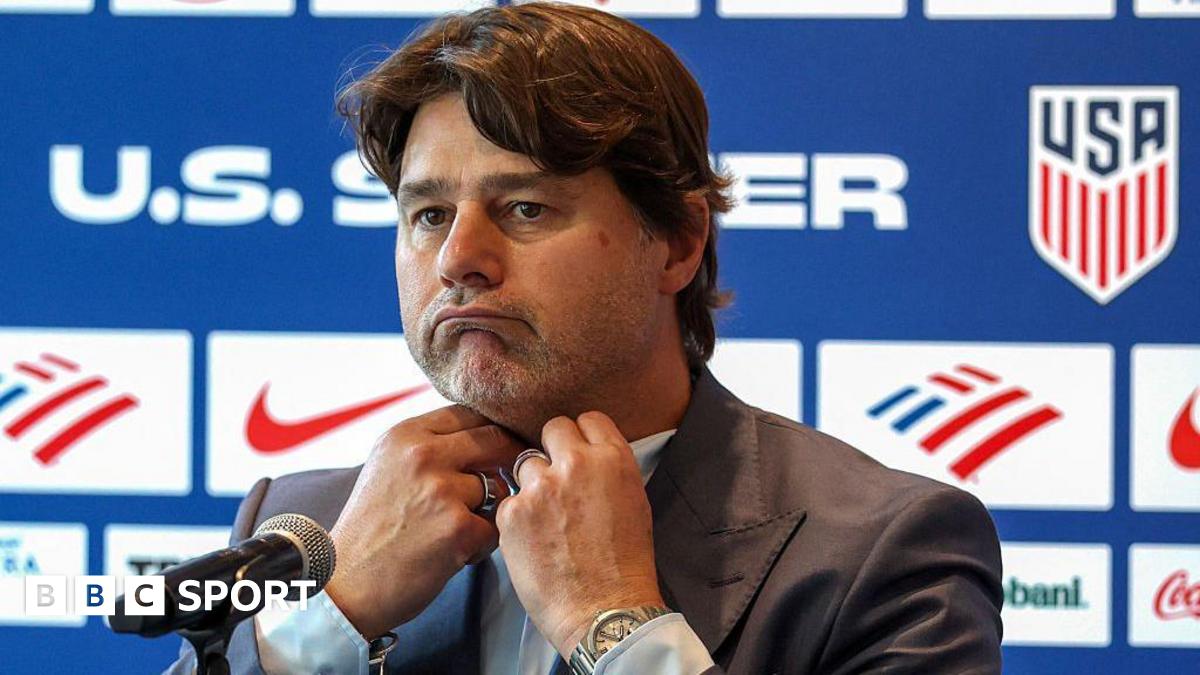
Pochettino moving to Milan mid-cycle is a dereliction of duty
10 hours ago
Mauricio Pochettino is flirting with Milan while the US ship is barely afloat
1 day, 1 hour ago
Pochettino is distracted and the USMNT are running out of time
1 day, 1 hour ago
Mauricio Pochettino's post-World Cup pivot to AC Milan
1 day, 3 hours agoThe USMNT isn't ready for the absolute circus of the 2026 World Cup
1 day, 5 hours agoMore Analysis
Canada is not just here to host the 2026 World Cup party
1 month, 4 weeks ago
Canada, Austria, and the disruptors built to ruin the 2026 World Cup
2 months, 1 week ago5 World Cup dark horses that could ruin your bracket
1 month ago
Why the CONCACAF Champions Cup is the secret to a USMNT World Cup run
2 months, 1 week agoMexico's World Cup opener at the Azteca is a disaster waiting to happen
1 week, 4 days ago