The Anatomy of a Career-Altering Pop
Ask any professional who has felt it, and they describe the same sensation: the feeling of being kicked violently in the back of the heel. They turn around to confront an opponent who isn't there. That is the moment the Achilles tendon—the thickest and strongest tendon in the human body—has snapped. It is a clinical, brutal reality that remains the ultimate boogeyman in the medical rooms of the Premier League and beyond.
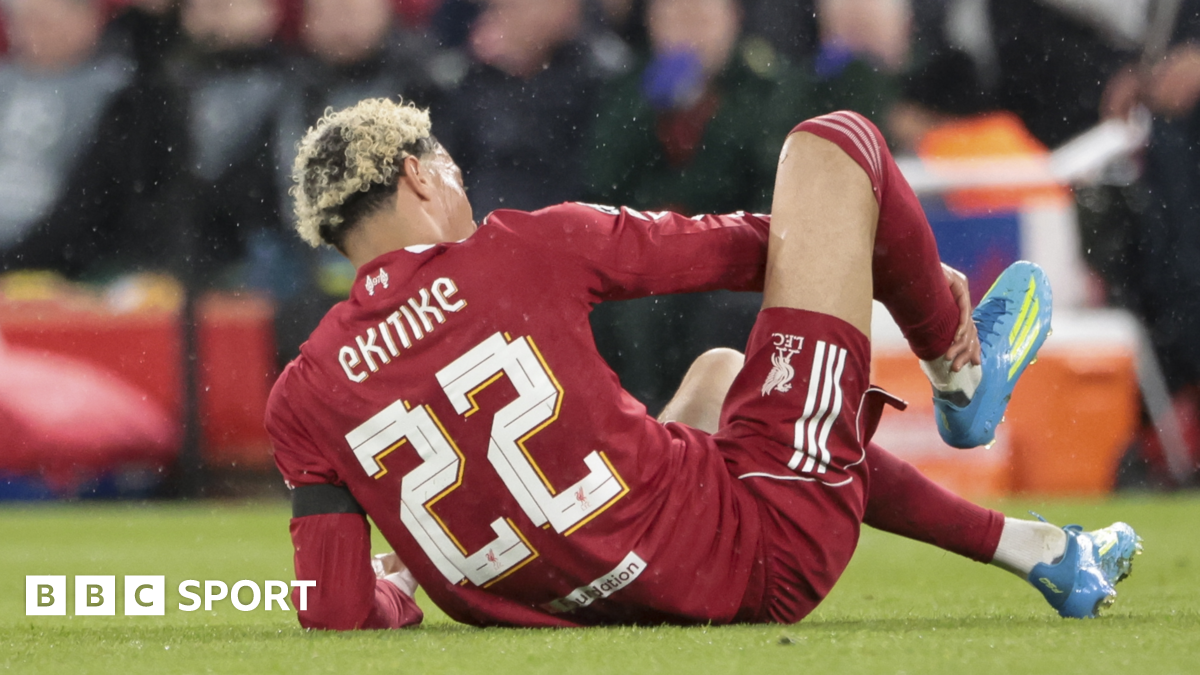
As the BBC recently detailed, the Achilles connects the calf muscles to the heel bone. It is the literal engine of explosive movement. Without it, you cannot jump, you cannot sprint, and you certainly cannot change direction at 20 miles per hour. When it goes, the mechanical integrity of the lower leg is effectively deleted.
The injury is not just a break in tissue; it is a total system failure. While ACL reconstructions have become almost routine with high success rates, the Achilles remains unpredictable. It is a poorly vascularized area of the body, meaning blood flow is limited. Without blood, healing is slow, agonizing, and prone to setbacks that can end a career before the player even hits age 30.
The Surgical Reality and the Recovery Tax
Once a rupture is confirmed via a Thompson test—where a medic squeezes the calf to see if the foot moves—the clock starts on a grueling nine-month minimum rehabilitation. Surgery usually involves stitching the two ends of the tendon back together. In some modern cases, surgeons use a 'speed-bridge' technique to anchor the tendon directly into the calcaneus bone, but the biological reality of the tissue remains the bottleneck.
The first six weeks are spent in a heavy boot, often in a 'equinus' position with the toes pointed down like a ballerina. This prevents the tendon from stretching while the initial scarring occurs. During this phase, the calf muscle begins to waste away. This calf atrophy is the biggest hurdle for elite athletes. Regaining that specific, explosive power in the gastrocnemius is a process that takes nine to twelve months of daily, repetitive work.
The psychological toll is equally heavy. Players often report a loss of 'feel' in their take-off. Even when the tendon is technically healed, the brain often refuses to let the body load it with the same violence as before. We are talking about a structure that must withstand forces of up to 100 tons per square inch during a full-tilt sprint. If the brain doesn't trust the repair, the player loses that half-yard of pace that makes them elite.
A History of Broken Dreams
Football history is littered with the shadows of players who were never the same after the 'pop.' David Beckham’s missed 2010 World Cup is the most famous example of the injury hitting at the worst possible moment. More recently, we saw Leonardo Spinazzola go from the best left-back at Euro 2020 to a player struggling for consistent minutes as his explosive recovery pace vanished. He was never able to replicate the same overlapping threat that defined his tournament.
The statistics are sobering. Studies on professional athletes returning from Achilles ruptures show a significant drop in performance metrics across the board. On average, players see a 30 percent reduction in their successful dribbles and high-intensity sprints in their first season back. Some never return to the top flight at all, forced to drop down the divisions where the physical demands are slightly less punishing on the lower extremities.
Callum Hudson-Odoi and Ruben Loftus-Cheek are two Premier League examples who saw their stratospheric trajectories flattened by this specific injury. Both returned, but the raw, untouchable acceleration they possessed as teenagers seemed to be left behind on the operating table. It took years for them to recalibrate their games to account for their new physical limitations.
Strategic Implications and the 2026 Crisis
The strategic impact on clubs is massive. An Achilles injury to a star winger or a recovery-dependent center-back can wipe 40 million pounds off a player’s transfer value overnight. In the modern market, buying a player with a history of Achilles issues is considered a high-risk gamble that most Tier 1 clubs are increasingly unwilling to take. Insurance premiums for these players skyrocket, and squad depth becomes a matter of survival rather than luxury.
We are currently entering a dangerous period for these injuries. With the 2026 World Cup kickoff just 56 days away, the intensity of the domestic schedule is reaching a breaking point. Fatigue is the primary driver of tendon failure. When the calf muscles are exhausted, they stop absorbing the shock of impact, passing that load directly onto the tendon. It is a recipe for disaster that FIFA and UEFA continue to ignore in favor of expanded tournament formats.
There is a glaring lack of accountability from governing bodies regarding the 'over-scheduling' of elite talent. We are asking human beings to perform at 100 percent intensity every three days, then expressing shock when their primary mechanical connectors fail. The current fixture list is not a meritocracy of talent; it is a war of attrition where the Achilles tendon is the first casualty.
The Critical Failure of Prevention
Despite all the millions spent on sports science and GPS tracking, we are not seeing a decrease in these ruptures. If anything, the increased pace of the modern game is making them more frequent. The obsession with 'high-intensity sprints' in modern coaching—epitomized by the Gegenpressing era—puts a strain on the lower leg that the human body was never designed to handle for 60 games a season.
Clubs are great at measuring heart rate and sleep, but they are still poor at measuring the cumulative microscopic damage to the tendon. By the time a player complains of a 'sore heel' or 'tight calf,' the tendon may already be in a state of degenerative tendinopathy. The medical departments are often reactive rather than proactive, waiting for the rupture rather than pulling a player out of the lineup when the biological red flags appear.
Ultimately, the Achilles injury remains the great equalizer. It doesn't care about your talent or your wage packet. It is a mechanical failure of a biological part that simply cannot be rushed back to health. As we look toward the final stretch of the season and the looming World Cup in North America, every 'pop' heard on a pitch is more than just an injury—it is a potential end to a player's peak years. The game is getting faster, but the human heel is staying exactly the same, and that 8.8 millimeters of tissue is being asked to carry a load it simply cannot sustain.
Read Next
- Hugo Ekitiké injury adds insult to injury for Liverpool's failed season
- Arsenal injury woes mount ahead of high-stakes Manchester City tilt
- Arsenal suffer massive injury blow ahead of City showdown
- Chris Wood is back but Nottingham Forest are playing a dangerous game
- 🏆 World Cup 2026 — Full Coverage Hub