The Death of Hero Ball
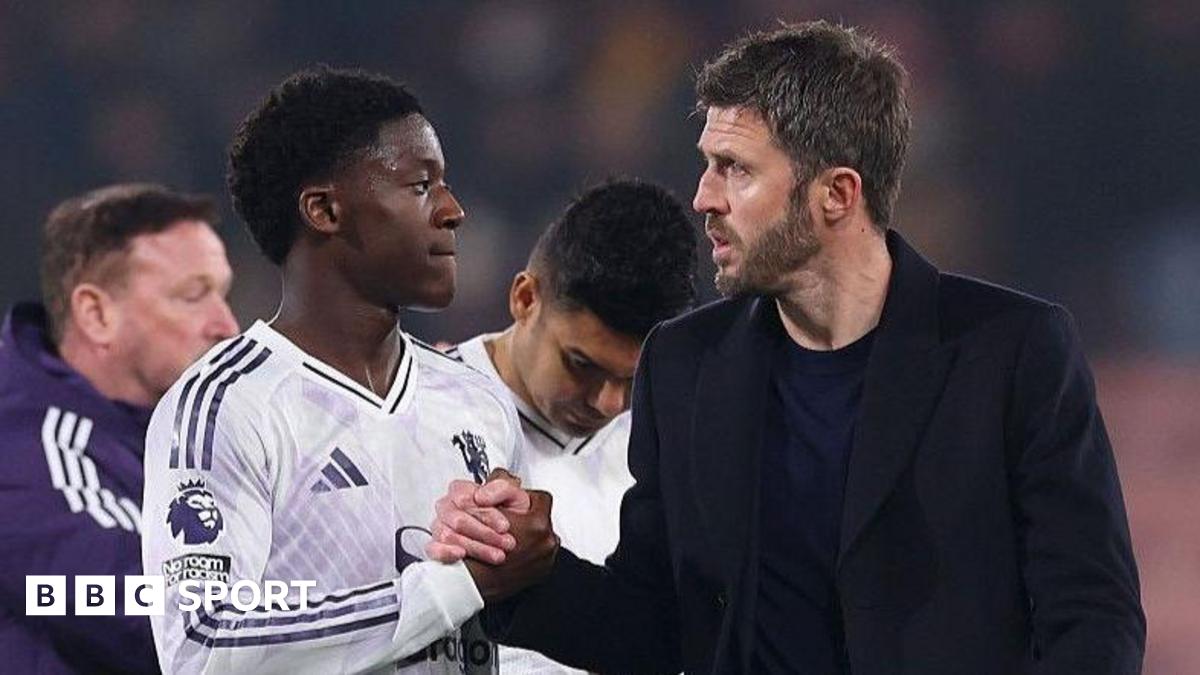
Michael Carrick standing on a touchline looks exactly like Michael Carrick standing in the center circle a decade ago. He is completely devoid of nervous energy. He watches the game with a detached, analytical coldness that borders on the unnerving.
Since taking over as Manchester United's interim head coach, that exact coldness has bled directly into the team's identity. He has spent the last couple of months quietly dismantling the tactical chaos that defined this club for years. There are no more emotional rollercoaster performances.
For a long time, United did not play football matches. They played a series of disjointed transitions, hoping their most expensive players would figure something out in the final third. It was basketball on grass, entirely reliant on individual moments of magic rather than a cohesive plan.
If the game became a shootout, they backed themselves. If it required patience, they collapsed completely. Carrick looked at that methodology and immediately threw it in the bin.
He has implemented a rigid, unforgiving system based on ball retention and positional discipline. Players are no longer allowed to simply wander around the pitch following the ball. They have specific zones, specific triggers, and specific responsibilities.
But building a system that actually functions has created a massive, unintended casualty. The very structure that is saving Manchester United's season is actively suffocating their captain. Bruno Fernandes looks completely lost in a system that demands control over chaos.
Imposing the Structure
To understand why Fernandes is struggling so badly, you have to look at what Carrick has done to the midfield behind him. The days of a single, isolated defensive midfielder trying to cover seventy yards of space on their own are officially gone.
Carrick has installed a strict double pivot that rarely deviates from the central column of the pitch. When United have possession, these two players sit behind the ball. They offer an outlet, recycle possession, and completely refuse to get drawn into the opposition penalty area.
Kobbie Mainoo has been the biggest beneficiary of this structural shift. He no longer has to guess where his midfield partner is going to be when he receives the ball under pressure. He has reliable reference points for the first time in his senior career.
The defensive line has also crept higher, compressing the space in the middle of the park. Lisandro Martinez is aggressively stepping into the midfield to win the ball back, knowing there is actually a structural safety net behind him if he misses the tackle.
It sounds painfully basic. But for a team that has looked completely un-coached for long stretches of recent history, basic competence feels like a tactical masterclass. The passing networks are shorter, tighter, and significantly less risky than they were six months ago.
The Captain's Dilemma
This brings us to the captain's dilemma. There is no player in world football who thrives in absolute chaos quite like Fernandes. He is a high-risk, high-reward machine who views every possession as an opportunity to play a killer pass.
When the game is stretched and unstructured, Fernandes is lethal. He sees passing angles that no one else sees, and he has the technical audacity to try them. He is the ultimate transitional playmaker.
But Carrick does not want the game stretched under any circumstances. Carrick wants total control. He wants the team to probe patiently until an obvious numerical advantage appears in the final third.
This requires the number ten to play simple passes, retain possession, and wait for the right moment. For Fernandes, this looks like pure torture. You can see the frustration in his body language every single weekend.
He receives the ball in the half-space, looks up instinctively, and realizes there are no runners tearing blindly into the box. Instead, he is forced to turn backward and play a simple five-yard pass back to Mainoo.
His underlying metrics reflect this shift entirely. His expected assists have dropped off a cliff, but his pass completion rate is higher than it has ever been in a United shirt. He is being forced to be a metronome instead of a maverick.
The defensive structure has also broken his individualistic pressing habits. Fernandes loves the solo press, sprinting fifty yards on his own to close down a goalkeeper while his teammates stand still.
Carrick has banned it entirely. If the team is not in a position to press as a unified block, Fernandes is instructed to drop into a mid-block and hold his shape. He clearly hates it.
He constantly waves his arms at his teammates, furious that they aren't joining him in a wild, uncoordinated chase. Carrick has essentially put a leash on his most creative player to serve the greater good.
The Newcastle Blueprint
This weekend brings the ultimate stress test for Carrick's new system. A trip to St James' Park to face Newcastle United is rarely a quiet afternoon, and it certainly won't be this time.
Eddie Howe has built a team that exists specifically to destroy possession-based structures. They do not want to play a polite football match. They want to drag you into a violent street fight in the middle of the pitch.
Newcastle will look at United's recent attempts to play controlled, methodical football and see blood in the water. The physical intensity of their midfield trio is perfectly designed to shatter passing rhythms.
Bruno Guimaraes and Joelinton will snap into tackles the second United attempt to play through the center. The key battleground will be in those immediate transitional moments when the ball changes hands.
When Newcastle lose the ball, they counter-press with extreme violence. United's double pivot will have fractions of a second to secure the ball, turn, and find the exit pass. If they hesitate for a moment, the trap closes aggressively.
This is where the tactical matchup gets fascinating. Does Carrick trust his team to play through the heavy press, or does he compromise his newfound principles and instruct them to bypass the midfield entirely?
The Tactical Matchups
The wide areas will almost certainly decide this game. Alejandro Garnacho has had to completely adapt to receiving the ball to feet in Carrick's system, rather than just chasing it into the empty channels.
Against Newcastle, Garnacho will be pinned deep by the relentless overlapping runs of their fullbacks. He will have to do a massive amount of defensive tracking, which will severely blunt his attacking output on the counter.
On the other side of the pitch, Diogo Dalot has looked reborn playing as an inverted fullback. He tucks inside seamlessly to give United an extra man in midfield when building up from the back.
But Newcastle are brilliant at exploiting the exact space left behind by inverted fullbacks. Anthony Gordon will actively look to isolate Dalot in transition, forcing him into desperate one-on-one defending while retreating toward his own goal.
Then there is the issue of Rasmus Hojlund. The striker looks increasingly isolated in this new control-based system. He is making the correct runs, but Fernandes is no longer allowed to play the early, risky ball over the top to find him.
Hojlund will be up against Fabian Schar and Sven Botman for ninety minutes. It is a physical mismatch of the highest order. If United cannot sustain meaningful pressure in the final third, Hojlund will spend the entire afternoon fighting a losing battle for long clearances.
The Verdict
Manchester United are unquestionably a better-coached football team today than they were three months ago. The interim manager has done exactly what he was brought in to do. He has stabilized a rapidly sinking ship.
But tactical competence only gets you so far when you travel up to Tyneside. Eventually, you need your difference-makers to actually break the lines and make a difference.
By restricting Fernandes to fit a rigid system, Carrick might have inadvertently removed the only weapon United had to win games. When the tactical structure inevitably breaks down, they have no individual spark to fall back on.
I expect Newcastle to turn this into the exact type of chaotic, breathless game that Carrick actively despises. They will press high, foul aggressively, and bypass the midfield whenever possible to unsettle the backline.
The United structure will probably hold firm for about an hour. But the physical toll of defending wave after wave of relentless Newcastle attacks will eventually crack their resolve.
Prediction: Newcastle United 2-1 Manchester United. The winning goal will come deep into the second half. Carrick's control mechanism simply isn't quite ready for the cauldron of St James' Park.
Read Next
- Carrick's tactical revolution is completely ruining Bruno Fernandes
- Man United's summer transfer plans are already turning into a circus
- Man United's summer overhaul might already be falling apart
- Newcastle and Villa's transfer war will be settled on the pitch
- 🇵🇹 Portugal World Cup 2026 — A Seleção Hub