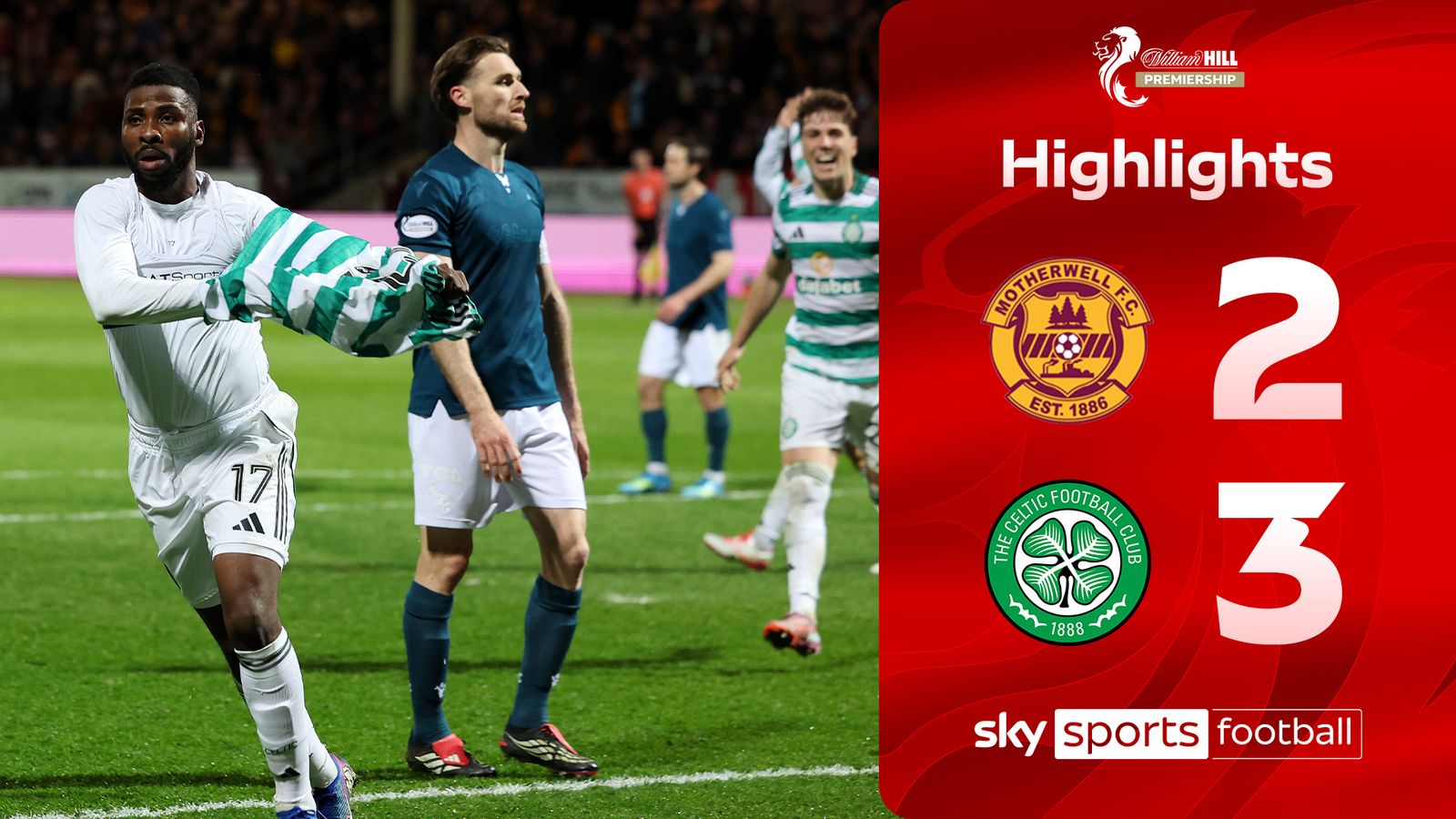
The Anatomy of a Late Collapse
Celtic escaped Fir Park with three points, but the 3-2 victory over Motherwell was anything but clean. The match hinged on a highly controversial late VAR intervention, awarding the visitors a decisive penalty deep into stoppage time.
While the headlines will inevitably focus on the refereeing decision and the furious reaction from the home crowd, the underlying medical story is one of profound physical exhaustion. Motherwell spent the majority of the second half absorbing intense pressure, executing a deep defensive block that requires immense lateral movement and short, high-intensity sprints to close down passing lanes.
Defending in a low block is notoriously taxing on the hamstrings, quadriceps, and calves. The constant shifting of body weight to match the ball's movement creates a heavy eccentric load on the lower body. When VAR delays are introduced into this highly pressurized environment, players are forced to stand idle while adrenaline spikes and muscle temperature rapidly drops. This is a classic recipe for soft-tissue failure and delayed onset muscle soreness.
The VAR Freeze and Muscle Cooldown Mechanics
The stoppage for the late penalty check lasted several agonizing minutes. During this time, players went from peak cardiovascular output to a virtual standstill. The physiological impact of this sudden cessation of movement cannot be overstated, particularly in the chaotic final moments of a match.
In modern football, extended VAR delays act as an unscripted timeout, but without the benefits of actual rest. Unlike basketball or American football, players cannot immediately put on tracksuits to stay warm. The abrupt halt in play leads to a rapid clearance of lactic acid from the bloodstream, but it also causes a dangerous drop in core muscle temperature. The fascial tissue begins to stiffen as the heart rate plummets.
When the referee finally points to the spot, players are instantly thrust back into explosive, max-effort movements. The sudden acceleration required for a potential penalty rebound or an immediate counter-attack places extreme, sudden load on cold muscle fibers. Biomechanically, this is when the risk of a high-grade hamstring tear or a calf strain is at its absolute peak.
Celtic's Relentless Press and Fatigue Accumulation
From a fitness and conditioning perspective, Celtic's tactical approach is a double-edged sword. Their high-pressing system demands elite cardiovascular conditioning and the ability to repeatedly sprint at speeds exceeding 20 kilometers per hour. In this specific match against Motherwell, they had to sustain that aggressive press well past the standard regulation limit.
We are seeing a disturbing trend across the Scottish Premiership where the final ten minutes of a match are no longer just the final ten minutes. With added time frequently exceeding eight or nine minutes, we are effectively watching players complete a fourth period of extra time. The physical load data from these fixtures is alarming, with GPS trackers frequently showing severe red-zone exposure.
High-speed running distances are heavily skewed towards these chaotic final stages. This is exactly when systemic fatigue is at its highest, glycogen stores are severely depleted, and technical mechanics begin to break down. A player is far more likely to mistime a tackle or land awkwardly from a header when their central nervous system is drained.
Motherwell's Defensive Toll and the Cost of Resistance
Motherwell's backline was subjected to a relentless barrage of crosses, overlapping runs, and penetrating passes. The sheer volume of defensive actions—headers, sliding blocks, desperate clearances—takes a massive cumulative toll on the body. Each aerial duel requires explosive vertical power and subjects the skeletal system to significant impact forces upon landing.
Center-backs are rarely rotated during a match unless forced off by an acute, visible injury. They are expected to absorb 100 minutes of blunt force trauma, battling physically dominant strikers while maintaining intense concentration. In this specific fixture, the late VAR decision effectively negated all that prior physical and emotional investment in a single, devastating moment.
The mental fatigue of conceding so late is inextricably linked to physical recovery. Cortisol levels spike dramatically in the aftermath of a perceived injustice or a heartbreaking loss. Elevated cortisol has been clinically shown to delay muscle repair and increase systemic inflammation in the 48 to 72 hours following a match, making the turnaround for the next fixture even more precarious.
The Broader Impact of IFAB Directives
The International Football Association Board directive to strictly calculate time lost to goal celebrations, substitutions, and VAR interventions has permanently altered the physiological demands of the sport. The days of the standard regulation match are officially over.
Matches now routinely stretch well beyond the scheduled duration. While this may increase active ball-in-play time—a primary goal for broadcasters and purists—it severely tests the very limits of human endurance. Squad depth is no longer a luxury reserved for the elite clubs; it is a fundamental requirement for basic survival in a top-flight league.
Teams without the financial muscle to heavily rotate five quality substitutes face a disproportionate and dangerous injury risk. A club like Celtic can bring on fresh, international-caliber legs to sustain their intensity and exploit tired defenders. Motherwell, operating on a much tighter budget, must often rely on heavily fatigued starters to simply survive the onslaught and see out the match.
Strategic Implications and Timeline for Resolution
While no catastrophic acute injuries were immediately reported from Fir Park, the entire starting XI for both squads are severely affected by extreme fatigue. Both medical departments will implement a strict 72-hour recovery timeline before any player is cleared for full-contact training.
Managerial strategy across the league must aggressively adapt to this new reality. Training loads in the immediate days following these marathon matches must be drastically reduced. The traditional recovery protocol of a light jog and a brief pool session is no longer sufficient when players are logging significant extra minutes of high-intensity work under extreme psychological stress.
The medical staff at Lennoxtown will be heavily monitoring creatine kinase levels and heart rate variability metrics this week to assess the true extent of the muscle damage. Any significant spike in these objective markers will force immediate tactical adjustments and squad rotation for the next fixture, regardless of the opponent.
A Critical Look at the VAR Protocol
The late penalty award was controversial not just for its timing and the subjective nature of the foul, but for the agonizingly slow nature of the review process. The technology was initially introduced to quickly eliminate clear and obvious errors, yet it repeatedly subjects players and fans to lengthy delays for highly marginal, forensic decisions.
There is a glaring, inexcusable lack of consideration for player welfare embedded in the current VAR protocol. The officials are comfortably analyzing slow-motion freeze-frames in a climate-controlled room, completely detached from the physical reality on the pitch. Meanwhile, twenty-two elite athletes are forced to stand shivering in the Scottish cold, their muscles stiffening by the second as they wait for a verdict.
Until this review process is drastically streamlined and executed with far greater urgency, we will continue to see a direct correlation between lengthy VAR stoppages and late-game soft tissue injuries. The governing bodies must publicly acknowledge that their obsession with millimeter precision is putting players in genuine physical danger.
Looking Ahead to the Recovery Phase
Both teams will require extensive, highly specialized recovery interventions following this brutal clash at Fir Park. Ice baths, pneumatic compression therapy, hyperbaric oxygen chambers, and strictly controlled sleep environments will be absolutely paramount to preparing the squads for their next respective challenges.
Celtic escaped with the win, but the internal sports science data will likely show glaring red flags across several key physical metrics. Motherwell, conversely, must manage the brutal dual blow of total physical exhaustion and the immense psychological frustration of having points snatched away at the death.
The Scottish Premiership remains a brutally demanding, unforgiving league. Matches like this frantic encounter highlight the incredibly razor-thin margin between elite athletic performance and catastrophic physical breakdown.
Read Next
- A 99th-minute penalty just turned the Scottish title race into a total circus
- Celtic's VAR escape against Motherwell papers over real tactical cracks
- Celtic's late penalty sparks a total meltdown in the Scottish Premiership
- The Celtic VAR meltdown proves Scotland's officiating is broken
- ⚽ Scottish Premiership 2025-26 — Celtic vs Rangers Hub