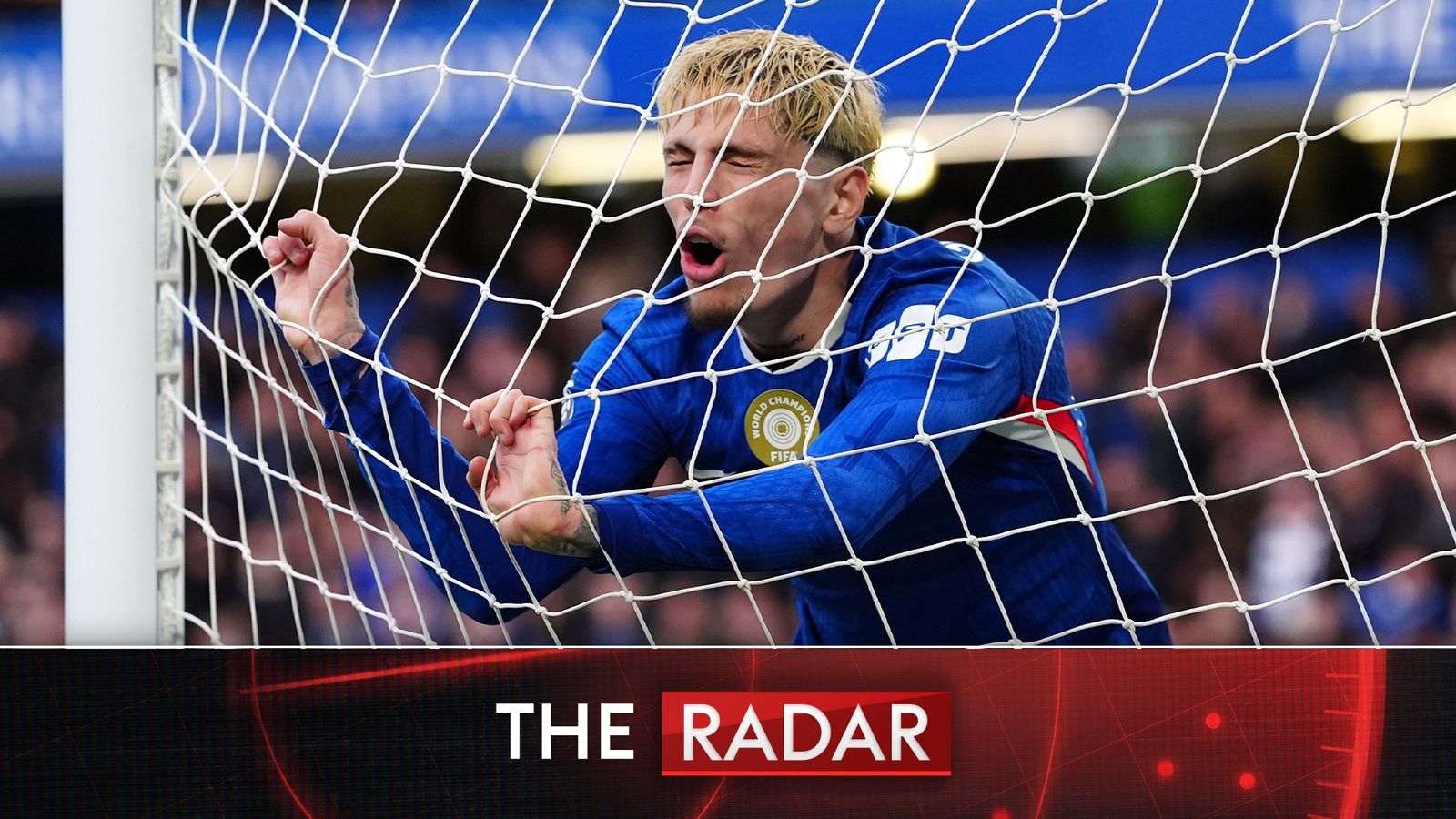
Chelsea are tactically bankrupt and Brighton just proved it

Tactical fragility at the Amex
Watching Chelsea attempt to defend vertical transitions under pressure has become a recurring nightmare for anyone interested in structural integrity. During the recent loss to Brighton, the defensive line played with the coordination of a group who had just met in the tunnel. When Danny Welbeck found the space for that clinching third goal, it was not merely an individual mistake.
It was a failure of spatial management that has plagued the side all season. The distance between the holding midfielders and the center-backs consistently hovers around twenty yards, creating an inviting gap for any technician comfortable operating in the half-spaces. Brighton exploited this with mathematical precision. Every time the ball shifted from the flank to the central channel, the Chelsea block collapsed inward, leaving the edge of the box entirely unguarded.
The Welbeck mismatch
Danny Welbeck thrives on these specific failures. While statisticians might focus on his final touch, the real analysis lies in his positioning against Chelsea's center-back pairing. At the moment the ball moved toward the final third during the buildup to his goal, Welbeck drifted into the blindside of the nearest defender. This is a basic movement, yet the backline failed to track the run.
The defensive discipline shown was abysmal. By the time the ball was played forward, the Chelsea defense had lost their defensive shape entirely. They retreated toward their own goal, inviting the shot rather than challenging the dribbler. It is a recurring theme that reflects a lack of on-pitch leadership. When a team concedes a goal like the one Welbeck sealed for Brighton, it highlights a deep-seated disconnect between coaching instructions and player application.
The numbers don't lie
Possession stats are a vanity metric if the shot map looks like a firing squad target. Brighton’s xG efficiency in this match was clinical. They didn't need sustained control of the middle third to hurt Chelsea; they simply needed one or two efficient passes to cut through the press. Watching the game, it was clear that Chelsea's high line is essentially a handicap when the transition defense is this porous.
The team is currently operating on 1.12 xG conceded per 90 minutes in recent fixtures, a number that would make a relegation-battling side blush. This is not about bad luck or individual errors. It is about a structural decision to play aggressively without the necessary speed in recovery to sustain that philosophy. Even the mid-card velocity shift noted in the recent NXT pipeline shift shows more consistency than this Chelsea defense.
Missed defensive triggers
Pressing, when done correctly, acts as a filter for the opposition's attack. Chelsea’s press, however, looks like a suggestion rather than a command. Players arrived to the ball late, often stopping three yards short of the defender, allowing for simple diagonal passes to break the first line. Once that line is broken, the team is forced into a frantic scramble to relocate, which typically ends in tactical fouls or free shots.
Compare this to how teams of similar caliber manage their defensive setup. There is an inability to recognize the trigger moments—the heavy touch from a midfielder, the back-to-goal pass from a striker—that should signal an immediate, synchronized team movement. Instead, we see individual players chasing shadows while the rest of the team stands flat-footed. The lack of defensive awareness is alarming, particularly for a squad with this much personnel turnover.
Moving toward May
With major fixtures looming on the calendar, the current trajectory is unsustainable. If we look at the upcoming schedule, every week brings a test that mandates a tighter, more compact defensive shell. The upcoming WWE Backlash 2026 event shares a calendar month with massive European football stakes, yet the focus for Chelsea must be inward. There is nothing to suggest they have the discipline to fix these errors before the intensity ramps up toward the end of May.
The mid-field pivot needs a total rethink. Playing two midfielders against a high-pressing team like Brighton is essentially leaving the defenders to deal with 2v3 or 3v4 scenarios periodically. Unless the personnel is shuffled to include a dedicated screen, these high-scoring defensive lapses will continue. The board needs to look at the numbers, stop pretending that talent will naturally resolve tactical incoherence, and accept that the current setup is fundamentally broken.
Roku Streaming Stick 4K | Streaming Device 4K/HDR/Dolby Vision with Roku Voice Remote and TV Controls
The easiest way to stream every match in 4K.
More Coverage

Anthony Gordon to Barcelona marks a high-stakes gamble
19 minutes ago
Arsenal vs PSG: Why tactical rigidity will determine the European champion
19 minutes ago
Arsenal's 104 million gamble on Julian Alvarez is pure chaos
19 minutes ago
Top 10: The Definitive Arsenal Moments of the 2025/26 Season
an hour agoLincoln City just entered the weirdest experiment in League One history
2 hours ago
Newcastle are burning the furniture to keep the house warm
2 hours agoMore Analysis
Chelsea are an absolute train wreck at the Amex
1 month, 1 week ago
Chelsea are in full-blown crisis mode after the Manchester United disaster
1 month, 1 week ago
Chelsea are technically bankrupt, and Rosenior is the wrong architect
1 month, 1 week agoChelsea's defensive collapse signals a deeper fitness crisis
1 month, 1 week ago
Chelsea’s meltdown at Brighton proves they have no identity
1 month, 1 week ago