The expected goals trap
Fifty-two shots. Over their last three Premier League matches, Chelsea have taken fifty-two shots. They have scored exactly one goal from open play.
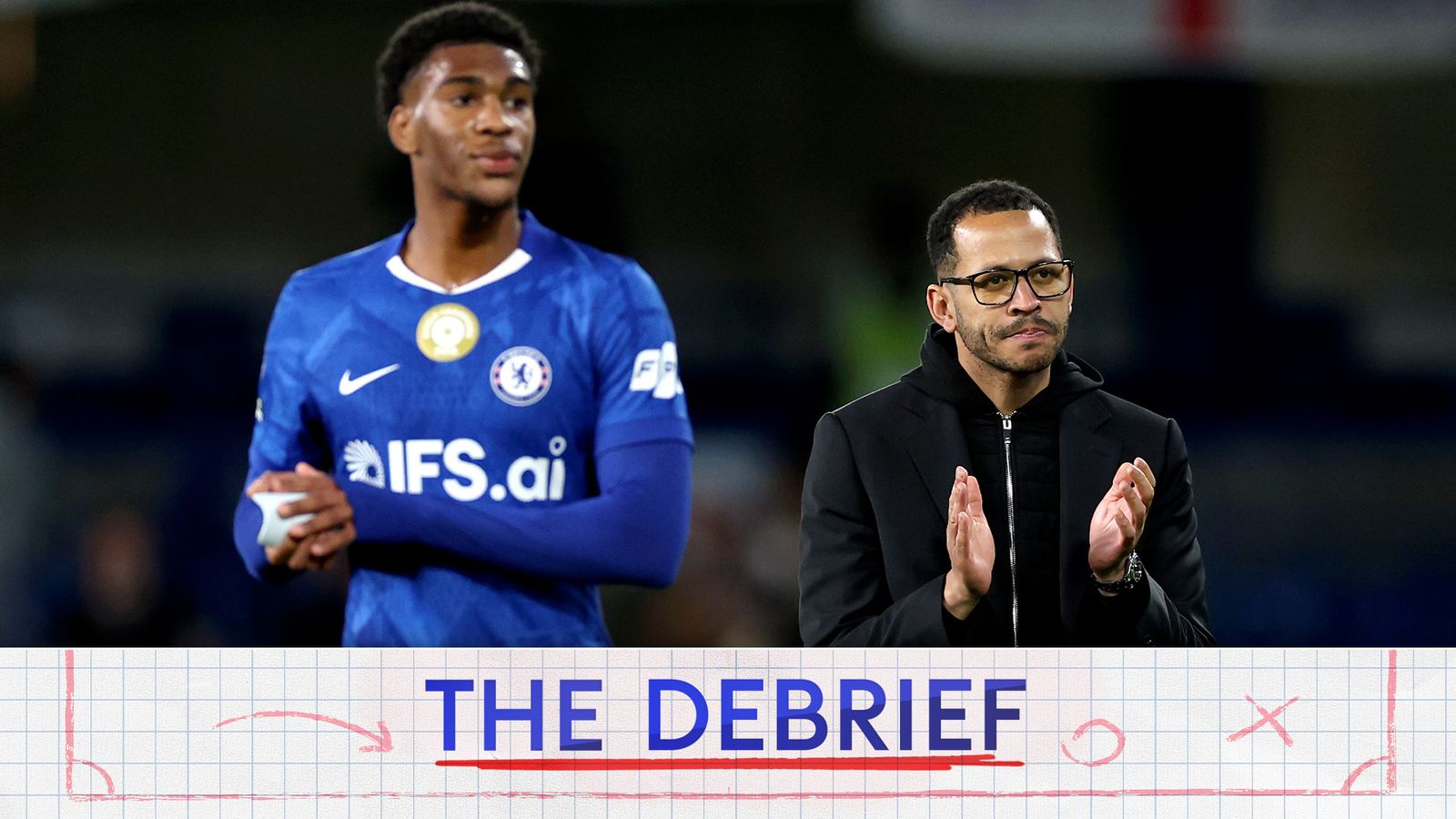
Liam Rosenior stood in front of the cameras this weekend and played the hits. He blamed the bounce of the ball. According to Sky Sports, the Chelsea manager bemoaned his team's bad luck after another frustrating draw.
Managers do this when they want to shield their players from criticism. But the data paints a much harsher picture of what is happening at Stamford Bridge. Underperformance against Expected Goals (xG) is often dismissed as a temporary blip.
A striker hits the post instead of the inside of the net. An opposing goalkeeper has the game of his life. These things happen over a 38-game season.
But Chelsea have been consistently underperforming their underlying numbers for months now. You can only blame variance for so long before you have to look at the tactical structure. The headline numbers are stark.
Over their last ten Premier League fixtures, Chelsea have accumulated 18.4 xG but scored only ten times. That is an enormous gap. It is easy to look at that differential and assume positive regression is just around the corner.
That assumption is fundamentally flawed when you dig into how those chances are actually being created.
Shot locations and defensive pressure
Not all high-xG chances are created equal. This is the dirty secret of modern football analytics. A chance rated at 0.15 xG looks identical on a spreadsheet whether the striker has three seconds to take a touch or is hitting a first-time volley while being dragged down by a centre-back.
Context matters. The context of Chelsea's attacking play right now is heavily contested, slow, and predictable. Chelsea are systematically creating chances under heavy pressure.
Their build-up play under Rosenior is incredibly slow and deliberate. By the time the final pass is played, opposing defences are already completely set. Consider the average time it takes Chelsea to transition from the middle third to a shot in the penalty area.
They rank fourteenth in the league for attacking pace. They are allowing teams to drop into low blocks. When you face a low block, the penalty area is crowded.
When the penalty area is crowded, finishing becomes harder because the goalkeeper has less ground to cover and defenders are blocking shooting lanes. This is where the manager deserves heavy criticism.
The tactical setup is generating shots on paper, but it is not generating usable space on the pitch. Rosenior's possession structure forces opponents back, but Chelsea lack the quick combinations to disorganise them.
The ball moves side to side, a hopeful cross is thrown in, and the resulting shot is heavily contested by two or three defenders. Cole Palmer is suffering the most from this stagnant approach.
His progressive passes into the penalty area have dropped by 14 percent since February. He is receiving the ball on the half-turn, looking up, and seeing a wall of eight defenders. The system is failing the talent.
The illusion of control
Chelsea average over sixty-two percent possession across their last ten matches. They dominate the ball. They dictate the tempo.
But possession without penetration is just defensive action by another name. The modern game has moved past the idea that keeping the ball inherently leads to scoring goals. When you break down their passing networks, the problem becomes obvious.
The highest volume of passes occurs between their centre-backs and their holding midfielders. The ball goes from side to side in a U-shape around the opposition block. There is almost no vertical progression through the centre of the pitch.
Opposing managers have realised that if you concede the wide areas and pack the middle, Chelsea will simply pass themselves into a stupor. They cross the ball out of frustration rather than design.
They are averaging twenty-two crosses a match, but their completion rate on those crosses is a miserable 18 percent. You cannot whip crosses into a penalty box containing four opposition defenders and expect your wingers to win aerial duels.
It is mathematically unsound. Yet, week after week, Chelsea revert to this exact pattern when the central spaces are closed off.
The Newcastle blueprint
If you want a masterclass in manipulating variance, look at Eddie Howe's Newcastle United. They are doing the exact opposite of Chelsea. They concede chances willingly, but they dictate the exact terms and locations of those chances.
Newcastle's defensive metrics are fascinating right now. They give up a significant amount of territory, sitting in a mid-to-low block. They allow passes into the final third without much pressing.
Their Passes Allowed Per Defensive Action (PPDA) is one of the highest in the top half of the table. But look at where those opponent passes end up. Attackers are forced wide into low-danger zones.
The Magpies have conceded just 12 goals in their last fifteen matches. Their expected goals against (xGA) during that same period is significantly higher. Is that luck?
Partially. But it is also a deliberate tactical choice to force low-quality shots. Howe has constructed a defensive block that actively invites long-range efforts.
They pack the penalty area, rigidly defend the cut-back zones, and dare opponents to beat them from twenty-five yards.
Controlling the penalty area
Most teams simply do not have the ball-striking ability to do it consistently. When opponents do manage to get into the box against Newcastle, they are usually shooting through a forest of legs.
The xG models might rate a shot at 0.10 because of its location. The reality is the shot has almost zero chance of finding the net because of the defensive density. Howe is actively breaking the public xG models.
Chelsea, by contrast, are trying to score the perfect, intricate goal every single time. They want to walk the ball into the net through passing sequences that require zero margin for error. When they face a rigid defensive structure, they run out of ideas.
Newcastle understand who they are and what their limitations are. Chelsea are still trying to play like a team that has elite finishers, despite all evidence to the contrary.
The Florian Wirtz exception
While Chelsea struggle to convert chances and Newcastle focus on preventing them, Florian Wirtz is operating in a different reality entirely. As noted in the Sky Sports debrief, the underlying numbers for Wirtz this season are absolutely absurd.
He is the ultimate outlier in European football right now. When we talk about overperformance, Wirtz is the gold standard. He takes low-probability situations and routinely turns them into high-value outcomes.
He does not need the perfect pass or the perfect system. He creates the value himself through sheer technical brilliance. Look at his expected assists (xA) versus his actual output.
The gap is massive, and it has been sustained for two years. He is consistently finding runners in incredibly tight spaces. He breaks defensive lines with passes that most players wouldn't even attempt to visualise, let alone complete.
Creating value out of nothing
Wirtz is averaging an incredible 6.4 actions creating a shot per ninety minutes. But the sheer volume isn't even the most impressive part. It is the quality and audacity of those chances.
He is bypassing entire midfields with a single action, totally breaking open games that look destined for a goalless draw. Chelsea would give anything for a player with that kind of decisive final-third passing.
Instead, they have a collection of talented individuals who seem completely disconnected from one another. Wirtz sees the picture before it develops. Chelsea's attackers seem perpetually surprised when the ball finally arrives at their feet.
With the Champions League semi-finals just eight days away on April 28, players like Wirtz are the ones who decide ties. They don't need three xG to score a goal. They need half a yard of space and a single lapse in concentration.
What the numbers actually mean
Stats without context are worse than useless; they are actively misleading. We can look at shot maps, passing networks, and expected threat charts all day. What actually matters is how those numbers translate to the pitch when the whistle blows.
For Liam Rosenior, the translation is completely failing. The process looks acceptable on a spreadsheet, but it is disjointed and predictable on the grass. The manager needs to stop talking about luck in his press conferences and start addressing the severe structural issues in his attack.
He needs to speed up the offensive transition. He needs to get his attackers the ball before the opponent's defensive block is perfectly set. If he keeps relying on variance to bail him out of bad tactical setups, he will not last the season at Stamford Bridge.
Eddie Howe has figured out how to win ugly by manipulating the defensive data. Florian Wirtz has figured out how to make the impossible look completely routine. Chelsea are stuck somewhere in the middle, playing pretty football that leads nowhere.
The underlying numbers are not a shield for Rosenior. Right now, they are a damning indictment of his system.