The reality of the fifth tier
The fifth tier of English football is famously unforgiving. It doesn't care how many Premier League goals you scored. It doesn't care about your international caps or your highlight reel on YouTube.
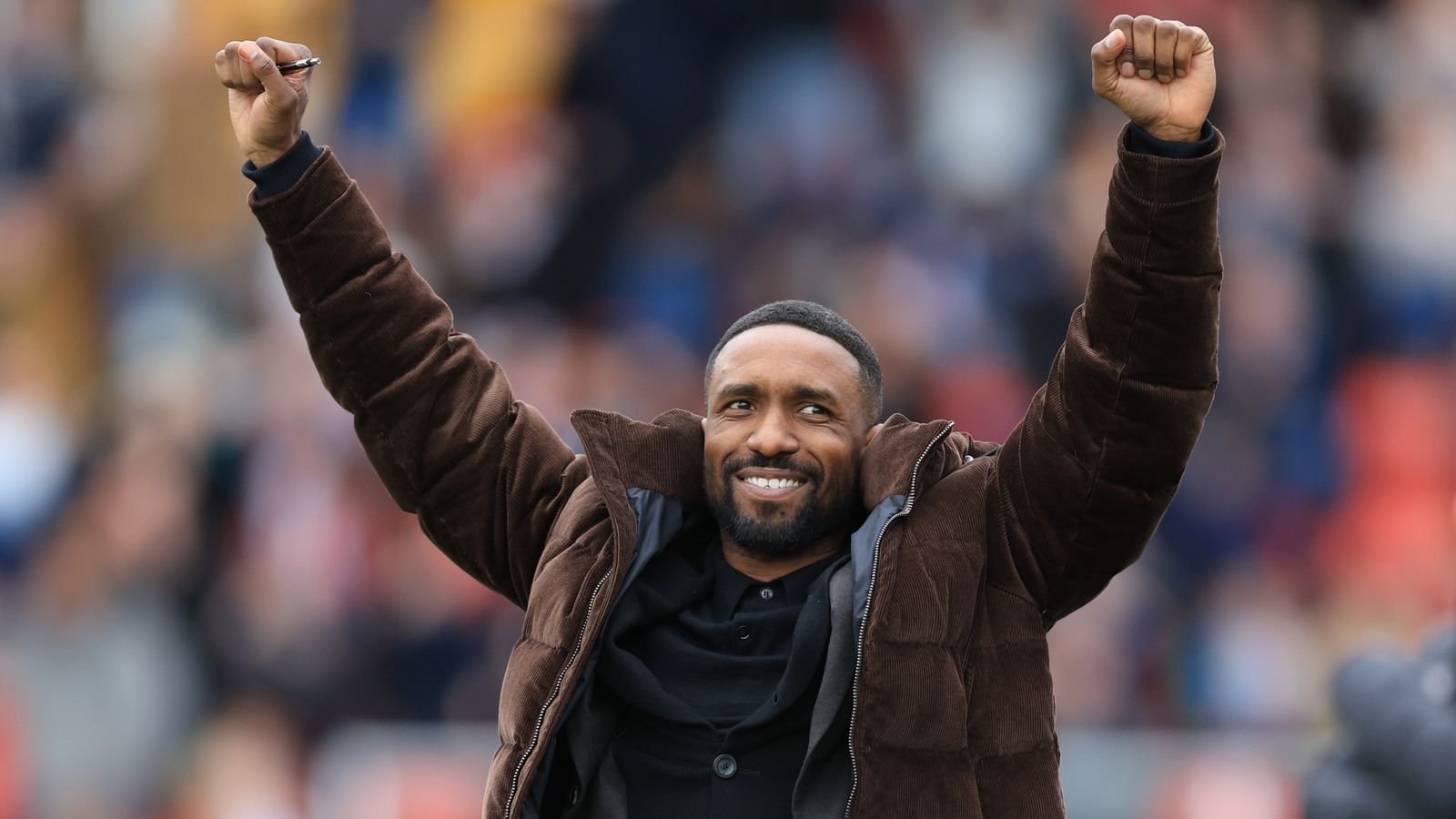
Down here, the pitches get heavy and the schedule is relentless. The centre-backs treat every aerial duel like a personal insult. That is the brutal reality Jermain Defoe walked into at Woking last month.
So far, he is surviving. Thriving, even. As The Mirror reported recently, Defoe has engineered an impressive unbeaten start to his managerial career.
He spoke openly in that interview about putting his ego to one side. It is the perfect press conference line. It signals humility. But what does putting your ego aside actually look like on a freezing Tuesday night in Aldershot?
I have spent the weekend reviewing Woking's last four fixtures. The initial new-manager bounce is absolutely real. You can see the players covering an extra yard, throwing themselves into tackles they might have shirked a month ago.
They are responding to a genuine legend on the touchline. But beneath the surface of this unbeaten run, there are glaring structural cracks. Defoe is trying to implement a proactive, possession-based system with a squad assembled to survive in a low block. That tactical friction is going to cost them points very soon.
Tactical friction and rest defence
Let's break down the setup. Defoe has shifted Woking from a pragmatic 5-3-2 into a much more expansive 4-3-3.
When they have the ball, the wingers tuck inside to overload the half-spaces, and the full-backs are instructed to bomb forward. It looks fantastic when it clicks.
In their recent 2-0 victory, they completely dominated the midfield transitions. The passing triangles were crisp. But we have to contextualize that performance. They were playing a side sitting dead last in the form table, completely devoid of confidence.
The real test is coming, and I don't think Woking are ready for it. The critical flaw in Defoe's system is their rest defence. By pushing eight men forward in the attacking phase, Woking are leaving massive, terrifying gaps behind their full-backs.
When they turn the ball over high up the pitch, their midfield pivot is repeatedly left exposed. They simply do not have a defensive midfielder with the recovery pace to cover those channels.
Any competent National League side with speed on the counter is going to tear that defensive structure apart. You can't just command fifth-tier players to execute complex positional rotations if they don't have the technical floor to match the ambition. It results in sloppy turnovers in dangerous areas.
The Ashley Cole transition
Defoe referenced Ashley Cole's comments regarding the difficult transition from elite player to coach. Cole has smartly found his niche as a tactical assistant, learning the ropes away from the unrelenting glare of the main job.
Defoe, conversely, has dived straight into the deep end as the primary decision-maker. Being a world-class striker is largely about instinct. It is about split-second geometry and raw execution in the penalty box.
Being a successful manager at this level is about minimizing risk over 90 minutes. Defoe hasn't learned how to kill a game yet. He seemingly wants his team to keep attacking relentlessly, even when defending a narrow lead in the 85th minute.
That naivety is charming right now while the results are flowing, but it will be brutally punished by smarter opposition.
The inevitable regression
We have to look at the underlying numbers. Woking are currently outperforming their expected goals (xG) by an entirely unsustainable margin. Their starting forwards are finishing half-chances at a rate that simply won't last over a full campaign.
The finishing has been ruthless, which is exactly what you would expect from a team managed by one of the Premier League's most lethal marksmen. Defoe might be taking the finishing drills himself on the training ground, but he can't sub himself on to take the shots.
Regression to the mean is an absolute certainty. When those low-percentage shots stop flying into the top corner, the goals will dry up. And when the goals dry up, the defensive frailties I mentioned earlier will be ruthlessly exposed.
This brings us to the midfield engine room. Defoe is asking his central midfielders to press aggressively high up the pitch. It works well in the first half.
By the hour mark, however, you can clearly see the fatigue setting in. They are regularly losing the second-ball battles late in games. In this league, if you lose the second balls, you lose the match.
It is really that simple. You cannot carry tired legs in the centre of the park against teams that play direct, physical football.
Prediction: The wall hits in May
Let's talk predictions. I am calling it now: this unbeaten honeymoon period ends within the next three weeks. As we head deeper into May, the fixture list gets significantly denser.
Woking are scheduled to face three promotion-chasing teams in a punishing ten-day span. They simply do not possess the squad depth to maintain this high-intensity pressing game against superior opposition.
Injuries are already starting to pile up, particularly in the wide areas where Defoe's system demands the most running. Defoe is going to be forced to rotate, and the drop-off in quality between his starting XI and his bench is steep.
I predict Defoe will suffer his first heavy defeat before the end of May. It won't be a narrow 1-0 loss; it will be a structural collapse where they are caught on the break three or four times.
The gaps behind the full-backs will finally be exploited by a team with genuine attacking quality. Woking will likely finish the season safely mid-table. That is objectively a massive success given the serious relegation fears that hovered over the club when he took the job.
He deserves massive credit for pulling them away from the drop zone. However, the current narrative of the invincible new manager is going to crash hard against the reality of National League squad fatigue.
Defoe has to prove he can organize a gritty, ugly, backs-to-the-wall performance when things aren't going his way. So far, we haven't seen it.
He has the attacking patterns dialed in, but the defensive transition remains a complete mess. If he doesn't adjust his overly optimistic setup, this unbeaten run will be remembered as a brief flash of new-manager syndrome rather than the foundation of a permanent tactical revolution.
He needs to learn that sometimes, putting your ego aside means parking the bus and accepting a boring draw.